
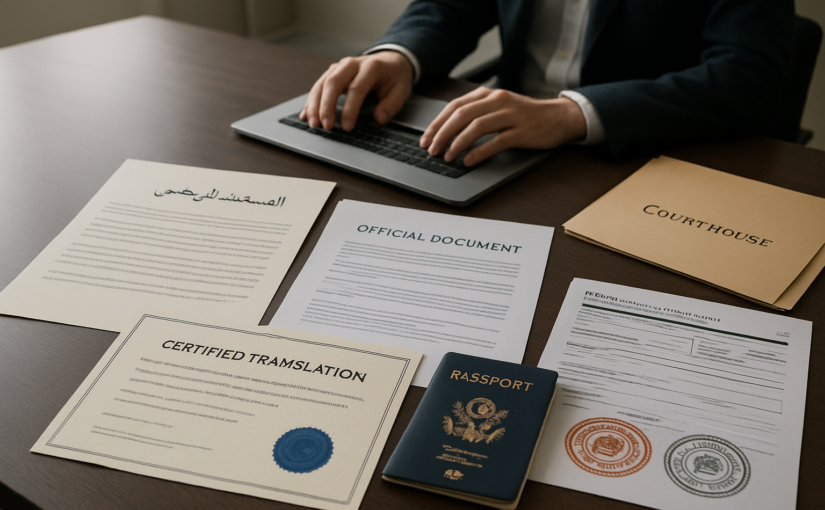
Why Certified Arabic Translation Matters for Official U.S. Submissions
If you are submitting Arabic-language documents to a U.S. government agency, court, university, or apostille office, accuracy alone is not enough. In most cases, you need certified Arabic translation that clearly states the translation is complete and accurate and that the translator or translation company is qualified to perform the work. This requirement often applies to birth certificates, marriage certificates, divorce decrees, police clearances, academic transcripts, powers of attorney, court judgments, and other personal or legal records.
Because official submissions can affect immigration status, litigation, admissions, licensing, or international document use, agencies want confidence that the English translation faithfully reflects the original Arabic document. A missing certification statement, inconsistent names, poor formatting, or omitted stamps and seals can delay your case or trigger a rejection. That is why many people comparing providers focus on three things: acceptance, speed, and accuracy.
In this guide, we explain how certified Arabic translation works for USCIS, court, and apostille-related documents, what U.S. agencies generally accept, and how to order fast while reducing the risk of problems.
What Is Certified Arabic Translation?
Certified Arabic translation is an official translation of an Arabic document into English, accompanied by a signed certification statement. The certification usually confirms that the translation is accurate and complete to the best of the translator’s knowledge and that the translator is competent to translate from Arabic into English.
For many U.S. uses, certification does not necessarily mean notarization. These are different services:
- Certified translation: Includes a signed statement of accuracy and translator competence.
- Notarized translation: The translator or authorized representative signs the certification before a notary public.
- Sworn translation: A separate legal concept used in some countries, not typically the standard U.S. requirement.
When ordering certified Arabic translation, it is important to confirm whether the receiving institution requires certification only, certification plus notarization, or additional formatting or submission rules.
When You Need Certified Arabic Translation
People most often request certified Arabic translation for official submissions in the following situations:
- USCIS immigration petitions and applications
- Immigration court or civil court filings
- Academic admissions, transcript evaluations, and credential reviews
- Apostille and authentication packages
- Marriage, divorce, inheritance, and probate matters
- Driver’s license, Social Security, and state-level identity documentation
- Employment background checks and licensing boards
Arabic documents often include handwritten notes, multiple seals, stamps, marginal comments, and nonstandard date formats. A qualified provider of certified Arabic translation should know how to handle all of these elements in a way that preserves meaning and supports acceptance.
Certified Arabic Translation for USCIS: What Is Typically Accepted
USCIS generally requires that any foreign-language document submitted to the agency be accompanied by a full English translation and a certification from the translator stating that the translation is complete and accurate and that the translator is competent to translate from the foreign language into English. For Arabic documents, this means you should submit the Arabic document along with a certified Arabic translation into English.
Common USCIS documents that need translation include:
- Birth certificates
- Marriage certificates
- Divorce certificates or judgments
- Police certificates
- National ID cards
- Passports and passport pages
- Family books
- Court records
- Military records
Key USCIS Expectations
- Complete translation: Do not translate only selected sections unless your attorney specifically advises that a limited translation is acceptable for a particular filing. Omissions can create problems.
- Certification statement: The translation should include a proper signed certification.
- Legibility: If the original is blurry, cropped, or handwritten, the translator may need a better scan to avoid uncertain wording.
- Name consistency: Arabic names can be transliterated in multiple ways. A good provider will flag differences between spellings across passports, IDs, and certificates.
- Faithful formatting: Dates, seals, registration numbers, and annotations should be reflected clearly.
USCIS does not usually require notarization for every translated document, but some applicants still request it for added formality. The safest approach is to follow the current instructions for your specific form and, if applicable, your attorney’s guidance.
Certified Arabic Translation for Court Documents
Court submissions often demand a higher level of precision than general administrative filings. Whether you are dealing with family court, civil litigation, probate, criminal matters, or immigration court, certified Arabic translation should be handled by professionals familiar with legal terminology and document structure.
Examples of court-related Arabic documents include:
- Judgments and orders
- Affidavits and witness statements
- Contracts and powers of attorney
- Divorce rulings and custody decisions
- Police reports and evidentiary records
- Death certificates and inheritance documents
What Courts Often Look For
- Accurate legal terminology
- Translation of stamps, seals, handwritten notes, and side remarks
- Page-by-page completeness
- Certification statement signed by the translator or agency
- Notarization if requested by local court rules or counsel
Because court requirements vary by jurisdiction, ask your attorney, clerk, or filing instructions whether the court needs certified Arabic translation only or a notarized version as well. If timing is critical, choose a provider that can deliver rush service without sacrificing legal accuracy.
Certified Arabic Translation for Apostille and Authentication Documents
Apostille-related submissions can be confusing because the translation requirement depends on where the document will be used and which authority is reviewing it. In the United States, an apostille verifies the authenticity of a signature or seal on a public document for use in another country that is part of the Hague Apostille Convention. Some documents in Arabic may first need translation for use with attorneys, state agencies, consulates, or end recipients.
Typical apostille-related documents include:
- Birth and marriage certificates
- Diplomas and transcripts
- Powers of attorney
- Corporate records
- Background checks
- Court judgments
If your Arabic document is being prepared for U.S. legal or administrative handling before apostille or authentication, certified Arabic translation may be necessary so all parties can review the content accurately. In some cases, you may also need notarization, depending on whether the source document is a public record or a private document requiring notarization before authentication.
Because apostille workflows differ by state and destination country, it is wise to confirm the exact sequence: translation, notarization if needed, county certification if applicable, secretary of state apostille, and any consular legalization steps if the destination country is outside the Hague system.
Academic Records: Diplomas, Transcripts, and Enrollment Letters
Universities, credential evaluation agencies, and licensing boards often require certified Arabic translation for academic records. This includes diplomas, transcripts, mark sheets, enrollment confirmations, and graduation certificates.
Academic translations must be especially careful with:
- Course titles and grades
- Credit hours and academic standing
- Institution names and ministry references
- Official seals and registrar notes
- Date systems and academic years
Many schools and evaluators compare the translation against the original line by line. A provider experienced in certified Arabic translation can preserve layout and terminology in a way that helps evaluators process your file faster.
What a Reliable Certified Arabic Translation Provider Should Include
Not all translation services are equal. If your document is headed to USCIS, a court, or an apostille-related process, look for a provider that offers more than basic bilingual ability.
Essential Features to Look For
- Certification statement: Included with every certified Arabic translation.
- Human translation: Official documents should be translated by qualified professionals, not raw machine output.
- Document formatting: Replication of tables, seals, stamps, and handwritten notes where possible.
- Name review: Attention to transliteration consistency across documents.
- Rush options: Same-day or 24-hour service for urgent filings.
- Acceptance focus: Experience with USCIS, courts, schools, and government submissions.
- Secure handling: Safe upload and storage practices for personal records.
A strong provider will also tell you honestly if your scans are too poor to translate reliably or if notarization may be needed for your specific use case.
Common Reasons Official Arabic Translations Get Rejected or Delayed
Even a small issue can slow down an application or filing. The most common problems include:
- Missing certification statement
- Partial translation instead of full translation
- Misspelled names that do not match passports or IDs
- Failure to translate stamps, seals, or handwritten annotations
- Incorrect date conversion or unclear date formatting
- Poor scan quality causing illegible text
- Use of unqualified or purely automated translation
- No notarization when a court or institution specifically requested it
Certified Arabic translation should reduce these risks, but only if the provider understands official document standards.
How to Order Certified Arabic Translation Fast
If you need a fast turnaround, preparation matters. You can speed up the process and improve accuracy by following a simple workflow.
Step-by-Step Ordering Process
- Scan your document clearly. Use a flat, high-resolution image with all corners visible. Include both sides if there is content on both sides.
- Confirm the destination. Tell the provider whether the translation is for USCIS, court, university, apostille, or another agency.
- Request certification and ask about notarization. If you are unsure, say so. A professional service should explain the difference.
- Share deadline requirements. If you need same-day or next-day delivery, mention it before ordering.
- Provide name spellings. If your passport uses a specific English spelling of your Arabic name, share that version to maintain consistency.
- Review the draft if offered. Check names, dates, and document numbers carefully.
- Download and print as instructed. Some agencies accept digital copies, while others may prefer printed signed certification pages.
Fast service should not mean careless service. The best certified Arabic translation providers have workflows for urgent projects that still include review and quality control.
How Long Does Certified Arabic Translation Take?
Turnaround time depends on document length, scan quality, complexity, and whether notarization is required. A simple one-page birth certificate may be completed the same day, while a multi-page court judgment or academic file may take longer. If your submission deadline is close, ask about expedited service and whether the provider can deliver a digital PDF first, followed by mailed hard copies if needed.
When speed matters, choose a service with dedicated experience in certified Arabic translation rather than a general marketplace where quality and acceptance standards can vary widely.
How Pricing Usually Works
Certified Arabic translation may be priced per page, per word, or per document type. Factors that affect cost include:
- Document length
- Complexity and handwriting
- Legal or technical terminology
- Rush turnaround
- Notarization or mailing options
The cheapest option is not always the best value if a translation error causes a filing delay. For USCIS, court, or apostille use, reliability and acceptance are usually worth more than saving a small amount upfront.
Final Tips Before You Submit
Before sending your documents to any agency, make sure your certified Arabic translation package is complete. Confirm that the translation matches the original, the certification statement is attached, names are consistent across all records, and any extra requirements such as notarization have been addressed.
If you are working with an attorney, school, or apostille service, ask whether they want the translation in PDF, printed form, or both. Keeping digital and paper copies organized can save time if you need to respond quickly to a request for evidence or supplemental filing.
Choose Certified Arabic Translation Designed for Acceptance, Speed, and Accuracy
When your documents affect immigration, legal rights, education, or international recognition, certified Arabic translation is not just a formality. It is a key part of making sure your submission is understood and accepted. Whether you need a birth certificate for USCIS, a judgment for court, a diploma for evaluation, or supporting documents for an apostille-related process, choosing the right translation provider can help you avoid delays and move forward with confidence.
Look for a service that understands official U.S. requirements, delivers complete and accurate translations, includes proper certification, and offers fast turnaround when deadlines are tight. The right certified Arabic translation provider can make a complicated process much smoother from the start.