
Introduction
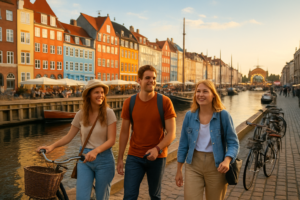
Denmark is one of Europe’s most appealing travel destinations, known for its colorful waterfronts, fairy-tale castles, Viking history, modern design, and relaxed Scandinavian charm. Whether you are planning a city break in Copenhagen, a cultural road trip across Zealand and Jutland, or a peaceful coastal escape, Denmark offers a rich mix of history, architecture, food, and natural beauty in a compact and easy-to-navigate country.
This guide highlights 10 must-see places in Denmark for travelers who want to experience the country’s most memorable attractions. You will also find useful Danish travel phrases, practical advice for using a translation app on your phone, tips for getting a good cell phone rate overseas, and simple ways to check the weather in Denmark before and during your trip. If you are traveling for study, business, immigration, or international paperwork, we will also explain how professional certified translation and interpreting services can help make your journey smoother.
10 Must-See Places in Denmark
-
Nyhavn, Copenhagen
Nyhavn is one of the most iconic places in Denmark and often the image travelers picture first. This 17th-century waterfront district is lined with brightly painted townhouses, historic wooden ships, lively restaurants, and cozy cafes. It is perfect for a canal-side stroll, boat tour, or evening meal while taking in the classic Copenhagen atmosphere. The area is especially beautiful at sunset, when the harbor glows with warm light and reflections shimmer across the water.
-
Tivoli Gardens, Copenhagen
Tivoli Gardens is one of the world’s oldest amusement parks and remains one of Denmark’s most beloved attractions. More than just rides, Tivoli combines gardens, live entertainment, seasonal decorations, elegant architecture, and a nostalgic old-world spirit. Families love the rides, couples enjoy the romantic lights, and culture lovers appreciate the concerts and performances. Visiting Tivoli in summer or during the Christmas season is especially magical.
-
The Little Mermaid, Copenhagen
Inspired by Hans Christian Andersen’s famous fairy tale, The Little Mermaid statue is small in size but huge in cultural significance. Sitting quietly on a rock by the waterfront, she has become one of Denmark’s most recognized landmarks. While the statue itself is modest, the surrounding harbor walk makes the visit enjoyable, and it pairs well with nearby sights such as Kastellet and the royal district.
-
Rosenborg Castle, Copenhagen
Rosenborg Castle offers a fascinating glimpse into Denmark’s royal history. Built in the early 17th century, this elegant Renaissance castle houses the Danish crown jewels, royal regalia, and beautifully preserved interiors. The surrounding King’s Garden is one of the oldest and most pleasant parks in central Copenhagen, making Rosenborg an ideal stop for travelers interested in history, architecture, and photography.
-
Kronborg Castle, Helsingør
Kronborg Castle, a UNESCO World Heritage Site, is famous worldwide as the setting of Shakespeare’s Hamlet. Located in Helsingør on the narrow strait between Denmark and Sweden, the fortress is dramatic, historic, and visually striking. Visitors can explore grand halls, underground casemates, and panoramic coastal views. It is one of the best day trips from Copenhagen and a must for anyone who enjoys literature, history, or castles.
-
Louisiana Museum of Modern Art, Humlebæk
Just north of Copenhagen, the Louisiana Museum of Modern Art is one of the finest art museums in Scandinavia. Its collection includes major international modern and contemporary artists, but the setting is equally impressive. The museum blends architecture, sculpture gardens, and sea views into a calm, inspiring experience. Even travelers who do not usually prioritize museums often find Louisiana unforgettable because of its balance of art, landscape, and design.
-
ARoS Aarhus Art Museum, Aarhus
ARoS is one of Denmark’s leading cultural attractions and a centerpiece of Aarhus, the country’s second-largest city. The museum is best known for its circular rooftop installation, Your Rainbow Panorama, which lets visitors walk through colored glass while enjoying sweeping views of the city. Inside, ARoS features impressive exhibitions ranging from classic to experimental. It is a vibrant stop for travelers who want to see Denmark’s creative and contemporary side.
-
Den Gamle By, Aarhus
Den Gamle By, or The Old Town, is an open-air museum that brings Danish urban history to life. Historic buildings from different periods have been relocated and reconstructed here, creating streets and neighborhoods that show how people lived in past centuries. Costumed interpreters, traditional shops, and authentic interiors make the experience immersive and educational. It is especially rewarding for families and visitors curious about everyday Danish life through time.
-
Legoland Billund, Billund
For families and playful travelers, Legoland Billund is one of the top attractions in Denmark. Located in the birthplace of LEGO, this park combines imaginative rides, themed lands, miniature world displays, and interactive experiences. Children love the colorful energy, while adults appreciate the creativity and craftsmanship behind the models. If you are traveling with kids, Billund can easily become the highlight of your Denmark itinerary.
-
Møns Klint, Zealand
Møns Klint offers a completely different side of Denmark, one defined by dramatic natural beauty. These striking white chalk cliffs rise above the Baltic Sea and create one of the country’s most breathtaking landscapes. Hiking trails through beech forests, scenic viewpoints, and fossil-hunting opportunities along the shore make this destination ideal for nature lovers. It is a peaceful and memorable escape from the cities, especially in spring and summer.
Useful Travel Phrases in Denmark
The main local language in Denmark is Danish. Many Danes speak excellent English, especially in cities and tourist areas, but learning a few basic phrases is still respectful and helpful. Below are useful travel phrases in Danish with English meanings and simple pronunciation guidance.
- Hello — Hej — Pronunciation: “hi”
- Thank you — Tak — Pronunciation: “tack”
- Sorry — Undskyld — Pronunciation: “OON-skool”
- How much is it? — Hvor meget koster det? — Pronunciation: “vor MY-eth KOS-ter deh?”
- Where is the restroom? — Hvor er toilettet? — Pronunciation: “vor air twah-LET-et?”
- Bye — Farvel — Pronunciation: “far-VEL”
- Please — Vær sød — Pronunciation: “vair surth”
- Yes — Ja — Pronunciation: “ya”
- No — Nej — Pronunciation: “nye”
- Do you speak English? — Taler du engelsk? — Pronunciation: “TA-ler doo ENG-elsk?”
- I don’t understand — Jeg forstår ikke — Pronunciation: “yai for-STOR IK-keh”
- Can you help me? — Kan du hjælpe mig? — Pronunciation: “kan doo YEL-peh my?”
- Where is the train station? — Hvor er togstationen? — Pronunciation: “vor air TOH-sta-see-O-nen?”
- I would like this — Jeg vil gerne have denne — Pronunciation: “yai vil GER-neh hay DEN-neh”
- Good morning — Godmorgen — Pronunciation: “GO-morn”
Even if your pronunciation is not perfect, using a few polite words in Danish can make interactions warmer and more enjoyable.
How to Use a Translation App on Your Phone
A phone translation app can be extremely useful in Denmark, especially for reading menus, signs, transportation instructions, museum labels, and local notices. While English is widely spoken, a translation app adds convenience and confidence when you are outside major tourist settings.
1. Download your app before departure
Install a trusted translation app before leaving home. Popular options include Google Translate, Microsoft Translator, and Apple’s built-in translation tools on supported devices. Set up the app while you still have a stable internet connection.
2. Download offline language packs
Before your trip, download Danish and English offline packs. This is important in case you lose signal, want to save mobile data, or are traveling in rural areas. Offline translation may be simpler than live online translation, but it is still very helpful for basic communication.
3. Use voice translation for quick conversations
If you need help at a station, hotel, shop, or clinic, open the voice feature and speak clearly in short sentences. Let the app translate into Danish, then show or play the result. Keep your wording simple for the most accurate translation.
4. Try conversation mode
Many translation apps offer a conversation mode that allows two people to speak back and forth in different languages. This can be useful when asking for directions, discussing dietary restrictions, or clarifying travel arrangements.
5. Use the camera for signs and menus
The camera function is one of the most practical travel tools. Point your phone at a menu, train notice, museum sign, or product label to get an instant translation. This is especially useful for understanding ingredients, schedules, and public instructions.
6. Save common phrases
Most apps let you save favorite translations. Store key phrases such as “Where is the restroom?” “I have a reservation,” “I need a doctor,” or “Do you accept cards?” so you can access them quickly.
7. Double-check important information
For casual travel situations, machine translation is usually enough. However, for legal, medical, academic, or immigration matters, do not rely on an app alone. Important documents and sensitive conversations require professional human translation or interpreting.
How to Get a Good Cell Phone Rate Overseas
Staying connected in Denmark is usually easy, but international phone costs can become expensive if you do not plan ahead. Here are smart ways to get a good cell phone rate overseas.
Use an eSIM if your phone supports it
An eSIM is often the easiest option for travelers. You can purchase a data plan for Denmark or Europe before arrival, activate it digitally, and avoid the hassle of finding a physical SIM card. This is ideal for short stays and frequent travelers.
Compare local SIM and eSIM options
If your phone is unlocked, compare local prepaid SIM cards with travel eSIM plans. Depending on your needs, a local option may offer more data for less money. If you are visiting multiple European countries, look for a regional plan rather than a Denmark-only plan.
Check your home carrier’s international plan
Some mobile providers offer daily or monthly international passes. These can be convenient if you want to keep your regular number active for calls and texts. Read the details carefully, since convenience sometimes comes with higher costs.
Use Wi-Fi whenever possible
Hotels, airports, cafes, and many public places in Denmark offer Wi-Fi. Connect when available for messaging, maps, and app updates. For extra safety, avoid entering sensitive financial information on unsecured public networks unless you use a VPN.
Turn off data roaming if needed
If you are unsure about your international rates, disable data roaming in your phone settings until your travel plan is active. This simple step can protect you from unexpected charges.
Download essentials in advance
Save maps, translation packs, train tickets, hotel confirmations, and travel guides before you leave your accommodation. That way, you can navigate even with limited connectivity.
How to Check the Weather in Denmark
Denmark’s weather can change quickly, especially near the coast. Wind, light rain, cool mornings, and shifting skies are common, so it is wise to check conditions regularly.
Use reliable weather apps
Popular apps such as AccuWeather, The Weather Channel, Apple Weather, and Weather Underground can provide current conditions, hourly forecasts, and precipitation alerts for Danish cities and regions.
Check the Danish Meteorological Institute
For local accuracy, consult the Danish Meteorological Institute, often referred to as DMI. It is a trusted source for weather forecasts in Denmark and useful for checking wind, rain, and coastal conditions.
Look at hourly forecasts, not just daily highs
A day in Denmark may begin sunny, turn windy by afternoon, and end with light rain. Hourly forecasts help you plan museum visits, walking tours, cycling, or coastal excursions more effectively.
Learn a few weather-related local terms
- Vejr — weather
- Regn — rain
- Vind — wind
- Sol — sun
- Koldt — cold
- Skyet — cloudy
Recognizing these simple words can help when reading local forecasts, station screens, or weather updates online.
Pack layers and a light waterproof jacket
No matter the season, layering is the key to comfort in Denmark. Comfortable walking shoes, a sweater, and a compact rain jacket are practical choices for most travelers.
Travel Smarter with Professional Translation and Interpreting Support
Travel to Denmark can be simple and enjoyable, but some trips involve more than sightseeing. You may need certified translations for birth certificates, marriage certificates, academic transcripts, medical records, legal paperwork, visa applications, or business documents. In those situations, accuracy matters far more than convenience.
latranslation.com provides certified translation and interpreting services for individuals, families, students, professionals, and companies who need reliable language support. Whether you are preparing travel-related documents, applying for visas, handling international business, or coordinating important communication across languages, professional assistance can save time and prevent costly misunderstandings.
If your Denmark travel plans involve official paperwork or multilingual communication, latranslation.com can help with certified translations and professional interpreting tailored to your needs. Before you depart, make sure your documents are clear, accurate, and ready for international use so you can focus on enjoying everything Denmark has to offer.