
Mexican Birth Certificate Translation Apostille in 2026: What You Need to Know
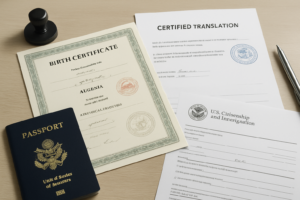
If you are preparing immigration, citizenship, marriage, visa, education, or probate paperwork, an Mexican birth certificate translation apostille may be one of the first document issues you need to solve. In 2026, applicants are still regularly confused about whether they need a certified translation, an apostille, consular legalization, or all three. The answer depends on where the document will be used and which authority is reviewing it.
For U.S. immigration filings, including many applications submitted to USCIS, the core requirement is usually a complete English translation accompanied by a translator certification. For use in foreign jurisdictions outside the United States, the receiving authority may also require authentication, apostille, or consular legalization of the original Mexican civil record or its translation. Because rules vary by destination country and agency, understanding the difference between these steps is essential.
This guide explains how Mexican birth certificate translation apostille requests typically work in 2026, what USCIS usually expects, what overseas authorities often require, and how to reduce the risk of rejection, delay, or requests for additional evidence.
What Is an mexican Birth Certificate Translation Apostille?
The phrase Mexican birth certificate translation apostille is often used as a catch-all term, but it actually refers to multiple legal-document services that may or may not all apply to your case:
- Birth certificate retrieval or review: confirming you have the correct Mexican civil record format.
- Certified translation: translating the document into English or another target language with a signed certification of accuracy.
- Notarization: in some cases, the translator’s signature or affidavit may be notarized if requested by the receiving authority.
- Apostille or legalization: authenticating the document for international use, depending on the destination country’s rules.
Many applicants assume apostille is always required. That is not true. For example, USCIS generally focuses on whether a foreign-language document is accompanied by a full English translation and translator certification. By contrast, a civil registry office, foreign ministry, consulate, or court overseas may require additional authentication beyond translation.
Why Mexican Birth Certificates Need Special Attention
Mexican civil documents can present practical challenges during immigration and legal processing. Birth certificates may exist in different formats, may contain handwritten or abbreviated entries, and may include Arabic and French. Names can also appear in multiple spellings across passports, national ID cards, family records, and prior translations.
These issues matter because even a small inconsistency in a birth record can trigger questions from immigration officers, consulates, universities, or foreign civil registries. A professional Mexican birth certificate translation apostille service should do more than translate words literally. It should also preserve the document structure, accurately render seals and annotations, and flag any legibility or name-variation issues before submission.
What USCIS Usually Requires in 2026
For most filings submitted to U.S. Citizenship and Immigration Services, the key requirement is straightforward: any document containing foreign language must be submitted with a full English translation and a certification from the translator stating that the translation is complete and accurate and that the translator is competent to translate from the foreign language into English.
In practical terms, that means USCIS commonly expects:
- A clear copy of the original Mexican birth certificate.
- A complete English translation of all visible text, stamps, seals, and marginal notes.
- A signed translator certification.
USCIS does not typically require an apostille merely because the document comes from Mexico. However, applicants should always verify the latest instructions for the exact form type, the Department of State reciprocity guidance, and any case-specific request for evidence.
If you are filing for a green card, family petition, naturalization-related matter, or derivative status, the quality of the translation still matters greatly. Incomplete translations, omitted annotations, or inconsistent spellings can lead to delays or follow-up notices. That is why many applicants search specifically for Mexican birth certificate translation apostille services even when apostille itself may not be necessary for USCIS.
USCIS Translation Best Practices
- Translate every element on the document, including side notes, stamps, and registry references.
- Match names and dates consistently with the passport and immigration forms.
- Use a professional certification statement signed by the translator.
- Do not submit a partial or summary translation.
- Review the final package before filing to ensure no page is missing.
When Overseas Authorities May Require Apostille or Legalization
If your Mexican birth certificate will be used outside the United States, requirements may be very different. Authorities in another country may ask for one or more of the following:
- The original or a recent official copy of the Algerian birth certificate.
- A sworn, certified, or court-approved translation into the destination language.
- Notarization of the translator’s declaration.
- An apostille, if accepted in the destination process.
- Consular or embassy legalization where apostille is not the correct route.
This is where many applicants run into trouble. They hear the term apostille and assume it is universally accepted. In reality, international document authentication depends on the legal relationship between the issuing country and the destination country, as well as the specific procedure of the receiving institution. A marriage registrar in Europe, a university in the Gulf, and a court in Canada may each ask for something different.
For that reason, a reliable Mexican birth certificate translation apostille provider should first ask: Which country is the document going to, and which authority will receive it? Without that information, it is impossible to confirm the correct authentication path.
Translation vs. Apostille vs. Legalization: The Key Differences
Understanding these terms can save time and money.
Certified Translation
A certified translation is a translated version of the birth certificate accompanied by a signed statement attesting that the translation is accurate and complete. This is commonly what USCIS needs.
Apostille
An apostille is a form of authentication used for international documents in qualifying cross-border situations. It does not translate the document and does not confirm the truth of the birth details. It only authenticates the signature, seal, or official capacity on the public document.
Legalization
Legalization is a different chain of authentication that may involve government ministries and the destination country’s consulate or embassy. In some cases, this is the route used instead of apostille.
So when someone asks for an Mexican birth certificate translation apostille, the real question is often: Do I need a certified translation only, or do I also need international authentication for the country where I will use the document?
Common Use Cases in 2026
Demand for Mexican birth certificate translation apostille services remains high in several legal and administrative situations:
- USCIS family-based immigration: proving identity and parent-child relationship.
- Consular immigrant visa processing: submitting civil documents through a U.S. embassy or consulate stage.
- Marriage abroad: registering a foreign marriage or obtaining a marriage license.
- Dual citizenship or nationality claims: proving lineage and civil status.
- Foreign university admissions: identity verification and student records matching.
- Inheritance and probate matters: proving family relationship in court or before a notary.
- Child relocation or parental consent cases: documenting legal parentage.
Each use case may involve different formatting expectations, turnaround urgency, and authentication steps.
How to Prepare Your Mexican Birth Certificate for Translation and Authentication
Before ordering service, gather the best available version of the document and confirm the end-use requirements. A little preparation can prevent rework.
Checklist Before You Order
- Obtain a clear, complete scan or official copy of the birth certificate.
- Check whether the certificate includes marginal notes or later amendments.
- Confirm the destination country and receiving agency.
- Ask whether they require English translation, another language, apostille, or legalization.
- Compare the spelling of names with the passport and application forms.
- Identify any deadlines for filing, interview, enrollment, or registration.
If your document has faded text, handwritten notes, or inconsistent dates, mention that before translation begins. A professional translator can often preserve unclear text using standard notation, but it is better to address legibility concerns in advance.
How Long Does Mexican Birth Certificate Translation Apostille Take?
Translation takes one day, and apostille takes one day. If in a rush, you can have them on the same day with a rush fee.
If timing is critical, do not wait until your USCIS filing deadline or overseas appointment is near. Start early, especially if the receiving authority requires the document to be recently issued or authenticated within a limited validity period.
Common Mistakes That Cause Rejection or Delay
Applicants often lose time because of avoidable errors. The most common problems include:
- Submitting an untranslated Mexican birth certificate to USCIS.
- Using a translation that omits stamps, seals, or annotations.
- Ordering apostille when the actual requirement is legalization, or vice versa.
- Providing an outdated or unofficial extract when the authority wants a recent civil record.
- Ignoring spelling discrepancies between the birth certificate and passport.
- Assuming one version of the translation will work for every country and agency.
A careful Mexican birth certificate translation apostille process should be tailored to the exact legal use, not treated as a generic document service.
How to Choose the Right Service Provider
Because this is a high-stakes legal document, quality matters more than bargain pricing. Look for a provider that understands immigration and cross-border document compliance, not just basic translation.
What to Look For
- Experience with Mexican civil documents in Spanish.
- Familiarity with USCIS translation standards.
- Ability to explain whether apostille or legalization is appropriate for your destination country.
- Clear turnaround times and transparent pricing.
- Professional formatting that mirrors the original document structure.
- Responsive support for urgent or complex cases.
If a provider promises that apostille is always required, or cannot explain the difference between certified translation and legalization, that is a warning sign.
Final Thoughts on Mexican Birth Certificate Translation Apostille in 2026
In 2026, the most important thing to remember is that Mexican birth certificate translation apostille is not a one-size-fits-all service. For USCIS, you will usually need a complete English translation with proper certification. For overseas use, you may also need notarization, apostille, or consular legalization depending on the destination country and the authority involved.
The safest approach is to confirm the end-use requirements first, then work with a professional service that can prepare the translation accurately and guide you through any authentication steps. When your immigration status, marriage registration, citizenship claim, or legal rights depend on one civil document, precision is not optional.
If you are preparing an application now, getting the correct Mexican birth certificate translation apostille support early can help you avoid rejection, prevent delays, and move your case forward with confidence.