
Understanding Vietnam’s Apostille Rules Effective September 11, 2026
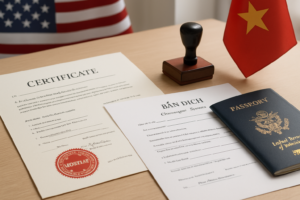
If you need to use U.S. documents in Vietnam for immigration, marriage registration, work permits, business filings, school enrollment, or civil status matters, the rules are changing in a way that could save time for some applicants and create confusion for others. Beginning September 11, 2026, Vietnam’s apostille-related procedures are expected to affect how foreign public documents are accepted, reviewed, translated, and legalized for official use inside the country.
For many U.S. citizens, expats, employers, attorneys, and families, the practical question is not simply whether a document needs an apostille. The real issue is whether the document also needs a Vietnam apostille certified translation, whether that translation must be notarized, and whether the apostille should be obtained before or after translation. Getting the sequence wrong can lead to delays, rejected filings, missed deadlines, and duplicate fees.
This article explains the likely compliance steps for U.S. documents intended for Vietnam after September 11, 2026, with a focus on high-intent legal and immigration use cases. While specific agency practices can vary by province, consulate, and receiving authority, the framework below will help you understand what is commonly required and how to prepare your documents correctly the first time.
What Is an Apostille and Why Does It Matter for Vietnam?
An apostille is a certificate issued by a competent authority that authenticates the origin of a public document for use in another country that recognizes apostilles under the Hague Apostille Convention. In the United States, apostilles are typically issued by the secretary of state for state documents or by the U.S. Department of State for certain federal documents.
For example, if you have a birth certificate issued in California, a marriage certificate issued in Texas, a single status affidavit notarized in Florida, or an FBI background check issued at the federal level, the apostille confirms that the signature, seal, or issuing authority on that document is genuine. It does not validate the content of the document itself. Instead, it helps the receiving authority in Vietnam trust that the document is officially issued or properly notarized.
However, an apostille alone is often not enough. Vietnamese authorities generally need to read and process the document in Vietnamese, and that is where a Vietnam apostille certified translation becomes essential.
Why Certified Translation Is Often Required Even After Apostille
Apostilles authenticate documents, but they do not translate them. If your U.S. document is in English, the receiving office in Vietnam may still require a complete Vietnamese translation before it can be accepted for legal, immigration, labor, or civil use. In many cases, the apostille page itself must also be translated, not just the underlying document.
This is one of the most common mistakes applicants make. They obtain the apostille correctly, then submit only a translation of the original document while omitting the apostille certificate attached to it. If the Vietnamese authority wants the entire document package translated, the file may be rejected or placed on hold.
A proper Vietnam apostille certified translation usually means a translation prepared for official use, with a signed certification from the translator or translation provider affirming that the translation is complete and accurate. Depending on the receiving office, the translation may also need notarization or local certification in Vietnam.
When You Need a Vietnam Apostille Certified Translation for U.S. Documents
You will commonly need a Vietnam apostille certified translation when presenting U.S. documents for:
- Marriage registration in Vietnam
- Birth registration or family record updates
- Visa, residency, or immigration-related filings
- Work permits and labor compliance
- Criminal background check submissions
- University admissions or credential verification
- Business licensing and corporate registration
- Power of attorney use in Vietnam
- Court, inheritance, or probate matters
- Adoption and family law proceedings
Each category may involve different document types, but the pattern is similar: first confirm whether the document is a public record or a notarized private document, then determine whether apostille is required, and finally confirm the translation and notarization standards expected by the Vietnamese authority receiving it.
Common U.S. Documents That May Need Apostille and Translation
Civil Documents
- Birth certificates
- Marriage certificates
- Divorce decrees
- Death certificates
These records are usually issued by a state or county authority. For use in Vietnam, they often require a state-level apostille and a Vietnam apostille certified translation into Vietnamese.
Identity and Status Documents
- Single status affidavits
- Name change orders
- Affidavits of support
- Copies of passports or IDs if officially notarized
These may require notarization first, then apostille, then translation.
Background Checks
- FBI Identity History Summary
- State police background checks
Federal background checks usually need a federal apostille, while state checks may need a state apostille. For work permits or residency matters, a Vietnam apostille certified translation is frequently required as part of the submission package.
Academic and Professional Documents
- Diplomas
- Transcripts
- Teaching certificates
- Professional licenses
Whether these can be apostilled directly depends on how they were issued. Some documents require notarized copies before apostille. Translation requirements should be confirmed in advance with the employer, school, or licensing authority in Vietnam.
Do You Need Notarization Before Apostille?
Sometimes yes, sometimes no. The answer depends on the type of document.
Documents That Usually Do Not Need Prior Notarization
Official vital records such as certified birth certificates, marriage certificates, and court-issued divorce judgments are generally already public documents. These can often go directly to the appropriate apostille authority without separate notarization.
Documents That Often Do Need Prior Notarization
Private documents such as affidavits, consent letters, powers of attorney, authorization letters, and copies of IDs often must be notarized first. The notary’s signature then becomes the basis for the apostille.
This distinction matters because if you apostille the wrong version of a document, the receiving office in Vietnam may reject it. For example, an ordinary photocopy of a diploma usually cannot be apostilled unless it has first been turned into a notarized copy or accompanied by a notarized affidavit, depending on state rules.
What Is the Correct Order: Translation, Notarization, or Apostille?
For most U.S. documents intended for Vietnam, the safest sequence is:
- Obtain the correct original or certified copy of the U.S. document.
- If the document is private, notarize it if required.
- Obtain the apostille from the proper U.S. authority.
- Complete a full Vietnam apostille certified translation of the document and apostille certificate.
- Obtain any additional notarization or local certification of the translation if required by the Vietnamese receiving office.
This order is important because the apostille is attached to the original document or notarized document. If you translate first and then apostille the translation, you may end up authenticating the translation rather than the underlying U.S. document, which may not satisfy the authority in Vietnam.
Will Vietnam Accept English Documents Without Translation?
In some limited business contexts, an English-language document may be reviewed informally, but for official filing purposes, applicants should not assume English alone will be accepted. Government offices, civil registries, labor departments, courts, and local administrative agencies in Vietnam often require Vietnamese-language documentation for the official record.
That is why a Vietnam apostille certified translation is not just a helpful extra. In many cases, it is the part that makes the apostilled document usable in practice.
Key Use Cases After September 11, 2026
Marriage in Vietnam
U.S. citizens marrying in Vietnam often need a birth certificate, divorce decree if previously married, and a single status or eligibility-to-marry document. These documents may require notarization, apostille, and certified translation into Vietnamese. Local civil status offices may also impose document freshness requirements, so timing matters.
Work Permit Applications
Foreign employees may need apostilled criminal background checks, degrees, licenses, and employment verification documents. A complete Vietnam apostille certified translation package can help avoid delays with labor authorities and sponsoring employers.
Business Registration and Corporate Use
If a U.S. company or investor is using articles of incorporation, certificates of good standing, board resolutions, or powers of attorney in Vietnam, the documents may require notarization, apostille, and translation before they can be used for licensing or transactional purposes.
Immigration and Residency
Residency-related filings may involve birth certificates, marriage certificates, police clearances, and support affidavits. Because immigration cases are often deadline-driven, applicants should confirm whether the receiving agency wants original apostilled documents, certified copies, or translated and locally certified versions.
How to Avoid Rejection of Your Vietnam Document Package
- Confirm the exact receiving authority in Vietnam before ordering services.
- Use the correct apostille authority for the document type.
- Do not assume all U.S. documents can be apostilled in the same way.
- Translate both the document and the apostille when required.
- Check whether the translation itself needs notarization or local certification.
- Verify name spellings across passports, certificates, and supporting records.
- Watch for expiration windows on background checks and affidavits.
- Use a professional provider familiar with Vietnam apostille certified translation workflows.
Should You Use a Professional Apostille and Translation Service?
If your case involves immigration, marriage, employment, or legal compliance, professional help is often worth the cost. The reason is simple: apostille processing is jurisdiction-specific, and translation requirements are use-case-specific. A provider experienced with Vietnam apostille certified translation can identify whether your document needs notarization first, whether state or federal apostille applies, and whether the Vietnamese receiving office is likely to require certified or notarized translation formatting.
Professional support can be especially valuable if you are overseas, facing a deadline, or handling multiple documents from different states. Instead of guessing, you can submit a coordinated package that is more likely to be accepted the first time.
Final Thoughts on Vietnam Apostille Rules Effective September 11, 2026
The new Vietnam apostille environment effective September 11, 2026 will likely make document recognition more streamlined in principle, but only for applicants who understand the difference between authentication and usability. An apostille confirms the legitimacy of a U.S. document. A Vietnam apostille certified translation makes that document readable and actionable for authorities in Vietnam. Notarization may still be necessary depending on whether the document is public or private.
If you are preparing U.S. documents for Vietnam, the safest approach is to verify the document type, identify the proper apostille authority, complete the translation after apostille, and confirm whether the translated package needs additional notarization or local certification. Taking these steps in the correct order can save weeks of delay and reduce the risk of rejection.
For high-stakes immigration and legal matters, accuracy matters more than speed alone. If you need help with a Vietnam apostille certified translation, document review, or apostille workflow for U.S. records, working with an experienced legal document service can help you move forward with confidence.