
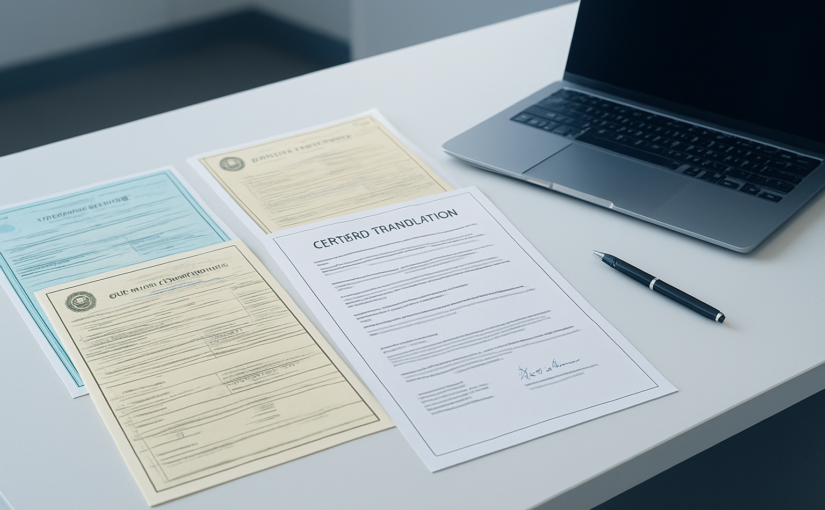
Certified Armenian Translation: Why Dialect Matters for Official Use
If you need a certified Armenian translation for USCIS, a court case, or a vital records submission, one of the first questions that may come up is whether the document is in Eastern Armenian or Western Armenian. This distinction matters more than many people realize. While both are forms of Armenian, they differ in spelling, vocabulary, pronunciation, and at times phrasing conventions. For official submissions, those differences can affect clarity, consistency, and confidence in the translated record.
When agencies review translated documents, they are not usually evaluating literary style or dialect preference. They want a complete, accurate, and certified English translation of the original document. However, if the translator does not correctly identify the Armenian variant, mistakes can occur in names, locations, legal terminology, or historical record wording. That is why choosing the right provider for a certified Armenian translation is essential, especially when the document will be used for immigration, litigation, birth and marriage registration, or other high-stakes purposes.
In this guide, we explain the difference between Eastern and Western Armenian, how that distinction affects acceptance by USCIS and courts, and what to look for when ordering a certified translation of Armenian documents.
What Is the Difference Between Eastern and Western Armenian?
Armenian has two major standardized forms: Eastern Armenian and Western Armenian. Eastern Armenian is widely used in Armenia and by many communities from the former Soviet sphere. Western Armenian is commonly associated with diaspora communities, especially those with roots in the historical Armenian communities of the Ottoman Empire, including families now based in Lebanon, Syria, France, and the United States.
These are not simply accent differences. A translator working on a certified Armenian translation must recognize that the two variants can differ in:
- Orthography: spelling conventions may vary significantly
- Vocabulary: some everyday and formal words are different
- Grammar and syntax: sentence structure can shift in subtle ways
- Personal and place names: transliteration patterns may differ
- Historical record language: older church, civil, or diaspora documents may use variant-specific terminology
For official translations, the key issue is not whether one form is better than the other. The issue is whether the translator can accurately interpret the exact source document as written.
Does USCIS Care Whether the Armenian Document Is Eastern or Western?
USCIS does not generally require applicants to label a document as Eastern Armenian or Western Armenian. What USCIS requires is a full English translation accompanied by a certification from the translator stating that the translation is complete and accurate and that the translator is competent to translate from Armenian into English.
Even so, dialect competence absolutely matters behind the scenes. If your birth certificate, marriage certificate, family register, police record, or supporting affidavit is in a form of Armenian the translator does not fully understand, the final translation may contain errors. Those errors can lead to delays, Requests for Evidence, or confusion about identity and eligibility.
For USCIS filings, a reliable certified Armenian translation should do the following:
- Translate every visible element on the document unless clearly unnecessary
- Preserve names, dates, stamps, seals, and annotations accurately
- Use consistent transliteration throughout the application package
- Include a proper certification statement
- Reflect the source wording without adding interpretation
If your records come from Armenia, they are often in Eastern Armenian or bilingual formats. If they come from diaspora institutions, churches, community organizations, or older family archives, Western Armenian may be more likely. A qualified provider should identify that immediately before beginning the translation.
How Courts Evaluate Certified Armenian Translation
Court submissions require precision. Whether the translation is being used in family law, probate, civil litigation, criminal defense, asylum support, or evidentiary filings, the court expects the English version to faithfully represent the original text. In this setting, an inaccurate translation can affect credibility, admissibility, or case strategy.
A professional certified Armenian translation for court use should be prepared with special attention to legal terminology, formatting, and completeness. Courts may see Armenian documents such as:
- Birth, marriage, and death certificates
- Divorce decrees
- Power of attorney documents
- Police reports or court records from abroad
- School and identity records
- Church certificates and family registry extracts
When Eastern and Western Armenian distinctions are overlooked, legal meaning can be distorted. This is especially true in older records, handwritten entries, and community-issued documents. A translator must understand not only modern Armenian but also context, formal phrasing, and nonstandard archival language. For courts, the safest approach is to work with a service experienced in legal-grade Armenian translation rather than a general bilingual speaker.
Vital Records: Birth, Marriage, Death, and Family Documents
Vital records are among the most common reasons people request a certified Armenian translation. These documents are often required for immigration petitions, passport applications, dual citizenship matters, marriage registration, inheritance proceedings, and genealogical proof.
Vital records may come from several sources, including Armenian civil registries, consulates, churches, municipalities, and diaspora institutions. Depending on the source and date, the document may be typed, handwritten, stamped, partially bilingual, or written in an older administrative style.
For these records, Eastern versus Western Armenian can affect:
- Name rendering: family names and patronymics may appear differently
- Place names: historical or diaspora references may need careful treatment
- Status terminology: terms for marriage, legitimacy, widowhood, or registration type may vary
- Religious and civil labels: church-issued records can use variant-specific wording
An accurate certified Armenian translation should preserve the source meaning while presenting the English text clearly for the receiving authority. If a stamp is illegible, if handwriting is partially unreadable, or if a seal overlaps text, the translator should indicate that appropriately rather than guessing.
Will Eastern or Western Armenian Affect Acceptance?
In most cases, acceptance depends on accuracy and certification, not on whether the source is Eastern or Western Armenian. USCIS, courts, and most government offices are not rejecting documents simply because they originate in one Armenian variant instead of the other. What matters is whether the translation is complete, competent, and properly certified.
That said, the Armenian variant can indirectly affect acceptance because it affects the risk of error. A poor translation may create problems such as:
- Mismatched spellings of names across documents
- Incorrect interpretation of marital status or family relationships
- Confusion about issuing authority or registration office
- Inconsistent dates or locations
- Omission of marginal notes, seals, or handwritten amendments
So the practical answer is this: Eastern or Western Armenian does not usually change the legal standard for submission, but it absolutely can change the quality of the translation you receive. That is why the provider’s language expertise matters so much.
What a Proper Certified Armenian Translation Should Include
If you are ordering a certified Armenian translation for official use, make sure the final package includes more than just the translated text. A professional submission should typically contain:
- A complete English translation of the Armenian document
- A certification statement affirming the translation is accurate and complete
- The translator’s or company’s name and contact details, if required
- The date of certification
- Consistent formatting that reflects the structure of the original document
Some institutions may also request notarization, though notarization is not the same as certification. For USCIS specifically, certification is generally the core requirement. For courts or state agencies, requirements may vary by jurisdiction, so it is wise to confirm before ordering.
How to Choose the Right Provider
Not every translation service is equally equipped to handle Armenian records. To reduce risk, look for a provider that can demonstrate experience with certified Armenian translation for official submissions. Ask practical questions before placing the order.
Questions to Ask
- Do you translate both Eastern Armenian and Western Armenian?
- Have you handled USCIS, court, or vital records submissions before?
- Can you translate handwritten or older Armenian documents?
- Will the translation include a certification statement?
- How do you handle names and transliteration consistency across multiple documents?
- Can you note seals, stamps, signatures, and illegible text appropriately?
A strong provider should answer these questions clearly and confidently. If the service seems unfamiliar with dialect distinctions or official formatting standards, that is a warning sign.
Common Mistakes to Avoid
When people need a certified Armenian translation quickly, they may choose the cheapest or fastest option without checking qualifications. That can create avoidable issues. Common mistakes include:
- Using a non-specialist translator: conversational fluency is not enough for legal or civil records
- Ignoring dialect differences: Eastern and Western Armenian require accurate source comprehension
- Submitting incomplete translations: omitted stamps, notes, or side text can matter
- Inconsistent spellings: names should align across passports, certificates, and applications
- Assuming notarization replaces certification: these are separate concepts
For official matters, accuracy is far more important than speed alone. A careful translation done correctly the first time can save time, money, and stress later.
When You May Need Multiple Armenian Documents Translated Together
Many clients do not need just one document. Immigration and legal matters often involve document sets, such as a birth certificate, marriage certificate, passport page, divorce decree, and police clearance. In those cases, it is best to have the same qualified provider handle the entire package. This improves consistency in transliteration, formatting, and terminology.
For example, if a parent’s surname appears slightly differently across Eastern Armenian civil records and Western Armenian church records, the translator should recognize the relationship and maintain a coherent English rendering. A provider experienced in certified Armenian translation can also flag potential inconsistencies before they become filing problems.
Final Thoughts: Accuracy First, Dialect Awareness Always
If you are preparing documents for immigration, court, or civil registration, a high-quality certified Armenian translation is not just a formality. It is a critical part of making sure your records are understood and accepted. While USCIS and most authorities care primarily about completeness and certification, the difference between Eastern and Western Armenian still matters because it affects the translator’s ability to interpret the source correctly.
The safest approach is to choose a provider with proven experience in Armenian official documents, including both major variants of the language. That way, whether your record comes from Armenia, a diaspora church, an overseas consulate, or a family archive, you can submit it with confidence.
When accuracy, consistency, and compliance matter, investing in the right certified Armenian translation service can make the entire process smoother from the start.