
Certified Translation for Immigrant Visa Documents in September 2026
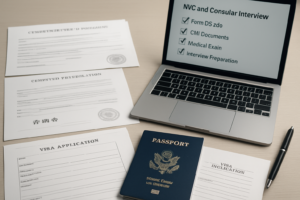
If you are applying for a family-based or employment-based immigrant visa, document preparation can determine whether your case moves smoothly or stalls at the National Visa Center (NVC) or the U.S. consulate. One of the most common issues applicants face is incomplete or noncompliant translation paperwork. In September 2026, the need for certified translation for immigrant visa documents remains a critical part of visa preparation, especially for applicants submitting civil records issued outside the United States.
For many families, the challenge is not simply translating a birth certificate or marriage certificate into English. The real issue is making sure the translation meets U.S. immigration expectations, matches the original record accurately, and is ready for both NVC document review and the consular interview. A poor translation can trigger delays, checklist notices, document rejection, or requests to resubmit records.
This guide explains what applicants typically need, which documents usually require translation, what “certified” means in this context, and how to choose a reliable provider for certified translation for immigrant visa documents.
Why Certified Translation Matters for Immigrant Visa Cases
U.S. immigration authorities require that documents in a foreign language be accompanied by a full English translation and a certification from the translator stating that the translation is complete and accurate and that the translator is competent to translate. For immigrant visa processing, this requirement often comes into play during NVC submission and again at the consular interview stage.
The purpose is straightforward: officers must be able to review the contents of your civil and legal records without ambiguity. If a translation is incomplete, if names do not match passport spellings, or if important annotations are omitted, your case may face unnecessary scrutiny.
Applicants often assume that a friend, relative, or bilingual acquaintance can translate everything informally. While some jurisdictions may not require notarization, the translation still needs proper certification and professional-level accuracy. When the stakes include visa approval, permanent relocation, and family reunification, using a professional service for certified translation for immigrant visa documents is usually the safer option.
What the NVC Usually Expects in 2026
The NVC reviews uploaded civil documents before scheduling many immigrant visa interviews. Although procedures can evolve, the core expectation remains the same: if a required document is not in English, you should provide a complete English translation with the proper certification unless the specific post accepts documents in another language under its local rules.
In practice, applicants should verify document and translation expectations in three places:
- The U.S. Department of State reciprocity schedule for the country that issued the document
- NVC submission instructions for immigrant visa applicants
- The interview instructions issued by the specific U.S. embassy or consulate
Even when a consulate is familiar with local-language documents, English translations are often still essential for centralized processing or file review. That is why certified translation for immigrant visa documents should be treated as a standard preparation step, not an afterthought.
Documents That Commonly Require Certified Translation
Most immigrant visa applicants need to submit at least several civil records. Any of these may require translation if issued in a language other than English:
- Birth certificates
- Marriage certificates
- Divorce decrees
- Death certificates
- Police certificates
- Adoption records
- Court and prison records
- Military records
- Name change documents
- Household registries or family books
- Custody documents for accompanying children
- Passport biographic page, if requested in context
Some cases also involve supporting evidence such as employment letters, prior immigration records, or affidavits. While not every supporting document requires translation in every scenario, anything material to the visa decision should be reviewed carefully. A qualified provider of certified translation for immigrant visa documents can help identify whether a document should be translated in full.
What “Certified Translation” Means for U.S. Immigration
For immigrant visa purposes, a certified translation generally includes two components: the translated document itself and a signed certification statement from the translator or translation company. The certification usually confirms that:
- The translation is complete and accurate
- The translator is competent to translate from the source language into English
This is different from a casual translation and may also differ from notarization, apostille, or sworn translation requirements used in other countries. Applicants often confuse these terms. For U.S. immigration, the key issue is not whether the translation carries a foreign court stamp, but whether it satisfies the immigration requirement for accuracy and certification.
That said, local legal systems sometimes issue records with special seals, side notes, or handwritten annotations. A professional translator should reproduce all material information, including stamps, marginal notes, amendments, and signatures where relevant. Omitting these details is one of the most common reasons a translation appears incomplete.
Common Mistakes That Cause Delays
Many NVC and interview delays tied to translations are avoidable. The following problems appear frequently in immigrant visa cases:
1. Partial translation instead of full translation
Applicants sometimes translate only the main text and leave out seals, remarks, registration notes, or reverse-side entries. Immigration reviewers may treat the document as incomplete.
2. Name mismatches
If the translated name spelling does not align with the passport, petition, or DS-260, the officer may question whether the document belongs to the applicant. Consistency matters.
3. Missing certification statement
A translation without a proper certificate may be rejected even if the English text itself is accurate.
4. Low-quality scans
If the original document is blurry, cut off, or unreadable, even the best translation cannot solve the problem. The upload and the translation both need to be clear.
5. Using machine translation without review
Automated tools can mistranslate legal terms, dates, and place names. Immigration documents require human review and quality control.
6. Waiting until the last minute
Applicants often realize they need certified translation for immigrant visa documents only after receiving a checklist or interview notice. Rush orders are possible, but planning ahead reduces stress and error risk.
How to Prepare Documents for Translation
Before ordering translation services, organize your file carefully. Good preparation can improve accuracy and speed.
- Collect the final version of each civil document.
- Make sure scans are complete, legible, and in color if stamps or seals are important.
- Check whether both front and back need translation.
- Review names, dates, and document numbers for consistency with your passport and immigrant visa forms.
- Ask the translation provider whether they include certification automatically.
- Confirm delivery format, especially if you need PDF files for upload and printed copies for the interview.
When possible, provide context. For example, if a household register lists multiple family members, note which person is the principal applicant and which entries are especially important. Context helps reduce ambiguity in certified translation for immigrant visa documents.
What to Bring to the Consular Interview
Even after NVC document review, applicants should arrive at the consular interview fully prepared. Officers may ask to inspect originals and may compare them with uploaded copies and translations. In many cases, you should bring:
- Original civil documents
- Photocopies, if instructed
- Printed certified translations
- Any updated records issued after NVC submission
- Evidence explaining corrections, amendments, or name differences
If a document was reissued, amended, or corrected after upload, obtain a new translation rather than relying on an outdated version. The interview file should reflect the same current record you intend the officer to review.
How to Choose a Translation Provider
Not all translation services are equally suited for immigration matters. When evaluating a company for certified translation for immigrant visa documents, look for the following:
- Experience with U.S. immigration and visa cases
- Clear certification included with each translation
- Ability to handle civil, legal, and court-issued records
- Human translators with quality review
- Fast turnaround options for urgent cases
- Transparent pricing per page or per word
- Secure file handling for personal documents
It is also wise to ask whether the provider has translated documents from your country before. Familiarity with local formats, registry terms, and official abbreviations can improve accuracy significantly.
September 2026 Practical Checklist for Applicants
If you are actively preparing an immigrant visa case now, use this checklist to stay ahead:
- Review your NVC document list and country-specific reciprocity guidance.
- Identify every non-English document in your file.
- Order certified translation for immigrant visa documents well before your expected submission date.
- Verify that each translation includes a signed certification statement.
- Check names, dates, and document numbers against your passport and DS-260.
- Upload legible scans of both originals and translations as required.
- Print and organize interview copies in a clearly labeled folder.
- Re-translate any updated or corrected documents before the interview.
This simple process can help prevent avoidable checklists and reduce the chance of interview-day confusion.
Cost, Turnaround Time, and Value
Price matters, especially for families handling petition fees, medical exams, travel, and relocation costs. Still, the cheapest option is not always the most cost-effective. A rejected translation can lead to rework, delays, and extra stress that far outweigh small upfront savings.
Turnaround times for certified translation for immigrant visa documents vary based on language pair, document complexity, and urgency. Standard civil records may be completed quickly, while handwritten court records or multi-page registries may take longer. If your interview is approaching, ask about expedited service and whether the provider can deliver digital copies first.
Value comes from accuracy, compliance, and peace of mind. For most applicants, that is worth prioritizing.
Final Thoughts
Immigrant visa processing involves enough uncertainty without document problems adding another layer of risk. In September 2026, applicants preparing for NVC review and consular interviews should treat certified translation for immigrant visa documents as an essential part of case strategy, not a minor administrative detail.
Whether you need translations for birth records, police certificates, marriage documents, or court papers, the goal is the same: submit complete, accurate, professionally certified translations that help the reviewing officer understand your file immediately. With the right preparation and a reliable translation provider, you can reduce delays, avoid common rejections, and move forward with greater confidence.
If your case timeline is active now, this is the right moment to review your records, confirm translation requirements, and get your documents interview-ready before the next notice arrives.