
Introduction
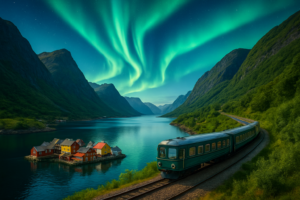
Norway is one of Europe’s most spectacular travel destinations, known for its majestic fjords, snow-capped mountains, charming coastal cities, and unforgettable Arctic landscapes. Whether you are planning a summer road trip through the west coast, a winter escape to see the Northern Lights, or a cultural city break in Oslo or Bergen, Norway offers a rare combination of natural beauty, safety, and modern convenience.
For travelers who love dramatic scenery, outdoor adventure, and clean, well-organized cities, Norway is hard to beat. You can sail through UNESCO-listed fjords, ride some of the world’s most scenic railways, hike to iconic viewpoints, and explore historic neighborhoods full of color and character. At the same time, Norway is a highly connected destination, making it easy to use travel apps, translation tools, and mobile data while on the move.
In this guide, you will discover 10 must-see places in Norway, along with practical language tips, advice on using a translation app, ways to get a good cell phone rate overseas, and how to check the weather before heading out. If Norway is on your travel list, this article will help you plan a smoother and more rewarding trip.
10 Must-See Places in Norway
-
Geirangerfjord
Geirangerfjord is one of the most famous fjords in Norway and a UNESCO World Heritage Site. Surrounded by towering cliffs, cascading waterfalls, and deep blue water, it looks like something from a postcard. Visitors can take a fjord cruise, drive the winding mountain roads, or stop at viewpoints such as Dalsnibba and Flydalsjuvet for panoramic photos. The waterfalls known as the Seven Sisters are especially memorable.
-
Bergen and Bryggen Wharf
Bergen is a historic coastal city often called the gateway to the fjords. Its most iconic area is Bryggen, the old Hanseatic wharf lined with colorful wooden buildings that reflect the city’s maritime past. Strolling through the narrow lanes, visiting local fish markets, and riding the Fløibanen funicular for sweeping views over the city make Bergen a must-see destination in Norway.
-
Oslo Opera House and Oslo Fjord
Norway’s capital offers a different side of the country, blending nature, design, and culture. The Oslo Opera House is one of the city’s most recognizable landmarks, with its striking modern architecture inviting visitors to walk on the roof for views of the harbor. While in Oslo, travelers can also enjoy the Oslo Fjord, museums, waterfront neighborhoods, and a thriving food and arts scene.
-
Tromsø
Located above the Arctic Circle, Tromsø is one of the best places in Norway to experience the Northern Lights. In winter, the city becomes a base for Arctic adventures such as dog sledding, whale watching, and snowmobiling. In summer, visitors can enjoy the midnight sun. Tromsø also has a lively cultural atmosphere, excellent seafood, and beautiful mountain-and-sea scenery.
-
Lofoten Islands
The Lofoten Islands are famous for their dramatic peaks, fishing villages, white-sand beaches, and crystal-clear Arctic waters. This destination is ideal for photographers, hikers, and travelers seeking a more remote side of Norway. Red fishermen’s cabins called rorbuer add to the charm, while activities such as kayaking, hiking, and scenic driving make Lofoten one of the country’s most unforgettable places.
-
Preikestolen (Pulpit Rock)
Preikestolen is one of Norway’s most iconic natural landmarks. This flat-topped cliff rises high above Lysefjord and rewards hikers with a breathtaking view over the water and surrounding mountains. The hike is popular but manageable for many travelers with moderate fitness. Arriving early helps avoid crowds and gives you more time to take in one of Norway’s most famous landscapes.
-
Flåm and the Flåm Railway
Flåm is a small village with outsized scenic appeal. It is best known for the Flåm Railway, one of the steepest standard-gauge railway lines in the world and one of the most beautiful train journeys anywhere. The route passes waterfalls, valleys, and mountain farms, making it a highlight for visitors who want to experience Norway’s landscapes in comfort.
-
Nordkapp (North Cape)
North Cape is one of the northernmost accessible points in Europe and a bucket-list destination for many travelers. Standing on the dramatic cliff above the Barents Sea feels both remote and exhilarating. In summer, the midnight sun creates a surreal atmosphere, while the journey itself through northern Norway offers vast tundra, rugged coastlines, and unique Arctic scenery.
-
Jotunheimen National Park
For hiking enthusiasts, Jotunheimen National Park is one of the best places to visit in Norway. Home to some of the country’s highest mountains, glaciers, and alpine lakes, it offers trails for both day hikers and experienced trekkers. The famous Besseggen Ridge hike is especially popular for its dramatic views over contrasting blue lakes and rugged peaks.
-
Nærøyfjord
Nærøyfjord, another UNESCO-listed fjord, is narrower and more intimate than many other fjords in Norway. The steep mountain walls rise sharply from the water, creating a powerful sense of scale. A boat trip through Nærøyfjord is peaceful, scenic, and deeply memorable. It is often combined with visits to Flåm and nearby villages for a classic fjord experience.
Useful Travel Phrases in Norway
The main local language in Norway is Norwegian. Many Norwegians speak excellent English, especially in cities and tourist areas, but learning a few basic phrases is still a respectful and useful way to connect with locals. Below are helpful Norwegian travel phrases with English meanings and simple pronunciation guides.
- Hello — Hei — hay
- Thank you — Takk — tahk
- Thanks a lot — Tusen takk — TOO-sen tahk
- Sorry — Unnskyld — OON-shyld
- Please — Vær så snill — vair sho sneel
- How much is it? — Hvor mye koster det? — vor MYE KOSS-ter deh?
- Where is the restroom? — Hvor er toalettet? — vor air twah-LETT-et?
- Bye — Ha det — hah deh
- Do you speak English? — Snakker du engelsk? — SNAK-er doo ENG-elsk?
- I need help — Jeg trenger hjelp — yai TREN-ger yelp
- Where is the train station? — Hvor er togstasjonen? — vor air TOG-stah-sho-nen?
- Can I pay by card? — Kan jeg betale med kort? — kahn yai beh-TAH-leh meh korht?
Even if your pronunciation is not perfect, most locals will appreciate the effort. In restaurants, shops, train stations, and hotels, these phrases can make your trip smoother and more enjoyable.
How to Use a Translation App on Your Phone
A translation app can be extremely useful in Norway, especially if you travel beyond major tourist areas, read transport signs, or need help with menus, labels, or local instructions. Although English is widely spoken, having a translation app adds confidence and convenience.
-
Download a reliable app before departure
Install a trusted translation app such as Google Translate, Microsoft Translator, or another well-reviewed option before your trip. Set it up while you still have a stable internet connection at home.
-
Download offline language packs
Download Norwegian for offline use. This is important if you travel through mountain areas, fjords, rural villages, or on trains where signal strength may vary. Offline packs let you translate basic text even without mobile data.
-
Use voice translation for quick conversations
Voice mode is useful when asking simple questions such as directions, prices, or transport information. Speak clearly into your phone, keep sentences short, and avoid slang for more accurate translations.
-
Try camera translation for signs and menus
Most modern translation apps include a camera feature. Point your phone at a menu, museum label, road sign, or product packaging to get an instant translation. This can be especially helpful in supermarkets, train stations, and local cafés.
-
Use conversation mode when speaking with locals
Conversation mode allows two people to speak back and forth while the app translates each side. This is handy for hotel check-in, shopping, taxi rides, or basic service interactions.
-
Save common phrases in advance
Bookmark useful travel phrases such as asking for help, ordering food, or finding a restroom. This saves time when you need a quick answer on the go.
-
Keep your phone charged
Translation apps can use battery quickly, especially with voice and camera functions. Carry a power bank during long sightseeing days or train journeys.
Translation apps are helpful tools, but for official documents, legal paperwork, immigration forms, or business communication, professional human translation is still essential.
How to Get a Good Cell Phone Rate Overseas
Staying connected in Norway is easy, but international roaming can become expensive if you do not plan ahead. A few simple steps can help you get a good cell phone rate overseas while avoiding surprise charges.
-
Check your current carrier’s international plan
Before leaving, ask your mobile provider whether Norway is included in your international coverage. Some plans offer daily travel passes or monthly international data packages that may be convenient for short trips.
-
Consider an eSIM
If your phone supports eSIM technology, this is often one of the easiest and most cost-effective options. You can buy a Norway or Europe data plan online before arrival and activate it in minutes.
-
Buy a local SIM card if needed
For longer stays, a local prepaid SIM card may offer better value. These are often available at airports, electronics stores, or mobile shops. Make sure your phone is unlocked before you travel.
-
Use Wi-Fi whenever possible
Hotels, cafés, airports, and many public spaces in Norway offer Wi-Fi. Connect when available for maps, messaging, and trip planning, especially if you have limited mobile data.
-
Turn off background data
Apps can use data in the background for updates, backups, and location services. Disable unnecessary background activity to conserve your data allowance.
-
Avoid accidental roaming charges
Turn off data roaming until your international plan or eSIM is active. Also disable automatic app updates and large cloud uploads while on mobile data.
-
Use messaging apps for calls
Instead of making expensive international calls, use WhatsApp, FaceTime, Zoom, or similar apps over Wi-Fi or data.
Norway has strong mobile infrastructure in cities and many populated areas, but remote mountain and Arctic regions may have weaker coverage, so prepare offline maps and travel information in advance.
How to Check the Weather in Norway
Weather in Norway can change quickly, especially in fjord regions, mountain areas, and the north. A sunny morning can turn into rain, wind, or fog by afternoon, so checking the forecast regularly is essential.
-
Use trusted weather apps
Popular apps such as Yr, Weather.com, AccuWeather, and the default weather app on your phone can provide current conditions, hourly forecasts, and precipitation maps. Yr is especially well known in Norway and is widely trusted by locals.
-
Check forecasts for specific locations
Weather can vary significantly between Oslo, Bergen, Tromsø, and mountain areas. Always search for the exact town, hiking route, or fjord area you plan to visit instead of relying on a broad regional forecast.
-
Pay attention to wind and rain
Temperature alone does not tell the full story in Norway. Wind, rain, and changing visibility can greatly affect comfort and safety, especially on ferries, hikes, and scenic drives.
-
Learn a few local weather terms
- Vær — weather
- Regn — rain
- Snø — snow
- Vind — wind
- Sol — sun
-
Check conditions before outdoor activities
If you plan to hike to places like Preikestolen or Besseggen, or travel in Arctic regions, check the weather the night before and again in the morning. Conditions can affect trail safety, transport schedules, and visibility.
Packing layers, a waterproof jacket, and sturdy shoes is a smart choice in almost any season. In Norway, being prepared for shifting weather can make a major difference in your travel experience.
Final Thoughts
From the world-famous fjords of western Norway to Arctic adventures in Tromsø and the Lofoten Islands, Norway is a destination that rewards travelers with unforgettable scenery, efficient infrastructure, and rich cultural experiences. Whether you are exploring historic cities, hiking mountain trails, or cruising through narrow fjords, good planning helps you enjoy every part of the journey.
Language tools, mobile connectivity, and weather awareness can make your trip smoother, but some travel needs go beyond apps. If you need certified translation for passports, birth certificates, marriage certificates, academic records, immigration paperwork, visa applications, or business documents related to international travel, latranslation.com can help. As a certified translation and interpreting company, latranslation.com provides accurate, professional language services for individuals, families, students, and businesses navigating global travel and communication.
If your plans involve official documents, cross-border business, or important multilingual communication, contact latranslation.com for trusted certified translation and interpreting support before your trip to Norway.