
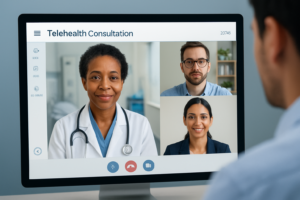
Telehealth Medical Interpreter Services in 2026: A Clinical Necessity
Telehealth is no longer a temporary convenience. In 2026, it is a core care delivery model for primary care, specialty consultations, behavioral health, urgent care, and chronic disease management. As remote care expands, so does the need for accurate multilingual communication. That is why telehealth medical interpreter services have become a critical investment for clinics, hospitals, private practices, and digital health platforms serving diverse patient populations.
Many healthcare organizations initially assumed machine translation would be enough for virtual visits. It is fast, inexpensive, and easy to access. But healthcare communication is not the same as translating a retail chat or a travel booking. Clinical conversations involve symptoms, consent, medication instructions, risk explanations, diagnoses, follow-up planning, and culturally sensitive discussions. In these situations, errors are expensive, dangerous, and legally risky.
Qualified interpreters bring what software alone cannot: medical terminology knowledge, real-time clarification, cultural competence, confidentiality awareness, and the ability to accurately interpret nuance between patient and provider. In telehealth settings, that expertise is even more important because providers cannot rely as much on in-person cues, body language, or on-site support staff. For clinics that want to improve patient trust, reduce liability, and deliver equitable care, professional telehealth medical interpreter services are no longer optional.
Why Machine Translation Falls Short in Virtual Healthcare
Machine translation tools have improved significantly, but they still struggle in live medical encounters. A telehealth visit is dynamic. Patients may speak in fragments, use regional expressions, describe pain imprecisely, or switch between languages. Providers may use technical terminology, abbreviations, or layered explanations that require context. Automated systems often miss these details or translate them too literally.
In a medical setting, even a small error can create major consequences. A mistranslated dosage instruction, allergy detail, or discharge recommendation can lead to treatment failure, readmission, or patient harm. Beyond safety, machine translation may also undermine the patient experience. If a patient senses that communication is awkward, inaccurate, or impersonal, trust in the provider can decline quickly.
Telehealth amplifies these risks because virtual appointments already have communication barriers such as audio lag, poor connectivity, and limited visual context. Adding unverified machine translation into the process can make a challenging interaction even harder. This is why clinics increasingly prefer telehealth medical interpreter services staffed by trained professionals who can manage real-time clinical communication with precision.
Common limitations of machine translation in telehealth
- Difficulty interpreting idioms, dialects, and nonstandard phrasing
- Inconsistent handling of medical terminology and abbreviations
- Inability to ask clarifying questions in context
- Lack of cultural mediation during sensitive discussions
- Potential privacy and data security concerns
- No accountability for errors in high-risk clinical conversations
What Qualified Medical Interpreters Provide That Software Cannot
Professional interpreters do much more than convert words from one language to another. In telehealth, they facilitate understanding between provider and patient while preserving meaning, tone, and intent. A qualified medical interpreter is trained to interpret accurately, remain impartial, manage turn-taking, and support communication without altering the clinical message.
Importantly, experienced interpreters understand healthcare workflows. They know how to handle informed consent, mental health visits, pre-op instructions, pediatric consultations, oncology discussions, and emergency follow-up. They also recognize when a provider’s explanation may need repetition or when a patient’s answer suggests misunderstanding. This human judgment is essential in remote care.
Telehealth medical interpreter services also support patient dignity. Patients with limited English proficiency often feel more comfortable discussing private health concerns through a trained interpreter who understands confidentiality and cultural nuance. This can improve disclosure, adherence, and satisfaction.
Core benefits of qualified telehealth medical interpreter services
- Accurate interpretation of complex medical terminology
- Support for informed consent and legal documentation discussions
- Improved patient comprehension and treatment adherence
- Better provider efficiency during multilingual virtual visits
- Reduced risk of miscommunication-related adverse events
- Stronger patient trust and engagement
Compliance, Risk Management, and the 2026 Standard of Care
Healthcare organizations in 2026 face increasing scrutiny around language access, patient equity, and digital care quality. Language support is not just a customer service issue. It is part of clinical risk management and regulatory compliance. Clinics that rely on ad hoc interpretation or consumer-grade translation apps may expose themselves to avoidable complaints, poor outcomes, and legal consequences.
Professional telehealth medical interpreter services help organizations build a more defensible language access strategy. Qualified interpreters are trained in confidentiality, role boundaries, and medical accuracy. Reputable providers also offer documented workflows, scheduling support, and secure technology integrations that align with healthcare privacy expectations.
For administrators, this matters because telehealth is now deeply embedded in care pathways. If a clinic offers virtual appointments to the general public, it must be prepared to communicate effectively with patients who speak different languages. The standard is no longer whether language support can be improvised. The standard is whether the clinic has a reliable, scalable, and clinically appropriate solution in place.
When Clinics Most Need Telehealth Medical Interpreter Services
Not every multilingual interaction carries the same level of risk. However, many of the most common telehealth use cases involve information that should never be left to guesswork or automated translation alone. Clinics should identify the moments where professional interpretation has the highest impact on safety and outcomes.
High-priority use cases
- Initial patient evaluations: First visits often require detailed history-taking, symptom review, and medication reconciliation.
- Behavioral health sessions: Mental health conversations depend heavily on nuance, tone, and emotional accuracy.
- Chronic disease management: Diabetes, hypertension, and cardiac care require clear instructions and ongoing patient education.
- Pediatric appointments: Providers must communicate with both child and caregiver, often across cultural and linguistic differences.
- Specialty consultations: Oncology, neurology, and surgery discussions involve complex terminology and elevated patient stress.
- Discharge and follow-up planning: Misunderstood aftercare instructions can directly affect recovery and readmission rates.
- Informed consent conversations: Patients must fully understand risks, alternatives, and next steps.
In each of these scenarios, telehealth medical interpreter services add measurable value by reducing ambiguity and supporting better clinical decision-making.
How Telehealth Interpreter Workflows Should Function in 2026
The best interpreter support is not improvised at the last minute. Clinics should build interpreter access into the telehealth workflow from scheduling through documentation. In 2026, patients expect digital healthcare to be seamless, and language support should be part of that seamless experience.
When a patient books an appointment, the clinic should capture language preference clearly in the intake process. Staff should then schedule a qualified interpreter in advance when appropriate or have on-demand access available for urgent needs. The telehealth platform should support multi-party video or audio participation without technical friction. Providers should also receive brief guidance on best practices for working with interpreters remotely.
Best practices for implementation
- Identify patient language preference at intake and in the EHR
- Offer both scheduled and on-demand interpreter access
- Use secure platforms that support three-way or multi-party telehealth sessions
- Train staff and clinicians on how to work effectively with interpreters
- Document interpreter participation consistently
- Track quality metrics such as patient satisfaction, no-show rates, and comprehension-related outcomes
Clinics that operationalize telehealth medical interpreter services in this way often see improvements not just in communication, but in efficiency and patient retention as well.
Choosing the Right Telehealth Medical Interpreter Services Provider
Not all language service providers are equally prepared for healthcare telemedicine environments. Some offer general interpretation with limited medical specialization. Others rely heavily on gig-style networks without consistent quality assurance. Clinics should evaluate vendors carefully before integrating them into patient care workflows.
The right partner should understand both healthcare communication and telehealth operations. That includes interpreter qualifications, scheduling responsiveness, platform compatibility, privacy standards, and reporting capabilities. A low-cost provider may seem attractive initially, but poor interpretation quality can create hidden costs through repeated visits, patient dissatisfaction, and risk exposure.
What to look for in a provider
- Interpreters trained specifically in medical interpretation
- Coverage for the languages your patient population actually needs
- Availability for video remote interpreting and phone interpreting
- Fast connection times for urgent telehealth appointments
- Secure, privacy-conscious technology and workflows
- Experience supporting clinics, hospitals, and digital health organizations
- Transparent quality assurance and performance monitoring
When evaluating telehealth medical interpreter services, ask for details about interpreter vetting, healthcare specialization, escalation procedures, and integration options. The goal is not simply to add language support, but to build a dependable multilingual care system.
The Business Case: Why Professional Interpretation Supports Growth
For high-intent healthcare buyers, the decision to invest in interpreter services is not only about compliance or ethics. It is also a smart business decision. Clinics that provide clear language access can reach broader communities, improve patient acquisition, and strengthen loyalty among families who need multilingual support.
Better communication often leads to better attendance, better follow-through, and better reviews. It can also reduce costly misunderstandings that consume staff time through repeat calls, rescheduling, and clarification requests. In competitive healthcare markets, telehealth medical interpreter services can become a meaningful differentiator for patient experience and brand reputation.
As telehealth continues to mature, patients will compare providers not just on appointment availability, but on whether care feels accessible, respectful, and understandable. Clinics that prioritize qualified interpreters send a strong message: every patient deserves safe communication, regardless of language.
Why 2026 Is the Turning Point
In earlier phases of telehealth adoption, some organizations treated language access as a secondary operational detail. In 2026, that approach no longer works. Virtual care has become mainstream, patient expectations are higher, and healthcare organizations are under pressure to deliver equitable outcomes across digital channels.
This is the turning point where clinics must decide whether to continue relying on imperfect tools or invest in professional communication support. Machine translation may still have limited value for low-risk administrative tasks, such as basic appointment reminders or general website content. But for diagnosis, treatment, consent, and care planning, qualified human interpreters remain the gold standard.
Telehealth medical interpreter services are not a luxury add-on. They are an essential part of safe, scalable, multilingual healthcare delivery. Clinics that recognize this now will be better positioned to reduce risk, improve outcomes, and serve growing patient populations with confidence.
Final Thoughts
The future of telehealth depends on trust, clarity, and accessibility. When language barriers stand between patients and providers, quality of care suffers. That is why more healthcare organizations are moving away from overreliance on machine translation and toward qualified telehealth medical interpreter services.
If your clinic is expanding virtual care in 2026, now is the time to review your language access strategy. Ask whether your current system truly protects patient safety, supports compliance, and reflects the standard of care your organization wants to deliver. In most cases, the answer is clear: when the conversation is medical, human expertise matters.