
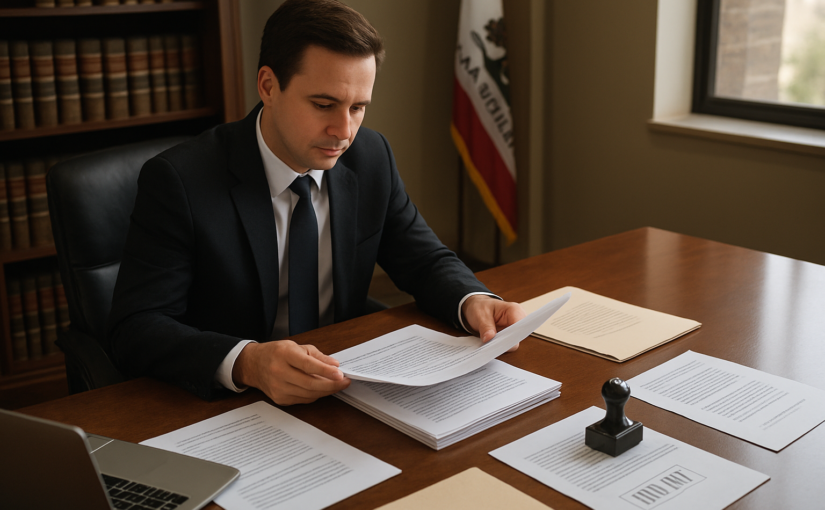

A Portuguese certified translator can be a critical resource for California attorneys, paralegals, and in-house legal teams handling cross-border disputes, multilingual evidence, immigration-related filings, employment matters, contracts, and regulatory documentation. When Portuguese-language records must be translated for courts, agencies, opposing counsel, or business counterparties, accuracy is not just a quality issue. It affects admissibility, credibility, deadlines, and legal risk.
This guide explains what legal professionals in California should know when retaining a Portuguese translator for litigation and transactional work. It covers the role of the translator, the credentials that matter, Portuguese-specific linguistic issues, due diligence questions, and practical expectations around pricing and turnaround.
The Role of a Portuguese Certified Translator in California Litigation and Transactional Work
In legal practice, translation is often part of the evidentiary record or deal documentation. A Portuguese certified translator may be needed to translate pleadings support materials, contracts, corporate records, medical records, police reports, banking documents, employment files, emails, text messages, birth and marriage certificates, and foreign regulatory filings.
In litigation, the translator’s work may support:
- Foreign-language exhibits attached to motions or declarations
- Document productions involving Portuguese-speaking custodians
- Witness preparation and case assessment
- Arbitration submissions and international discovery
- Immigration, family law, probate, and criminal matters involving Portuguese records
In transactional practice, a Portuguese certified translator may assist with:
- Bilingual contracts and side-by-side translations
- Corporate formation documents from Brazil or Portugal
- Compliance materials and internal policies
- M&A due diligence involving Lusophone entities
- Employment and HR documentation for multinational operations
California lawyers should distinguish translation from interpretation. A translator works with written text. An interpreter works with spoken language in depositions, hearings, interviews, or meetings. Some professionals do both, but the skill sets, workflows, and certifications are not identical.
For legal matters, the translator’s role extends beyond language conversion. The translator must preserve meaning, register, dates, formatting, signatures, stamps, handwritten notes, and ambiguities in the source document. A legally sound translation should not silently “fix” unclear source text. Instead, it should accurately reflect the original and, where appropriate, indicate illegible or ambiguous portions.
Credentials Explained for a Portuguese Certified Translator
ATA Certification
One of the most recognized credentials in the United States is certification by the American Translators Association, commonly called ATA certification. For law firms, ATA certification can be a strong indicator that the translator has demonstrated professional competence in a tested language pair. It is especially useful when selecting a translator for contracts, correspondence, corporate records, and certified translations submitted to agencies or private parties.
That said, ATA certification is not the only valid credential, and not every excellent legal translator holds it. Attorneys should view it as one important qualification within a broader vetting process that includes legal experience, subject-matter familiarity, and document-handling protocols.
Judicial Council Court Certification
California legal professionals often ask about court certification. In California, Judicial Council credentialing is primarily associated with court interpreters rather than document translators. This distinction matters. A court-certified interpreter is not automatically a specialist in written legal translation, and a highly qualified legal translator may not hold court interpreter certification.
For written Portuguese documents used in litigation, what usually matters most is whether the translation is complete, accurate, competently prepared, and supported by a proper certification or declaration. If the matter also involves hearings, depositions, or client meetings, separate interpreter credentials may be relevant.
Sworn Declarations of Accuracy
For foreign-language exhibits and many official submissions, attorneys often need a signed statement attesting that the translation is true and accurate to the best of the translator’s knowledge and ability. In U.S. practice, this usually takes the form of a certificate of translation accuracy or a sworn declaration.
A typical declaration should identify:
- The translator’s name and qualifications
- The source and target languages
- A statement that the translator is competent to translate from Portuguese into English
- A statement that the translation is complete and accurate to the best of the translator’s knowledge and ability
- The date and signature
Some matters may require notarization, though notarization generally authenticates the signature, not the linguistic accuracy itself. Counsel should confirm the exact requirements of the court, agency, or receiving party.
Portuguese-Specific Challenges in Legal Translation
Portuguese is spoken across multiple jurisdictions, and legal translation issues can vary significantly depending on the document’s country of origin. A record from Brazil may differ materially in terminology, formatting, naming conventions, and legal concepts from a document issued in Portugal, Angola, or Mozambique.
Dialect and Jurisdiction Differences
Brazilian Portuguese and European Portuguese differ in vocabulary, syntax, institutional terminology, and usage. For example, corporate, civil registry, labor, and court documents may use jurisdiction-specific terms that do not map neatly onto U.S. legal categories. A translator should identify the source jurisdiction and understand the legal system behind the text.
Scripts, Handwriting, and Legacy Documents
While Portuguese uses the Latin alphabet, legal teams often encounter handwritten civil records, notarial books, old certificates, and scanned exhibits with stamps, seals, annotations, or poor image quality. The challenge is less about script and more about deciphering degraded source material while preserving uncertainty where the original is illegible.
Legal Terms Without Direct Equivalents
Many Portuguese legal terms do not have exact one-to-one English equivalents. Translators must decide whether to use a functional equivalent, a literal rendering, or a transliterated term with context-sensitive wording. For example, concepts tied to civil law systems may not align perfectly with common law terminology used in California practice. Over-translation can be as dangerous as under-translation because it may imply legal consequences not present in the original.
Name Transliteration and Identity Consistency
Names, surnames, accents, abbreviations, and order of family names can create problems across passports, court filings, HR records, and banking documents. Portuguese naming conventions may include multiple surnames, prepositions, and diacritics. A legal translator should preserve names exactly as they appear, while flagging inconsistencies when necessary so counsel can maintain identity continuity across exhibits and declarations.
Dates and numbers also require attention. A date written as 03/04/2024 may mean April 3 or March 4 depending on context. Decimal separators, tax identifiers, and registry numbers should be handled with extreme care.
How to Vet a Translator for Legal Use
Not every bilingual professional is qualified for legal translation. Law firms should use a structured vetting process before entrusting sensitive Portuguese documents to a vendor.
Questions to Ask
- Do you regularly handle Portuguese legal translation for California matters?
- Which Portuguese variant do you work in most often: Brazilian, European, or both?
- Do you have ATA certification or other relevant credentials?
- Can you provide a standard certificate or declaration of translation accuracy?
- How do you mark illegible text, stamps, seals, handwritten notes, and formatting?
- What confidentiality measures do you use for privileged or highly sensitive documents?
- Can you accommodate rush deadlines without sacrificing quality control?
- Do you have experience with contracts, discovery, employment files, corporate records, or court exhibits similar to ours?
Sample Declarations and Formatting Standards
Ask for a sample certification page in advance. This helps legal teams confirm whether the translator’s declaration format meets filing or client requirements. It also reveals whether the provider understands legal presentation standards, including exhibit labeling, page fidelity, and treatment of seals or annotations.
Confidentiality, NDAs, and Privilege Awareness
Portuguese legal translations often involve privileged communications, trade secrets, internal investigations, medical records, or personally identifiable information. Your vendor should be willing to sign an NDA and explain secure file-transfer and retention practices. At minimum, counsel should confirm who will access the documents, whether subcontractors are used, and how data is stored and deleted.
Chain of Custody for Evidence
When translations relate to evidence, internal investigations, or anticipated disputes, chain of custody matters. A disciplined provider should be able to document when files were received, who handled them, which version was translated, and when the final translation was delivered. This is especially important for screenshots, chat exports, financial records, and foreign public documents where authenticity and completeness may later be challenged.
Pricing, Turnaround, and Rush Options
Legal translation pricing for Portuguese typically depends on document length, complexity, formatting, certification requirements, and deadline. Most providers charge by word, though some use per-page minimums for certificates or civil records. Heavily formatted exhibits, poor-quality scans, handwritten content, and urgent timelines generally increase cost.
Factors that affect pricing include:
- Word count and repetition level
- Subject matter complexity
- Certification or notarization requirements
- Desktop publishing or exhibit formatting
- Quality of the source files
- After-hours, same-day, or weekend rush service
For turnaround, short certificates may be completed quickly, while large productions or contract sets require more time for translation, editing, and final review. Law firms should avoid assuming that “certified” means “instant.” If a filing deadline is approaching, send the documents early and identify any court-imposed requirements at the outset.
Rush service is often available, but legal teams should confirm the quality-control process under expedited conditions. A reputable provider will be transparent about what can realistically be delivered without compromising accuracy.
Why Law Firms Choose L.A. Translation for Portuguese Certified Translators
Law firms and corporate legal departments choose L.A. Translation because legal translation requires more than language fluency. It requires precision, responsiveness, confidentiality, and familiarity with the expectations of California legal practice.
L.A. Translation supports attorneys and legal staff with Portuguese certified translator services designed for real-world legal workflows, including:
- Certified Portuguese-to-English translations for legal and official use
- Experience with litigation exhibits, contracts, corporate records, and compliance documents
- Careful handling of Brazilian and European Portuguese source materials
- Professional declarations of accuracy for court and agency submissions
- Confidential file handling and NDA-friendly engagement
- Reliable turnaround options, including rush service when deadlines demand it
Whether you need a single certified birth certificate translation, a set of Portuguese corporate records for due diligence, or a large evidentiary translation project for active litigation, the right provider can reduce risk and save valuable attorney time.
Contact L.A. Translation today to discuss your matter, request a quote, and secure a Portuguese certified translator who understands the demands of California legal practice.