
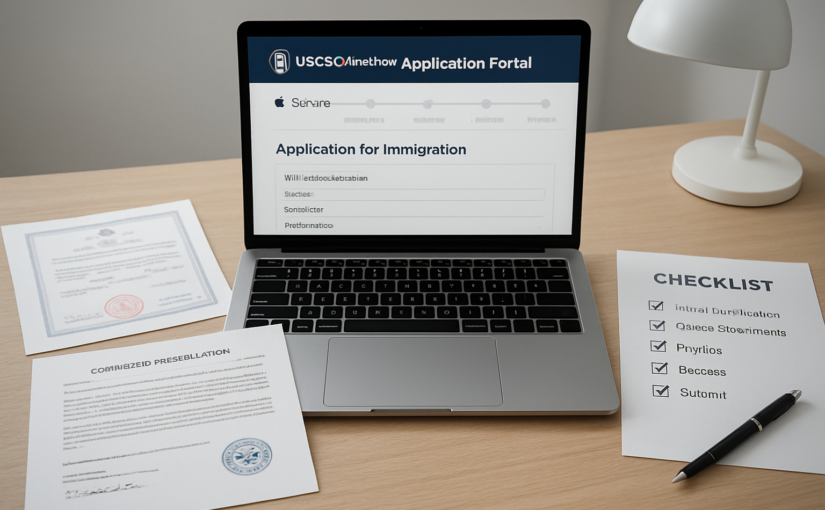
DS-260 Civil Documents Translation Checklist: What to Prepare Before Your Visa Interview
If you are applying for an immigrant visa, completing the DS-260 is only one part of the process. After submitting the online application, many applicants must gather civil records and supporting evidence for review by the National Visa Center and later present documents at the consular interview. One of the most common reasons for delay is incomplete or incorrect translation of required records. That is why understanding the DS-260 civil documents translation process early can save time, reduce stress, and help you avoid administrative setbacks.
In most cases, any civil document not written in English, or not in the official language accepted by the U.S. embassy or consulate handling your case, may need a complete and accurate translation. Requirements can vary by post, but applicants commonly need translated birth certificates, marriage certificates, police certificates, and court or prison records. This article provides a practical DS-260 civil documents translation checklist so you can prepare confidently before your visa interview.
Why DS-260 Civil Documents Translation Matters
The DS-260 civil documents translation requirement exists for a simple reason: consular officers must be able to review your records clearly and efficiently. If a document is incomplete, mistranslated, or missing a required certification, your case can be delayed or placed into administrative processing until the correct version is submitted.
Translation issues can affect several stages of the immigrant visa process. The National Visa Center may reject uploaded files if they are unreadable or improperly translated. At the interview stage, the consular officer may request a corrected translation or updated document if the version presented does not meet standards. Even a small inconsistency in names, dates, places of birth, or legal dispositions can create questions that slow down adjudication.
For that reason, DS-260 civil documents translation should be treated as a core part of your case preparation, not as a last-minute task.
Which Civil Documents Commonly Need Translation?
The exact documents required depend on your visa category, age, marital history, and country-specific reciprocity rules. However, the following records are among the most commonly requested for immigrant visa applicants.
1. Birth Certificates
Your birth certificate is one of the most important identity documents in the immigrant visa process. If the original is not in English or another language accepted by the interviewing post, you will usually need a full translation. The translation should include all visible text, stamps, annotations, marginal notes, and registration details.
Birth certificate translations are especially important because they are used to verify legal name, date of birth, place of birth, and parentage. If your certificate contains handwritten notes, regional abbreviations, or nonstandard formatting, the translator should render them clearly and accurately.
2. Marriage Certificates
If your visa case is based on marriage, your marriage certificate will almost certainly be reviewed closely. A DS-260 civil documents translation for a marriage certificate should include the full legal names of both spouses, the date and place of marriage, certificate number, issuing authority, and any seals or remarks.
If either spouse had prior marriages, divorce decrees, annulment records, or death certificates of former spouses may also need translation. Consular officers often compare these records for consistency, so accuracy matters.
3. Police Certificates
Police certificates are commonly required for applicants aged 16 or older from countries where such records are available and required under reciprocity rules. A translated police certificate should identify the issuing authority, the applicant’s name, relevant dates, and whether any criminal history is recorded.
Because police documents sometimes use legal terminology or standardized phrases that do not translate literally, it is important to use a professional translator familiar with official records. A poor translation can create confusion about whether the applicant has a criminal record or whether the certificate is clear.
4. Court and Prison Records
If you have ever been arrested, charged, convicted, or imprisoned, you may need to present certified copies of court and prison records. These documents are often complex and can include judicial decisions, sentencing details, legal codes, and procedural notes. DS-260 civil documents translation for court records must be especially precise because even minor errors can affect how a consular officer interprets the case.
If your record includes a dismissal, acquittal, expungement, probation completion, or rehabilitation order, make sure the translation reflects that outcome in full. Omitting pages or summarizing legal content is risky and may lead to additional document requests.
5. Divorce, Annulment, or Death Records
Applicants with prior marriages may need to show proof that each earlier marriage ended legally. Divorce decrees, annulment judgments, and death certificates often require translation if not already in English. These records help establish current marital eligibility and are especially important in family-based visa cases.
6. Adoption and Custody Documents
In some family-based cases, adoption decrees, custody orders, or guardianship records may be required. These should be translated fully, including judicial findings, dates, and legal relationships. If a child is immigrating, custody-related translations may be essential to proving legal authority and parental rights.
DS-260 Civil Documents Translation Checklist
Use this checklist before uploading documents or attending your visa interview:
- Identify every civil document required for your case based on your visa category and country reciprocity schedule.
- Check whether each document is already in English or in a language accepted by the U.S. embassy or consulate processing your case.
- Obtain clear, complete scans or copies of each original record.
- Use a qualified translator to prepare a full translation of every required non-English document.
- Make sure the translation includes all text, seals, stamps, handwritten notes, and marginal annotations.
- Confirm that names, dates, locations, and document numbers match the original exactly.
- Ensure the translation includes a signed certification of accuracy and translator competence, if required.
- Review country-specific guidance from the National Visa Center and the embassy or consulate where you will interview.
- Upload both the original document and the translation in the correct format, if submitting through an online portal.
- Bring originals and translations to the interview, even if they were uploaded earlier.
What Makes a Translation Acceptable?
Although requirements vary, an acceptable DS-260 civil documents translation is generally complete, accurate, legible, and properly certified. The translator should not paraphrase or summarize the document. Every relevant word should be translated, including stamps, side notes, and registration entries.
Many applicants use the term certified translation to describe a translation accompanied by a signed statement from the translator or translation provider affirming that the translation is complete and accurate to the best of their knowledge and that they are competent to translate from the source language into English. While not every post uses identical wording, this format is widely accepted and reduces the chance of rejection.
A strong certification typically includes:
- The translator’s name
- A statement of language competence
- A statement that the translation is complete and accurate
- The translator’s signature
- The date
Some applicants assume a bilingual friend can handle the translation. While that may seem convenient, professional translation is often the safer option, especially for police and court records where legal meaning is critical.
Common Mistakes That Delay Visa Processing
Many DS-260 civil documents translation problems are avoidable. Here are some of the most common mistakes applicants make:
- Submitting partial translations that omit stamps, notes, or back-page entries
- Using low-quality scans that make the original document unreadable
- Misspelling names or reversing date formats
- Failing to translate all prior marriage termination documents
- Uploading the original without the translation, or the translation without the original
- Using machine translation for legal or official records
- Ignoring embassy-specific language rules
- Bringing translated copies to the interview but forgetting the originals
Even if a mistake seems minor, it can lead to a request for additional evidence or a postponed decision. Reviewing everything in advance is worth the effort.
How to Choose a Translation Service for Visa Documents
If you want to minimize risk, choose a provider experienced in immigration and consular paperwork. The best translation services for DS-260 civil documents translation understand how official records are structured and know how to preserve formatting, legal references, and identifying details.
When comparing providers, look for:
- Experience with immigration and consular document translation
- Certified translation options
- Clear turnaround times
- Human translation rather than automated output
- Ability to handle legal and court terminology
- Secure document handling and privacy protection
- Responsive customer support for formatting or revision requests
For high-intent applicants preparing for an interview deadline, speed matters, but accuracy matters more. A fast translation that gets rejected is more expensive in the long run than a properly prepared one the first time.
Country-Specific Rules and Reciprocity Considerations
Not every country issues the same types of civil records, and not every U.S. embassy follows identical local document practices. Before ordering translations, review the Department of State reciprocity schedule for your country and read the interview instructions from your designated post. Some embassies accept documents in the local official language without translation, while others require English translations for all supporting records.
This is especially important for police certificates and court records because naming conventions, issuance methods, and terminology vary widely. A record that seems complete in one country may be considered insufficient in another if it does not match reciprocity guidance.
When Should You Start the Translation Process?
Start as early as possible after learning which documents your case requires. Some records take time to obtain, especially police certificates from multiple countries or archived court files. Once you receive them, allow enough time for professional translation, review, correction, and upload.
Do not wait until your interview is scheduled. Last-minute DS-260 civil documents translation often leads to rushed reviews, overlooked errors, and unnecessary stress. Early preparation gives you time to compare the translated text against the original and fix any discrepancies before they become a problem.
Final Pre-Interview Review
Before your visa interview, organize your file in a logical order. Keep originals and translations together for each document category. For example, place your birth certificate behind its translation, your marriage certificate behind its translation, and any police or court records with their corresponding translated copies. This makes it easier to respond quickly if the consular officer asks for a specific item.
Your final review should confirm:
- Every required civil document is present
- Every non-English document has a complete translation
- All names and dates are consistent across records
- Translations are signed and certified where appropriate
- You have both digital and printed copies if needed
- You understand any post-specific instructions for originals and photocopies
Conclusion
The immigrant visa process can feel document-heavy, but careful preparation makes a real difference. A reliable DS-260 civil documents translation strategy helps ensure that your birth certificate, marriage certificate, police certificate, and court records are ready for review long before your interview date. That means fewer surprises, fewer delays, and a smoother path through consular processing.
If you are unsure whether a particular record needs translation, or if your case includes complex legal or family history documents, professional help is often the best investment. Accurate translations are not just paperwork. They are a critical part of presenting a complete, credible visa application.