
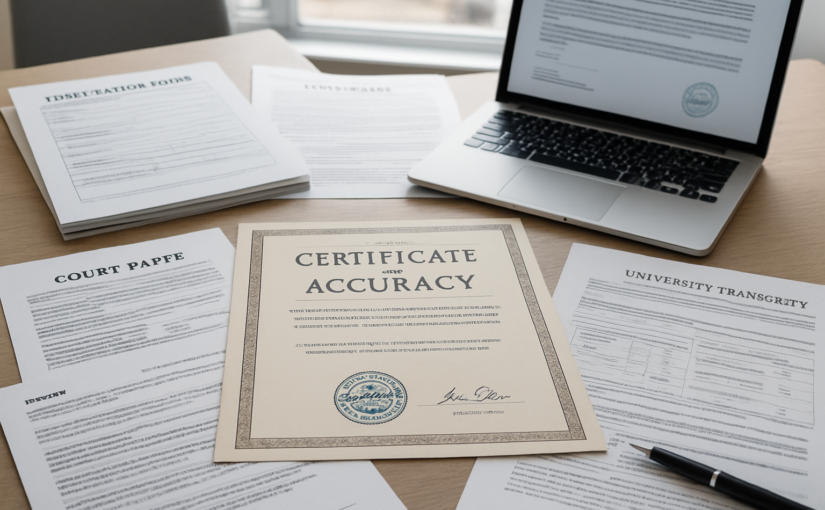
Why Certified Translation Services Matter for High-Stakes Documents
When you are submitting personal, legal, academic, or government records, accuracy is not optional. A small translation mistake can cause delays, requests for additional evidence, missed deadlines, or outright rejection. That is why buyers searching for certified translation services are usually not looking for a generic language provider. They need a translation partner that understands compliance, formatting, certification language, and the expectations of receiving institutions such as USCIS, courts, universities, licensing boards, and government agencies.
Certified translation services are commonly required when a document written in one language must be accepted by an English-speaking authority, or vice versa, with a formal statement attesting that the translation is complete and accurate. This requirement often applies to immigration filings, lawsuits, probate matters, international adoptions, admissions applications, transfer credits, diplomas, transcripts, and civil records such as birth, marriage, divorce, and death certificates.
For buyers, the challenge is not simply finding someone bilingual. It is finding a provider that can deliver a compliant translation package on time, with the right certification, the right formatting, and the right level of professionalism. In this guide, we will explain what certified translation services are, who needs them, which documents are commonly required, typical turnaround times, and how to avoid rejection when submitting translations to USCIS, courts, and universities.
What Are Certified Translation Services?
Certified translation services refer to document translation accompanied by a signed certification statement. This statement generally confirms that the translation is accurate and complete to the best of the translator’s knowledge and that the translator is competent to translate between the relevant languages.
In the United States, a certified translation usually does not mean the translator is licensed by the government. Instead, it means the translation is delivered with a certification of accuracy. However, different institutions may have additional requirements. Some courts or foreign authorities may request notarization, an affidavit, or even sworn translation depending on the jurisdiction.
A standard certified translation package often includes:
- A full translation of the source document
- Replication of key elements such as stamps, seals, signatures, headings, tables, and handwritten notes where relevant
- A certificate of accuracy signed by the translator or translation provider
- Provider contact information and date of certification
Professional certified translation services are especially important because many receiving institutions compare the translated document against the original for completeness, consistency, and readability. If names, dates, places, or document structure do not match clearly, the submission may be questioned.
Who Typically Needs Certified Translation Services?
Buyers of certified translation services usually fall into a few high-intent categories. These customers are not casually browsing. They often have a filing deadline, admission deadline, hearing date, or application in progress.
1. Immigration Applicants and Petitioners
People filing immigration petitions, adjustment of status applications, naturalization paperwork, asylum materials, family sponsorship packages, or consular processing documents often need certified translation services for USCIS or related agencies. If a required supporting document is in a foreign language, an English translation with certification is usually necessary.
2. Attorneys and Law Firms
Law firms purchase certified translation services for litigation, evidence submission, affidavits, witness statements, contracts, judgments, discovery documents, and family law matters. Accuracy is critical because translated documents may influence legal outcomes.
3. Students and Academic Applicants
Applicants to colleges, universities, graduate programs, and credential evaluation agencies often need certified translation services for diplomas, transcripts, letters of enrollment, degree certificates, and course descriptions. Universities may have very specific submission rules, especially for transfer credit or international admissions.
4. Individuals Handling Civil and Personal Records
People frequently need certified translation services for birth certificates, marriage certificates, divorce decrees, police clearances, vaccination records, death certificates, adoption papers, and identity documents. These may be needed for visas, marriage registration, citizenship, school enrollment, or employment screening.
5. Businesses and HR Teams
Employers, relocation firms, and HR departments may need certified translation services for employee records, background documentation, immigration support, or cross-border compliance matters.
Certified Translation Services for USCIS: What Buyers Need to Know
USCIS is one of the most common reasons people search for certified translation services. The agency generally requires that any foreign-language document submitted in support of an application be accompanied by a full English translation and a certification from the translator confirming that the translation is complete and accurate and that they are competent to translate from the foreign language into English.
Common USCIS Documents That Require Certified Translation
- Birth certificates
- Marriage certificates
- Divorce decrees
- Death certificates
- Passports and identity pages
- Police certificates
- Court records
- Household registration documents
- Military records
- School records used as supporting evidence
- Affidavits and personal statements
One of the biggest mistakes applicants make is assuming only the main text needs translation. In reality, annotations, seals, stamps, marginal notes, and handwritten entries may also matter. Professional certified translation services know how to indicate these elements clearly, often using bracketed notes such as “[stamp]” or “[signature illegible].”
What Makes a USCIS Translation Compliant?
Although requirements can change and applicants should always review current official instructions, buyers generally want certified translation services that provide:
- A complete translation, not a summary
- Accurate rendering of all visible text
- Correct spelling of names as shown in documents or as instructed by the client
- A signed certification statement
- Clear formatting that corresponds to the source document
USCIS rejections and delays often happen because of omissions, inconsistent names, untranslated stamps, or low-quality scans that make portions unreadable. A reliable provider will flag image quality issues before starting and ask questions about preferred spellings or prior immigration filings to maintain consistency.
Certified Translation Services for Courts and Legal Proceedings
Courts present a different level of scrutiny. In legal matters, a translation can affect admissibility, credibility, and procedural fairness. Buyers seeking certified translation services for court use should never assume that a cheap online translation or AI-only output will be accepted.
Common Court-Related Documents
- Contracts and agreements
- Judgments and orders
- Pleadings and motions
- Evidence exhibits
- Witness statements and affidavits
- Police reports
- Medical records
- Emails, messages, and social media evidence
- Birth, marriage, and divorce records for family law cases
Some courts accept standard certified translation services, while others may require notarization, a translator affidavit, or a court-approved interpreter or translator. Because requirements vary by state, county, and court level, buyers should confirm the exact standard before ordering.
Legal Translation Requires More Than Language Fluency
Legal documents contain terminology, procedural references, and formatting conventions that must be handled precisely. A mistranslated legal term can change meaning significantly. For example, the difference between a decree, order, ruling, and judgment may matter. Dates, signatures, article numbers, and references to statutes or case files must also be preserved accurately.
Professional certified translation services for courts often include extra quality control because legal buyers need confidence that the translation can withstand scrutiny. If the document may be used as evidence, accuracy and completeness are essential.
Certified Translation Services for Universities and Academic Institutions
Universities, colleges, credential evaluators, and scholarship committees frequently require certified translation services for admissions and records review. International students often need translations of transcripts, diplomas, course lists, grading scales, enrollment certificates, and degree confirmations.
Documents Commonly Requested by Universities
- Academic transcripts
- Diplomas and degree certificates
- Course descriptions or syllabi
- Enrollment verification letters
- Recommendation letters, in some cases
- Internship or training certificates
- Secondary school records
Academic buyers should be careful because some institutions want a certified translation only, while others require the translation to be sent directly by the provider, submitted in a sealed envelope, or paired with a credential evaluation. Some schools also distinguish between unofficial review copies and final official translations.
Why Academic Formatting Matters
Transcripts and diplomas often contain tables, abbreviations, grading systems, and institutional seals. Good certified translation services preserve structure so admissions staff can compare the translation to the original. They may also include translator notes for terms that do not have a direct equivalent, while avoiding unauthorized interpretation of academic value. For example, a translator should translate the course title accurately but should not convert grades or claim degree equivalency unless specifically qualified and authorized to do so.
Required Documents: What You Usually Need to Provide
To order certified translation services efficiently, buyers should prepare clean and complete document files. The better the source material, the smoother the process.
What to Send Your Translation Provider
- A clear scan or photo of the entire document. Every edge, stamp, signature, and note should be visible. Cropped or blurry images can lead to delays or incomplete translations.
- All pages, including blank reverse sides if required. Some institutions care about page numbering or backside stamps.
- The target language needed. Most buyers need English, but some need translations from English into another language for overseas use.
- The intended use. Tell the provider whether the translation is for USCIS, court, university, or another authority. This helps ensure the right certification format.
- Preferred name spellings. If your name appears differently across passports, IDs, and prior filings, tell the provider which version should be followed and where consistency is most important.
- Your deadline. Rush service may be available, but it is best to disclose timing upfront.
Documents That Often Need Special Attention
- Handwritten records
- Old or damaged civil certificates
- Multi-page court files
- Documents with seals over text
- Double-column transcripts or tables
- Mixed-language documents
Experienced certified translation services will review these issues before confirming the order and may ask clarifying questions to reduce the risk of rejection.
Typical Turnaround Times for Certified Translation Services
Turnaround depends on document length, language pair, complexity, image quality, and whether the order needs standard or expedited processing. Buyers often assume a one-page birth certificate can be done instantly, and in many cases it can be completed quickly. But more complex files, especially legal or academic records with dense formatting, take longer.
Common Timeframes
- 1 business day or less: Simple one-page civil documents such as birth certificates, marriage certificates, or police clearances, depending on provider capacity
- 1 to 3 business days: Small bundles of personal documents for USCIS or school applications
- 2 to 5 business days: Academic transcripts, diplomas, and moderate legal files with formatting needs
- Several days to a week or more: Large court records, medical records, discovery files, or multi-document immigration packages
Rush options are common, but buyers should not choose speed at the expense of quality. Certified translation services for legal or immigration use should include at least one quality check before delivery. A provider that promises instant turnaround on every file without reviewing legibility or completeness may not be the safest choice.
Factors That Affect Delivery Speed
- Language rarity
- Complex formatting or tables
- Handwritten text
- Poor scan quality
- Need for notarization or hard-copy shipping
- Volume of documents
If your deadline is firm, ask the provider when they can realistically deliver the final certified PDF and whether mailed originals are available if needed.
How Pricing Usually Works
Certified translation services are often priced per page, per word, or per document, depending on the provider and document type. Simple civil documents may be quoted at a flat rate, while legal and academic records may be priced based on complexity and length.
Buyers should ask whether the quoted price includes:
- Certification statement
- Formatting
- Revisions for provider errors
- Rush processing, if needed
- Notarization, if requested
- Physical shipping, if required
The cheapest quote is not always the best value. If a low-cost provider misses a stamp, mistranslates a name, or delivers a noncompliant certification, the resulting delay can cost far more than the original savings.
How to Avoid Rejection: Practical Buyer Checklist
For high-intent buyers, the real goal is not simply purchasing certified translation services. It is getting documents accepted the first time. Here is how to improve your odds.
1. Confirm the Receiving Institution’s Rules
Before ordering, verify whether the recipient wants certified translation, notarized translation, sworn translation, original hard copy, or direct delivery from the provider. USCIS, courts, and universities do not always follow the same standard.
2. Submit Complete Documents
Do not omit pages because they seem unimportant. If the original has multiple pages, stamps, amendments, or handwritten notes, include them all.
3. Use Clear, High-Resolution Scans
Blurry phone photos are a major cause of errors and delays. Scan in color if possible, especially when seals, signatures, or annotations are faint.
4. Keep Names and Dates Consistent
Tell your provider if your passport, birth certificate, and previous filings use different transliterations. Consistency matters in immigration and legal contexts.
5. Do Not Use Summaries When Full Translation Is Required
Some buyers try to save money by translating only selected sections. For USCIS and many courts, a complete translation is the safer approach.
6. Ask for a Review Before Submission
Review the final translation for personal details such as names, addresses, dates of birth, and case numbers. Professional certified translation services should welcome this check.
7. Order Early If Possible
Rush orders increase stress and reduce your time to catch issues. Ordering a few days earlier gives room for corrections or additional certification steps.
What to Look for in a Certified Translation Provider
If you are ready to buy certified translation services, evaluate providers carefully. A professional service should make the process simple, transparent, and compliant.
Signs of a Reliable Provider
- Experience with USCIS, courts, and universities
- Clear explanation of certification format
- Transparent pricing and turnaround
- Human translation and quality review process
- Ability to handle formatting, seals, and handwritten notes
- Responsive customer support
- Confidential handling of sensitive documents
- Options for rush service, notarization, or mailed copies if needed
Questions to Ask Before Ordering
- Have you handled certified translation services for my intended use before?
- Will the translation include a signed certificate of accuracy?
- Can you preserve the document layout and include stamps or annotations?
- What is the exact turnaround for my files?
- Do you offer revisions if there is an issue?
- Can you provide notarization or hard copies if required?
- How do you protect personal and legal data?
These questions help separate professional certified translation services from generic gig platforms or automated tools that may not meet compliance standards.
Common Myths About Certified Translation Services
Myth 1: Any Bilingual Friend Can Do It
Even if someone is fluent, they may not know certification requirements, formatting standards, or terminology expectations. Institutions often reject amateur translations.
Myth 2: Machine Translation Is Good Enough
Machine translation can be useful for casual understanding, but high-stakes submissions require human review, certification, and formatting accuracy. Legal, immigration, and academic documents are not the place to gamble.
Myth 3: Certified and Notarized Mean the Same Thing
They do not. Certified translation services usually involve a signed statement of accuracy. Notarization is a separate step that verifies the identity of the signer, not the quality of the translation itself.
Myth 4: One Certification Format Works Everywhere
Requirements vary. USCIS may accept one format, while a court or university may require something more specific.
Final Thoughts: Buy Certified Translation Services with Compliance in Mind
When your documents affect immigration status, legal rights, academic admissions, or official recognition, translation quality matters. Certified translation services are not just about converting words from one language to another. They are about delivering a complete, accurate, well-formatted, and compliant document package that the receiving institution can trust.
For USCIS, courts, and universities, the stakes are high and the standards can differ. The smartest buyers start by identifying the exact use case, gathering complete and legible documents, confirming requirements, and choosing a provider with proven experience in certified translation services. That approach reduces the risk of rejection, saves time, and helps your application or case move forward without unnecessary setbacks.
If you need certified translation services, treat the purchase like any other compliance decision: verify the requirements, prioritize accuracy, and work with professionals who understand the consequences of getting it wrong. In high-intent situations, the right translation partner is not a convenience. It is a critical part of a successful submission.