
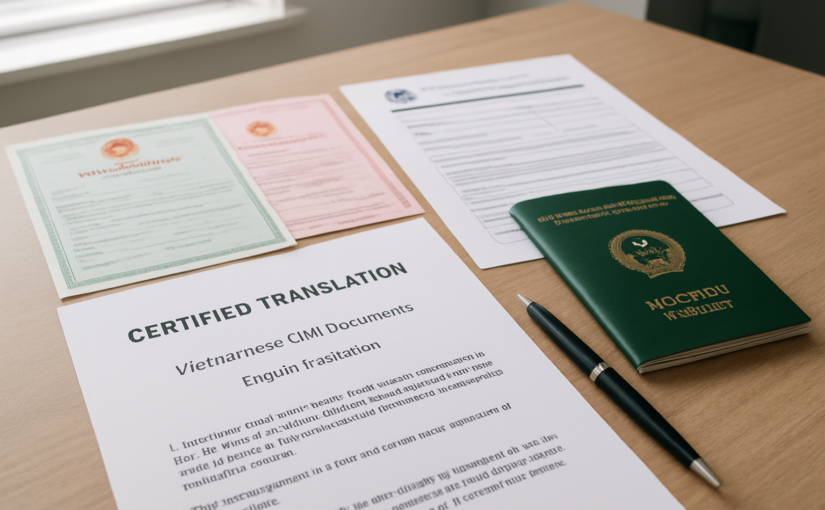
Why Certified Tagalog Translation Matters for Official Use
When you are submitting documents to a government agency, university, employer, or court, accuracy is not optional. A certified Tagalog translation helps ensure that important records written in Tagalog or English are translated clearly, completely, and in a format acceptable for official review. For many individuals and families, this is especially important when dealing with immigration petitions, school admissions, transcript evaluations, birth certificates, marriage records, and other sensitive paperwork.
Tagalog documents often contain names, civil registry terminology, abbreviations, stamps, handwritten notes, and formatting conventions that require careful handling. A casual or machine-generated translation may miss key details, create inconsistencies, or fail to meet submission requirements. That can lead to delays, requests for evidence, rejected applications, or unnecessary stress. Choosing a professional provider for certified Tagalog translation is one of the simplest ways to protect your timeline and your case.
In this guide, we cover best practices for certified Tagalog translation services, with a focus on three of the most common use cases: USCIS filings, academic records, and vital documents. If you need Tagalog-to-English or English-to-Tagalog translations for official purposes, understanding the process before you order can save time and reduce risk.
What Is a Certified Tagalog Translation?
A certified Tagalog translation is a complete and accurate translation of a document accompanied by a signed certification statement. That statement typically confirms that the translator or translation company is competent to translate the document and that the translation is true and complete to the best of their knowledge.
Certification is not the same as notarization, and it is not always the same as a sworn translation in other countries. In the United States, many institutions simply require a signed certificate of accuracy attached to the translated document. However, each agency or school may have its own standards, so it is wise to verify the exact requirement before placing your order.
In practical terms, a certified translation package often includes:
- A full translation of the source document
- Replication of key document elements such as headings, seals, stamps, signatures, and annotations
- A certificate of accuracy signed by the translator or translation provider
- Optional notarization if specifically requested
For official submissions, completeness is essential. A proper certified Tagalog translation should include all visible text, even if some portions are marked as illegible, stamped, or handwritten.
When You Need Certified Tagalog Translation Services
There are many situations where certified translation is required or strongly recommended. The most common include:
- USCIS immigration applications and supporting evidence
- Visa and consular submissions
- School admissions and transfer applications
- Credential evaluations and transcript reviews
- Birth, marriage, death, and baptismal certificates
- Court filings and legal records
- Employment verification and background documentation
- Medical records for official review
If your original document is in Tagalog and the receiving institution requires English, or if your document is in English and must be submitted in Tagalog for official use, professional certified Tagalog translation services can help ensure compliance.
Best Practices for USCIS Certified Tagalog Translation
USCIS is one of the most common reasons people request a certified translation. Immigration filings often involve civil records from the Philippines or documents that contain Tagalog entries, bilingual forms, or local registry terminology. USCIS generally requires that any foreign-language document submitted to the agency be accompanied by a full English translation and a certification from the translator.
1. Submit a Complete Translation, Not a Summary
USCIS expects a complete translation of the document, not just the parts you think are important. Names, dates, registry numbers, marginal notes, and stamps may all matter. A summary translation can trigger delays or follow-up requests.
2. Keep Names and Dates Consistent
One of the most common problems in immigration cases is inconsistency across documents. A translator should preserve spelling carefully and flag any obvious differences in the source material rather than silently “fixing” them. If a birth certificate, passport, and school record show variations, your attorney or preparer may need to address that separately.
3. Include Seals, Stamps, and Annotations
Official Philippine documents often include registry seals, remarks, and side notes. These should be translated or labeled appropriately, such as “[seal]” or “[illegible stamp],” where necessary. A high-quality certified Tagalog translation mirrors the source document as closely as possible in meaning and structure.
4. Use Clear Scans
Even the best translator cannot accurately translate text that is blurred, cut off, or unreadable. Before ordering, provide a full-color, high-resolution scan or photo of every page. Make sure corners, seals, and handwritten entries are visible.
5. Confirm Whether Notarization Is Needed
USCIS generally requires certification, not notarization, but some applicants request notarization for added formality or because another institution in the process asks for it. Always confirm current requirements for your exact filing type.
Best Practices for Academic Records and School Transcripts
Academic translations require a different level of care. Universities, licensing boards, and credential evaluation agencies often review transcripts line by line. A mistake in subject names, grading scales, or earned units can affect admissions decisions, transfer credits, or professional licensing outcomes.
1. Translate Course Titles Precisely
Course names should be translated accurately without oversimplifying the meaning. Educational terminology can vary by institution, and the translator should preserve the intent of the original record while presenting it in natural English or Tagalog as required.
2. Preserve the Original Structure
Transcript formatting matters. Terms, semesters, credit units, grades, and remarks should be presented in a clear, organized way that reflects the source document. This helps evaluators compare records efficiently.
3. Do Not Convert Grades Unless Requested
A translation should not reinterpret or recalculate grades unless the client specifically needs a separate credential evaluation. The role of a certified Tagalog translation is to translate the content faithfully, not to alter the academic record.
4. Include Abbreviations and Legends
If the transcript contains abbreviations, grading legends, or institutional notes, those should be translated as well. These details often help admissions officers understand the context of the record.
5. Check Institutional Requirements in Advance
Some schools accept digital certified translations, while others may ask for hard copies, sealed packages, or direct delivery. Before ordering, verify whether the institution has preferred formatting or delivery rules.
Best Practices for Vital Documents
Vital documents include birth certificates, marriage certificates, death certificates, certificates of no marriage record, divorce records, and similar civil documents. These records are frequently used in immigration, family law, inheritance matters, passport applications, and school enrollment.
1. Match the Source Document Exactly
Vital documents often contain standardized fields. A reliable certified Tagalog translation should preserve those fields accurately, including registry numbers, dates, places of issuance, and official remarks.
2. Handle Philippine Civil Registry Terms Carefully
Documents issued by local civil registrars or the Philippine Statistics Authority may include terminology that requires context-sensitive translation. Literal translation is not always enough; the translator must understand how official records are used in practice.
3. Capture Handwritten and Marginal Notes
Corrections, amendments, and handwritten annotations can be legally significant. If they are present, they should be included in the translation or marked appropriately if partially unreadable.
4. Review Spelling of Proper Names
Vital records are often used to establish identity across multiple agencies. Even a minor difference in a middle name, suffix, or place name can create confusion. Always review the translation carefully before submission.
How to Choose a Certified Tagalog Translation Provider
Not all translation services are equally prepared for official documents. If you are ordering a certified Tagalog translation, look for a provider that understands both language accuracy and document compliance.
Key qualities to look for
- Experience with USCIS, academic, and civil documents
- Native-level fluency and professional translation expertise
- A standard certificate of accuracy included with the order
- Attention to formatting, seals, signatures, and annotations
- Quality assurance or second-review process
- Transparent turnaround times and pricing
- Secure handling of personal documents
It is also helpful to ask whether the provider has experience with Philippine-issued records and whether they can translate both Tagalog-to-English and English-to-Tagalog documents for official use.
Common Mistakes to Avoid
Many document problems are preventable. Here are some of the most common mistakes people make when ordering certified translations:
- Using machine translation for official documents. Automated tools may be useful for casual reading, but they are not appropriate for certified submissions.
- Sending incomplete scans. Missing corners, cut-off seals, or blurred text can compromise the translation.
- Assuming certification and notarization are the same. They serve different purposes.
- Ordering too late. Rush service may be available, but planning ahead reduces stress and allows time for review.
- Ignoring institution-specific rules. USCIS, universities, and licensing boards may have different expectations.
- Failing to review names and dates. Always compare the translation with your other records before submission.
What to Prepare Before Ordering
To get the best result from a certified Tagalog translation service, gather the following before you place your order:
- A clear scan or photo of every page
- The target language required for submission
- The name of the receiving institution, if relevant
- Any deadline or filing date
- Instructions about notarization, hard copies, or delivery format
- Preferred spelling of names if your records contain variants
Providing complete information upfront helps the translator deliver a more accurate and submission-ready document.
Turnaround Time and Cost Considerations
Turnaround time for certified Tagalog translation depends on document length, legibility, complexity, and whether the file includes handwritten notes or multiple stamps. Simple one-page vital records may be completed quickly, while academic files and multi-page immigration packets usually take longer.
Pricing may be based on page count, word count, or document type. Be cautious about unusually cheap offers for official translations. Low-cost providers may skip quality review, omit formatting details, or provide certificates that do not meet your institution’s expectations. For important records, reliability is often more valuable than the lowest possible price.
Final Thoughts: Get Certified Tagalog Translation Right the First Time
If you are dealing with immigration filings, school applications, or legal records, a professional certified Tagalog translation is an essential step toward a smooth submission. Accurate translation protects the meaning of your documents, supports compliance with official requirements, and helps reviewers process your paperwork with fewer questions.
The best approach is simple: use a qualified provider, submit clear copies, verify the receiving institution’s rules, and review all names, dates, and document details before filing. Whether you need Tagalog-to-English translation for USCIS or English-to-Tagalog translation for official use, investing in a careful, complete, and properly certified translation can save time and prevent avoidable setbacks.
When the stakes involve your immigration status, education, family records, or legal identity, quality matters. Choosing the right certified Tagalog translation service can make all the difference.