
USCIS Interview Interpreter Requirements in 2026: What Applicants Need to Know
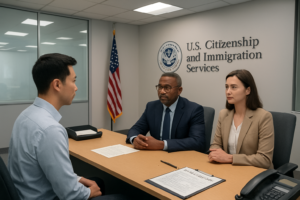
If you are preparing for an immigration interview and are not fully comfortable answering questions in English, understanding USCIS interview interpreter requirements should be one of your top priorities. A USCIS interview can affect a green card application, naturalization case, asylum matter, or other immigration benefit, so even small misunderstandings can create serious problems. In 2026, applicants still need to pay close attention to who may interpret, what paperwork is required, and whether a friend, family member, or professional interpreter is the safest choice.
This guide explains the practical side of USCIS interview interpreter requirements, including who can interpret at a USCIS interview, what Form G-1256, Declaration for Interpreted USCIS Interview means, and when it makes sense to hire a trained interpreter instead of relying on someone you know. If you are searching for dependable language support before a high-stakes immigration appointment, this article will help you make an informed decision.
Why USCIS Interview Interpreter Requirements Matter
USCIS officers use interviews to confirm identity, review eligibility, test credibility, and clarify details in an application. If an applicant misunderstands a date, a legal term, a biographic question, or a security-related issue, the consequences can include delays, requests for evidence, rescheduling, or even denial. That is why USCIS interview interpreter requirements are not just technical rules. They are part of the process designed to make sure communication is accurate and fair.
Many applicants assume that bringing any bilingual person is enough. In reality, USCIS expects the interpreter to be competent, impartial enough to interpret accurately, and able to complete required declarations. In some cases, a person may speak both languages well in everyday conversation but still lack the vocabulary, neutrality, or confidence needed in an official immigration interview.
Who Can Interpret at a USCIS Interview in 2026?
In general, the interpreter must be fluent in both English and the applicant’s language and must be able to interpret everything said during the interview completely and accurately. The interpreter should also be old enough and mature enough to understand the seriousness of the proceeding and the declaration they must sign.
While exact case handling may vary by office and interview type, the following principles are central to USCIS interview interpreter requirements:
- The interpreter must be competent in English and the applicant’s language.
- The interpreter must interpret fully and truthfully, not summarize or coach.
- The interpreter may be required to complete and sign Form G-1256.
- The interpreter should not have a conflict that could undermine the integrity of the interview.
- USCIS may refuse an interpreter who cannot communicate clearly or who appears to interfere with the process.
Applicants should always review the latest USCIS appointment notice and official instructions for their specific interview type, because some categories have unique procedures or limitations.
Can a Family Member Interpret?
Sometimes applicants want a spouse, sibling, adult child, or close friend to interpret. This may be convenient and less expensive, but it is not always the best option. Even where a relative is not automatically prohibited, USCIS may be concerned about bias, incomplete interpretation, or emotional involvement. A family member may unconsciously soften difficult answers, interrupt, answer for the applicant, or omit embarrassing facts.
For that reason, many applicants choose a neutral professional who understands the role. When accuracy matters, relying on a relative can be risky even if that person speaks both languages well.
Can an Attorney Also Interpret?
In many cases, the attorney’s role is separate from the interpreter’s role. Legal representation and language interpretation are different functions, and combining them may create practical or ethical concerns. An attorney must advocate, object when necessary, and monitor the legal process, while an interpreter must render speech neutrally and completely. If you have legal counsel, it is often better to have a separate interpreter available if one is needed.
Can a Minor Child Interpret?
Using a child as an interpreter is generally a bad idea in any formal immigration setting. A child may not understand legal terminology, may feel pressure, and may not be capable of handling sensitive topics such as marital history, finances, prior immigration violations, criminal issues, or trauma. Even if not expressly barred in every context, it is rarely appropriate and can raise immediate concerns with USCIS.
What Form G-1256 Means
A key part of modern USCIS interview interpreter requirements is Form G-1256, Declaration for Interpreted USCIS Interview. This form documents that the interview was interpreted and identifies the interpreter. It also includes declarations regarding the interpreter’s fluency and the accuracy of the interpretation.
In practical terms, Form G-1256 helps USCIS create a record that:
- The applicant used an interpreter during the interview.
- The interpreter stated they are fluent in English and the applicant’s language.
- The interpreter agreed to interpret accurately and completely.
- The applicant acknowledged that the interview was interpreted.
This form matters because it reinforces accountability. If an issue later arises about what was said, USCIS has documentation showing who interpreted and under what declaration. Applicants should not treat Form G-1256 as a routine signature page. It is an official statement connected to the interview record.
Why Form G-1256 Is Important for Applicants
For applicants, Form G-1256 is more than paperwork. It is a reminder that the interpreter is participating in a formal government proceeding. If your interpreter is hesitant, confused, or not confident enough to sign a declaration of fluency and accuracy, that is a warning sign. A weak interpreter can create inconsistencies that follow your case long after the interview ends.
Before the appointment, make sure the interpreter understands they may need to present identification, answer questions about their language ability, and sign Form G-1256 at the interview.
What USCIS Expects From an Interpreter During the Interview
To comply with USCIS interview interpreter requirements, the interpreter should do far more than simply “help out.” USCIS expects a professional standard of conduct, even when the interpreter is not formally certified.
A proper interpreter should:
- Interpret everything said by the officer and the applicant accurately.
- Use the first person when interpreting rather than changing the speaker’s meaning.
- Not add explanations unless asked to clarify language issues.
- Not answer questions for the applicant.
- Not coach, rehearse, or signal preferred answers during the interview.
- Remain calm, neutral, and respectful.
- Alert the officer if a word, phrase, or concept does not translate cleanly.
For example, if the officer asks, “Have you ever claimed to be a U.S. citizen?” the interpreter must convey that exact legal meaning. A casual or simplified version could lead to a dangerously inaccurate answer. This is one reason professional immigration interpreters are often worth the investment.
When to Hire a Professional Interpreter
Not every case requires a paid interpreter, but many do. If your interview involves legal complexity, sensitive facts, or any possibility of misunderstanding, hiring a professional may be the smartest choice. Applicants often underestimate how stressful the interview environment can be. Even people who understand everyday English may struggle with formal questions, accents, rapid follow-up questions, or requests to confirm prior statements in an application.
You should strongly consider hiring a professional interpreter if:
- Your English is conversational but not strong enough for legal or government terminology.
- Your case includes prior visa issues, overstays, waivers, arrests, or inconsistencies.
- Your marriage-based case may involve detailed personal questioning.
- Your asylum or humanitarian case involves trauma-sensitive facts.
- Your family member tends to become emotional, controlling, or overinvolved.
- You want a neutral person who understands interview protocol and Form G-1256.
A professional interpreter can also help reduce stress before the interview by reviewing the process, practicing question-and-answer flow, and explaining how interpreted communication works. They should not coach false answers, but they can help the applicant understand pacing, clarity, and the importance of listening carefully before responding.
Risks of Using the Wrong Interpreter
Failing to follow USCIS interview interpreter requirements can create avoidable problems. Some of the most common risks include:
- Rescheduling or refusal: USCIS may decline to proceed if the interpreter is unsuitable.
- Inaccurate testimony: Incorrect interpretation can create contradictions in the record.
- Credibility concerns: If answers seem coached or incomplete, the officer may doubt the applicant.
- Delays: Misunderstandings often lead to follow-up notices or additional evidence requests.
- Case denial: In serious situations, errors can directly affect eligibility findings.
These risks are especially important in high-stakes interviews where every answer matters. Saving money on interpretation can become expensive if it leads to delays, new legal fees, or a damaged case record.
How to Prepare for a USCIS Interview With an Interpreter
Preparation is one of the best ways to meet USCIS interview interpreter requirements successfully. Whether you use a professional interpreter or someone you know, do not wait until the day of the interview to discuss expectations.
Preparation Checklist
- Confirm that your interview notice permits or anticipates an interpreter if needed.
- Choose someone fluent in both languages and comfortable with formal interpretation.
- Make sure the interpreter understands they must translate completely and neutrally.
- Review your application so terminology, dates, and names are familiar.
- Bring valid identification for the applicant and interpreter.
- Arrive early in case USCIS has questions about the interpreter.
- Be ready to complete or sign Form G-1256 if requested.
It is also wise to remind the interpreter not to chat excessively with the officer, not to summarize long answers, and not to turn the interview into a conversation between themselves and USCIS. The officer is interviewing the applicant, not the interpreter.
Questions to Ask Before Hiring an Interpreter
If you are considering paid help, ask practical questions before booking. Since USCIS interview interpreter requirements can affect your case outcome, screening the interpreter carefully is worth the effort.
- Have you interpreted for USCIS interviews before?
- Are you comfortable signing Form G-1256?
- Do you interpret in my exact language or dialect?
- Do you understand immigration terminology relevant to my case?
- Will you interpret word-for-word and remain neutral?
- Can you provide in-person support at my local USCIS office if needed?
- What is your fee structure, cancellation policy, and wait-time policy?
These questions can help you distinguish a true professional from someone who is merely bilingual.
Final Thoughts on USCIS Interview Interpreter Requirements in 2026
In 2026, USCIS interview interpreter requirements remain a critical part of interview preparation for applicants who need language assistance. The right interpreter can help ensure that your answers are understood accurately, your rights are protected, and your case is presented clearly. The wrong interpreter can create confusion, credibility problems, and costly delays.
Understanding who can interpret, why Form G-1256 matters, and when to hire a professional gives you a major advantage before your appointment. If your interview involves important legal facts, sensitive personal history, or any uncertainty about English fluency, professional interpreting support is often the safer investment.
For applicants, families, and law firms seeking dependable interview support, the best approach is simple: treat interpretation as an essential part of case preparation, not an afterthought. When the stakes are high, accuracy matters.