
Immigrant Visa Backlogs in September 2026: Why Document Accuracy Matters More Than Ever
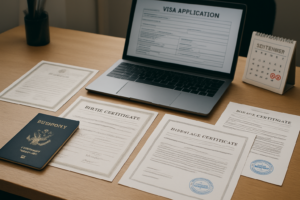
Immigrant visa processing in September 2026 continues to be shaped by backlogs, tighter review standards, and increased scrutiny of supporting documents. For applicants and petitioning families, that means one missing translation, one incomplete police certificate, or one poorly prepared civil document can lead to frustrating delays. In a high-backlog environment, every submission needs to be complete, consistent, and ready for review the first time.
One of the most common problem areas is the immigrant visa certified translation police certificate requirement. Many applicants know they need to collect police records, birth certificates, marriage certificates, divorce decrees, and court records, but they are often unsure whether those documents must be translated, who can certify the translation, and how the translation should be formatted for immigration use. These questions become even more urgent when visa bulletin movement is slow and interview slots are limited.
If your case is moving through the National Visa Center (NVC), a U.S. embassy, or a U.S. consulate, understanding the immigrant visa certified translation police certificate requirement can help you avoid costly mistakes. This guide explains when certified translations are needed, which documents commonly require them, how backlogs affect timing, and what to look for in a professional translation service.
What September 2026 Backlogs Mean for Immigrant Visa Applicants
Backlogs do not just affect waiting times. They also change how applicants should prepare. When agencies are handling large volumes of cases, officers have less flexibility to overlook avoidable issues. A document that is not translated properly may trigger a checklist, a request for additional documents, administrative processing, or even an interview delay.
In September 2026, many family-based and employment-based immigrant visa applicants are dealing with extended queues at multiple stages:
- Priority date waiting under the Visa Bulletin
- NVC document review delays
- Limited interview appointment availability at consulates
- Longer processing for security-related documents such as police certificates
Because of this, applicants should treat document preparation as a critical part of case strategy. A proper immigrant visa certified translation police certificate submission can be the difference between a smooth documentarily qualified case and weeks or months of avoidable delay.
What Is an Immigrant Visa Certified Translation Police Certificate?
An immigrant visa certified translation police certificate is a translated version of a police certificate issued in a language other than English, accompanied by a certification statement from the translator or translation provider. The certification generally confirms that the translation is complete and accurate and that the translator is competent to translate from the source language into English.
Police certificates are commonly required in immigrant visa cases to show an applicant’s criminal history, if any, in specific countries where they have lived. U.S. immigration authorities typically require applicants to submit police certificates from countries that meet the eligibility criteria listed by the Department of State. If the certificate is not in English, a certified translation is usually necessary unless the specific post accepts documents in another language under its local rules.
The key point is simple: if your police certificate is in Spanish, Arabic, French, Portuguese, Chinese, Russian, or any other non-English language, you may need an immigrant visa certified translation police certificate package before your case can move forward efficiently.
When Do You Need a Certified Translation for Police Certificates?
You generally need a certified translation when the original police certificate is not in English and the receiving immigration authority requires English-language documentation. In immigrant visa processing, this often applies at the NVC stage and again at the interview stage, depending on the embassy or consulate.
You should strongly consider obtaining an immigrant visa certified translation police certificate in the following situations:
- Your police certificate was issued in a non-English language
- Your civil documents are being uploaded to the CEAC system for NVC review
- Your consular post expects English translations for foreign-language documents
- You want to reduce the risk of a checklist or refusal under document deficiency grounds
- Your case involves multiple countries of residence and multiple foreign-language police records
Even if a document seems straightforward, such as a police clearance letter with only a few lines of text, it should still be translated correctly. Names, dates, official stamps, annotations, and issue dates matter. In backlog conditions, officers may not have time to interpret partially translated or informally translated records.
Which Civil Documents Usually Require Certified Translation?
Police certificates are only part of the picture. Most immigrant visa applicants submit a package of civil documents, and many of those may require certified translation as well. If your case includes any non-English records, it is wise to review the full set of likely translation needs early in the process.
Common documents that may require certified translation include:
- Birth certificates
- Marriage certificates
- Divorce decrees
- Death certificates
- Adoption records
- Court and prison records
- Military records
- Household registration documents
- Name change records
- Police certificates and criminal clearance letters
For many applicants, the most urgent item is still the immigrant visa certified translation police certificate because police records often expire for immigration purposes after a certain period or become outdated if the applicant returns to live in the issuing country. That makes timing especially important in 2026 backlog conditions.
Why Backlogs Make Translation Timing Critical
In a normal processing environment, applicants sometimes wait until the last minute to order translations. In September 2026, that approach is risky. Delays can happen at every step: obtaining the original certificate, confirming country-specific reciprocity rules, ordering the translation, uploading the file, and responding to any review issues.
Here is why timing matters:
- Police certificates can take time to obtain. Some countries issue them quickly, while others require appointments, fingerprints, mail processing, or in-country requests.
- Translations are not always same-day. Professional certified translation providers may need extra time for longer or complex documents, especially if seals, handwritten notes, or legal terminology are involved.
- NVC rejections cause compounding delays. If the upload is rejected because the translation is missing, incomplete, or unclear, you may lose valuable weeks in the review queue.
- Interview scheduling can be unpredictable. Some applicants receive little notice once a slot opens. If your immigrant visa certified translation police certificate is not ready, you may scramble to meet the appointment deadline.
For these reasons, many applicants now prepare translations proactively rather than waiting for a checklist.
What Makes a Translation Acceptable for Immigration Use?
Not every translation is suitable for an immigrant visa case. A proper immigration translation should be complete, legible, and professionally formatted. It should reflect all visible text on the original document that is relevant to the record, including stamps, seals, signatures, handwritten notes, and official remarks where applicable.
A strong immigrant visa certified translation police certificate submission usually includes:
- A full English translation of the original document
- The translator’s or translation company’s certification statement
- The translator’s name and signature, if required by the provider’s process
- The date of certification
- Clear formatting that matches the structure of the original where possible
The translation should also preserve accuracy in names, passport numbers, case numbers, and dates. Even a small inconsistency between the translated police certificate and other immigration records can create confusion. If your birth certificate uses one spelling of a name and your police certificate uses another, the translation should reflect the source exactly while allowing you to address discrepancies through proper immigration documentation if needed.
Common Mistakes That Lead to Delays
In a high-intent commercial context, this is where applicants often realize that choosing the cheapest or fastest option without checking quality can backfire. The following mistakes frequently cause problems:
- Submitting a non-English police certificate without a certified translation
- Using a machine translation with no certification
- Providing only a partial translation
- Uploading blurry scans that make the original or translation unreadable
- Misspelling names or omitting annotations
- Failing to translate stamps, seals, or handwritten remarks
- Waiting until interview notice arrives before ordering translations
Any of these errors can undermine an otherwise strong case. During September 2026 backlogs, the cost of correction is often higher because each fix may push your case back into another review cycle.
How to Prepare Your Police Certificate and Civil Documents Efficiently
If you want to stay ahead of delays, follow a structured preparation plan. This is especially helpful for applicants managing multiple foreign documents across several countries.
- Check country-specific reciprocity guidance. Confirm whether a police certificate is available, what format is accepted, and whether there are special instructions for your country.
- Collect original or official copies early. Do not wait until your priority date becomes current if obtaining records takes time in your country.
- Identify all non-English documents. Make a list of every record that may need certified translation, not just the police certificate.
- Order professional certified translations. Ensure the provider understands immigration requirements and can produce an immigrant visa certified translation police certificate that is suitable for NVC and consular use.
- Review for consistency. Check names, dates, places of birth, and document numbers against passports and prior filings.
- Scan clearly and save organized files. Use readable filenames and keep both originals and translations together.
- Upload or carry the documents as instructed. Follow NVC and embassy-specific submission rules carefully.
How to Choose a Certified Translation Service for Immigration Cases
When selecting a translation provider, look beyond price alone. Immigration cases are document-sensitive, and the service should be familiar with legal and civil records. A reliable provider can help reduce stress and improve submission quality.
Look for these qualities:
- Experience with immigration and visa documents
- Clear certification included with each translation
- Ability to translate police certificates and civil documents accurately
- Fast turnaround options for urgent cases
- Confidential handling of personal records
- Responsive customer support
- Transparent pricing with no hidden fees
If your case is time-sensitive, ask whether the provider has handled immigrant visa certified translation police certificate requests for NVC or consular processing before. That experience can matter when formatting and completeness are essential.
Do You Need Translation for Documents Other Than English at Every Embassy?
Requirements can vary by post, but applicants should not assume that a local-language document will be accepted without English translation. Some embassies may accept documents in the official language of the country where the interview takes place, while others still expect English translations for immigrant visa processing. Because rules can differ, the safest approach is to verify the current instructions for your specific post and prepare accordingly.
In practice, obtaining an immigrant visa certified translation police certificate is often the most conservative and efficient choice when the original is not in English. It helps ensure the document can be reviewed by all relevant parties, including NVC staff, consular officers, and any downstream adjudicators who may access the case file.
Final Thoughts: Protect Your Place in Line During September 2026 Backlogs
Immigrant visa backlogs in September 2026 are making precision more valuable than speed alone. Families and applicants who prepare complete, accurate document packages are in a better position to avoid repeat reviews and missed opportunities. That is especially true for police certificates and civil documents issued in foreign languages.
If your case includes any non-English records, do not leave translation to chance. A professionally prepared immigrant visa certified translation police certificate can help you meet NVC requirements, reduce the risk of document rejection, and move forward with greater confidence. In a backlog-heavy environment, the smartest strategy is often simple: prepare early, translate correctly, and submit a complete file the first time.
Whether you are responding to an NVC notice, preparing for a consular interview, or organizing documents before your priority date becomes current, investing in accurate certified translation is a practical step that can save time, stress, and money. When every month matters, document readiness matters too.