La guía definitiva para elegir al intérprete judicial adecuado en litigios comerciales de alto riesgo

La guía definitiva para elegir al intérprete judicial adecuado en litigios comerciales de alto riesgo

Court certified interpreter

En el panorama contemporáneo del comercio global, las corporaciones multinacionales (MNC, por sus siglas en inglés) operan dentro de una compleja red de alianzas transfronterizas, cadenas de suministro y marcos de propiedad intelectual. Con esta integración sin precedentes surge un efecto secundario inevitable: un marcado aumento en los litigios internacionales de alto riesgo. Cuando entidades multimillonarias se enfrentan por complejas infracciones de patentes, disputas contractuales transfronterizas o violaciones antimonopolio, el escenario suele ser un tribunal federal de los Estados Unidos o un tribunal de arbitraje internacional.

En estos entornos de alta presión, el idioma principal de las actuaciones es el inglés; sin embargo, la evidencia crítica —que abarca desde testimonios de ingenieros y correos electrónicos ejecutivos hasta esquemas técnicos— a menudo tiene sus raíces en idiomas extranjeros. En consecuencia, el resultado del caso con frecuencia depende de un factor que muchos equipos jurídicos corporativos consideran secundario: el intérprete judicial.

Ya sea que se esté navegando por una compleja demanda de patentes de teléfonos inteligentes o por una reclamación de incumplimiento de contrato de gran valor, no es una exageración afirmar que un intérprete judicial competente puede ayudarle a ganar su caso, mientras que uno deficiente puede hacer que lo pierda por completo. En los litigios comerciales de alto riesgo, los argumentos legales son tan fuertes como el lenguaje utilizado para transmitirlos. Esta guía integral explora los matices ocultos de la interpretación judicial, los campos de batalla éticos de la sala de audiencias y cómo seleccionar un activo lingüístico de élite para proteger sus intereses corporativos.


1. El espectro de la certificación: Por qué no todos los intérpretes certificados son iguales

Cuando un asesor jurídico corporativo busca un intérprete, la lista de verificación estándar generalmente comienza y termina con verificar que el individuo esté “certificado por el tribunal”. Si bien la certificación es un requisito básico necesario, asumir que todos los intérpretes certificados poseen el mismo nivel de competencia es un error peligroso. En los Estados Unidos, la certificación judicial requiere aprobar rigurosos exámenes estatales o federales diseñados para evaluar la interpretación simultánea, la interpretación consecutiva y la traducción a la vista. Sin embargo, la historia y la puntuación de estas certificaciones revelan un amplio espectro de capacidades.

La cláusula del abuelo frente a las evaluaciones modernas

Los sistemas de evaluación estandarizados y modernos utilizados por los tribunales estatales no se implementaron de la noche a la mañana. Por ejemplo, muchos programas de certificación estatal sólidos comenzaron formalmente alrededor de 1996. Antes de que estos rigurosos exámenes se volvieran obligatorios, a las personas que habían estado trabajando en el campo durante años a menudo se les otorgaba la certificación bajo una “cláusula del abuelo” (o derechos adquiridos).

Esto significa que actualmente hay intérpretes en ejercicio que nunca tomaron ni aprobaron los exámenes de certificación modernos y altamente exigentes. Si bien algunos de estos intérpretes veteranos han acumulado una experiencia invaluable, otros pueden carecer del dominio fundamental de la terminología legal y técnica avanzada requerida para los litigios comerciales modernos.

El margen de las puntuaciones de aprobación

Además, entre quienes han aprobado los exámenes de certificación modernos, el margen de competencia varía enormemente. Para lograr la certificación, el aspirante debe alcanzar un umbral mínimo de aprobación, que a menudo es una puntuación del 70% o 75% en los componentes orales.

Considere la diferencia en un entorno de juicio entre un intérprete que aprobó el examen con una puntuación mínima de 76 y un profesional de élite que logró una puntuación de 98. En una comparecencia penal estándar, una brecha lingüística menor podría no alterar el curso de la justicia. Pero en un juicio comercial complejo que involucra jerga técnica intrincada, ingeniería financiera o reclamaciones de patentes, una variación del 22% en la precisión lingüística puede resultar en malentendidos catastróficos.

Profundidad académica y bicultural

El nivel superior de los intérpretes judiciales —los activos de élite necesarios para las disputas corporativas de alto riesgo— con frecuencia poseen títulos académicos avanzados, como una Maestría o un Doctorado en lingüística, traducción o derecho. Estas personas típicamente han vivido y recibido una rigurosa formación académica tanto en los Estados Unidos como en el país de origen del idioma meta.

Ellos no se limitan a traducir palabras; comprenden los marcos institucionales, económicos y legales de ambas culturas. Combinadas con un mínimo de cinco años de experiencia activa en juicios de alto nivel, estas credenciales separan a los especialistas lingüísticos de élite de los intérpretes bilingües promedio.


2. La “batalla de los traductores” y las secuelas de una mala traducción

Los litigios comerciales de alto riesgo a menudo se convierten en lo que los litigantes experimentados describen como una “batalla de los traductores”. En juicios donde hay millones de dólares en juego, los equipos legales contrarios examinan minuciosamente cada documento traducido y cada interpretación hablada. Las objeciones a las traducciones son comunes, y la sala del tribunal puede transformarse rápidamente en un debate académico lingüístico.

[Testimonio extranjero original] ──> [Interpretación del intérprete principal] ──> [Objeción del abogado contrario]
                                                                                           │
                                                                                           ▼
                                                                           [Disputa resuelta por experto]

Cuando surge una disputa sobre si una traducción es precisa, el tribunal puede verse obligado a recurrir a un experto en lingüística o a un traductor externo neutral para resolver el estancamiento. Si su equipo legal confía en un intérprete que posteriormente el juez o un árbitro determina que ha traducido incorrectamente un documento crítico o el testimonio de un testigo, el daño para su caso es profundo:

  • Pérdida de credibilidad: La credibilidad de su testigo y, por extensión, de toda su estrategia legal, se ve gravemente comprometida ante los ojos del jurado o del juez.

  • Exclusión de pruebas: Piezas vitales de evidencia testimonial o documental pueden ser declaradas inadmisibles o recibir menos peso debido a que su integridad lingüística está en duda.

  • Disrupción estratégica: Sus abogados litigantes se ven obligados a gastar valioso tiempo y energía defendiendo una traducción en lugar de enfocarse en los argumentos legales centrales del caso.

Para evitar estos escollos, su traductor e intérprete principal debe poseer la autoridad académica, la confianza y la competencia absoluta requeridas para abrumar y silenciar cualquier objeción lingüística planteada por la contraparte.


3. La instrumentalización de los intérpretes de control: Un campo de batalla ético

En los juicios de alto riesgo que involucran a testigos de idioma extranjero, es una práctica común que cada parte contrate a su propio intérprete. Mientras que un intérprete actúa como el “intérprete principal” oficial designado por el tribunal para asentar el registro, la parte contraria empleará a un “intérprete de control” (o intérprete monitor) para que se siente en la mesa de asesoría, escuche atentamente y señale cualquier inexactitud en la interpretación oficial.

El Código Americano de Ética Profesional

En los Estados Unidos, el comportamiento de los intérpretes de control se rige por un estricto código de ética profesional. Si un intérprete de control identifica un error material en la versión del intérprete principal, se espera que actúe con decoro profesional.

De acuerdo con las directrices éticas establecidas, el intérprete de control debe notificar discretamente a su abogado, quien luego presenta una objeción ante el tribunal. Alternativamente, durante un receso o a través de una sesión privada estructurada (sidebar), el intérprete de control debe plantear la objeción de manera personal y profesional al intérprete principal, dándole la oportunidad de autocorregir el error en el registro. El objetivo es preservar un registro exacto, no montar un espectáculo teatral.

Estrategia internacional y disrupción procesal

Fuera de los Estados Unidos, sin embargo, estos principios éticos profesionales con frecuencia se ignoran o se desconocen por completo. En arbitrajes internacionales o disputas transfronterizas que involucran a conglomerados extranjeros, se sabe que algunas grandes empresas —como Samsung y otros gigantes tecnológicos globales— emplean tácticas agresivas y altamente disruptivas en la sala de audiencias.

En lugar de utilizar a los intérpretes de control como una medida pasiva de control de calidad, contratan deliberadamente a intérpretes reconocidos por ser hiperagresivos como armas tácticas. Estos individuos se sientan a la mesa e interrumpen de forma audible, reinterpretando y disputando casi cada palabra del testimonio de un testigo.

Enfoque de interpretación Estándar ético de EE. UU. Estrategia internacional disruptiva
Objetivo principal Proteger la precisión del registro oficial. Interrumpir el flujo del testimonio y desestabilizar al testigo.
Método de objeción Plantear las inquietudes discretamente al abogado o en privado al intérprete principal. Interrumpir audiblemente, cuestionar palabras individuales y forzar constantes sesiones privadas.
Impacto en el proceso Flujo del juicio fluido, preciso y profesional. Testimonio fragmentado, equipos legales exhaustos y registro fracturado.

Esta interferencia incesante suele ser una estrategia calculada y diseñada para romper el ritmo del contrainterrogatorio, poner nervioso al testigo, confundir al jurado y agotar al equipo legal contrario. Para un intérprete que no está preparado, este nivel de hostilidad puede ser psicológicamente paralizante.


4. Sobrevivir a la presión: Resiliencia psicológica y profesional

Debido a que las salas de audiencias de alto riesgo pueden transformarse en campos de batalla lingüísticos agresivos, la fluidez técnica por sí sola es insuficiente. Un intérprete de litigios comerciales de élite debe poseer una inmensa resiliencia psicológica y resistencia emocional.

Cuando se ve sometido a una ráfaga de objeciones por parte de un intérprete de control hostil, un intérprete promedio puede perder la confianza, comenzar a dudar de sus opciones de vocabulario o mostrar una vacilación visible. Cualquier signo de debilidad o incertidumbre por parte del intérprete es explotado inmediatamente por abogados litigantes experimentados para socavar la validez del testimonio.

El intérprete adecuado para un caso de alto riesgo es un veterano capaz de sobrevivir a una inmensa presión ambiental. Debe mantener la calma, proyectar autoridad absoluta y ofrecer traducciones precisas sin permitir que la naturaleza adversarial de la sala del tribunal degrade su rendimiento cognitivo. Debe ser capaz de mantenerse firme en sus traducciones cuando sea desafiado, defendiendo sus elecciones lingüísticas basándose en una rigurosa lógica gramatical y cultural.


5. El valor de la consistencia: Por qué cambiar de intérprete es un error estratégico

Otro error operativo frecuente cometido por los departamentos legales corporativos es la rotación constante de intérpretes a lo largo del ciclo de vida de una sola demanda. Debido a conflictos de programación o medidas de reducción de costos a corto plazo, un equipo legal podría usar un intérprete para la fase de exhibición de documentos (discovery), otro para las declaraciones juradas (depositions) y un tercero para el juicio propiamente dicho.

Esta falta de continuidad introduce vulnerabilidades severas en su caso:

  1. Pérdida de consistencia terminológica: Cada industria —ya sea la fabricación de semiconductores, el desarrollo farmacéutico o el financiamiento marítimo— tiene su propia nomenclatura altamente especializada. Diferentes intérpretes pueden usar palabras en inglés distintas, aunque técnicamente correctas, para el mismo término técnico extranjero. Si la terminología cambia entre las transcripciones de las declaraciones juradas y el registro del juicio, los abogados de la contraparte pueden explotar estas pequeñas variaciones para inventar contradicciones artificiales en las declaraciones de sus testigos.

  2. Sacrificio del conocimiento acumulado: A lo largo de semanas de declaraciones y revisiones de documentos, un intérprete acumula una comprensión profunda y sistémica de los hechos específicos, las jerarquías corporativas y los matices técnicos de su caso. Aprenden los hábitos de habla únicos, los acentos y los modismos de sus testigos clave. Si reemplaza a ese intérprete, desecha ese conocimiento acumulado y obliga a un nuevo intérprete a comenzar desde cero.

Siempre que sea posible, elija a un intérprete de élite a principios de la fase de descubrimiento, asegúrese de que esté completamente informado sobre la tecnología subyacente y los hechos del caso, y manténgase con ese mismo intérprete hasta el veredicto final.


6. Asociarse con una agencia empresarial probada: L.A. Translation and Interpretation, Inc.

Encontrar a un individuo que cumpla con todos estos estrictos requisitos —poseer un título avanzado, contar con décadas de experiencia en juicios, ostentar una puntuación de certificación casi perfecta y demostrar la resiliencia para soportar tácticas agresivas de interpretación de control— es un desafío extraordinario para un bufete de abogados corporativos que actúa por su cuenta. El método más confiable para asegurar talento de élite es asociarse con una agencia de nivel empresarial que se especialice en interpretación legal de alto riesgo.

L.A. Translation and Interpretation, Inc. ha operado como un proveedor líder de soluciones de interpretación judicial de élite para la comunidad legal internacional durante más de 25 años.

  • Evaluación y selección rigurosas: A lo largo de un cuarto de siglo de trayectoria, la empresa ha evaluado, clasificado y seleccionado minuciosamente a miles de intérpretes. Saben con precisión qué individuos poseen los antecedentes académicos de élite (credenciales de Maestría y Doctorado) y la resistencia psicológica requerida para los litigios de alto riesgo.

  • Alineación estratégica: L.A. Translation and Interpretation, Inc. no se limita a asignar a cualquier persona bilingüe disponible a su expediente. Analizan cuidadosamente el dominio específico de su demanda —ya sea una disputa compleja de patentes químicas o una ruptura de contrato multijurisdiccional— y vinculan a su equipo legal con un intérprete que posea una profunda experiencia en esa materia exacta.

  • Protección contra tácticas disruptivas: Al proporcionar profesionales experimentados que están profundamente familiarizados tanto con las estrategias procesales nacionales como internacionales, la agencia garantiza que su intérprete no se verá abrumado por intérpretes de control agresivos o tácticas corporativas hostiles.


Conclusión

En los litigios comerciales de alto riesgo, no hay margen para el error. La elección de un intérprete judicial es una decisión estratégica crítica que influye directamente en la integridad de sus pruebas, la credibilidad de sus testigos y la resolución definitiva de su caso. No ponga en peligro un activo corporativo de millones de dólares confiando en bilingües generalistas no verificados o en intérpretes certificados de nivel inicial.

Comprenda las vastas disparidades dentro del sistema de certificación, mantenga la consistencia lingüística a lo largo de sus procedimientos y prepárese para las realidades adversariales de los litigios transfronterizos. Cuando los riesgos son mayores, confíe su estrategia lingüística a los expertos probados. Contacte a L.A. Translation and Interpretation, Inc. para asegurar intérpretes judiciales de élite, evaluados y resilientes que protegerán su registro y le ayudarán a asegurar un resultado favorable.
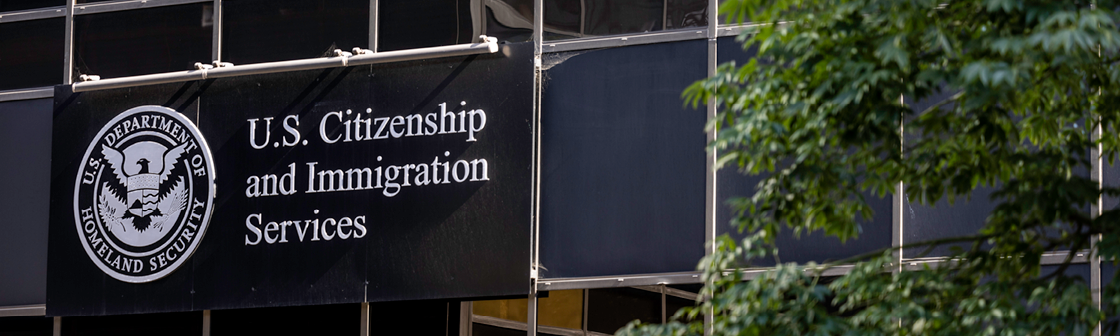

How to Prepare Certified Translations for USCIS to Avoid Costly RFEs

Mastering the Matrix: How to Prepare Certified Translations for USCIS to Avoid Costly RFEs

United States | New USCIS photo policy for enhanced identity ...

Navigating the United States Citizenship and Immigration Services (USCIS) framework is an intricate, high-stakes journey. Whether you are seeking a marriage-based green card, pursuing an employment-based visa, or embarking on an investment-based immigration pathway like the EB-5 program, the accuracy of your application is paramount. Every year, thousands of immigration cases are delayed, disrupted, or placed in jeopardy due to a single, easily avoidable administrative hurdle: poorly prepared document translations.

When a supporting document—such as a birth certificate, passport, or marriage license—is not originally written in English, USCIS strictly requires a certified translation. Failing to meet their exact specifications triggers a dreaded Request for Evidence (RFE). An RFE pauses the processing of your application, adds months of agonizing delays, and introduces unnecessary complications to your immigration journey.

To ensure your application transitions smoothly through the evaluation phase, you must understand exactly how to prepare certified translations that satisfy federal standards. This comprehensive guide breaks down the legal requirements, uncovers hidden pitfalls, and explains why professional execution is your best defense against an RFE.


1. The Critical Importance of Vital Records in Immigration

Every standard immigration petition relies on primary evidence to verify your identity, familial relationships, and legal status.

  • Marriage-Based Green Cards: In these petitions, documents like marriage certificates and divorce decrees are foundational. They establish the legal validity of your current relationship and prove that any prior marriages were legally terminated.
  • Employment-Based Visas (e.g., H-1B, L-1, EB-1/2/3): You must prove your professional credentials, which often requires translating foreign academic transcripts, university degrees, and professional certifications or licenses.
  • Investment-Based Immigration (EB-5): Applicants must submit extensive financial footprints, including foreign bank statements, business registration papers, and property deeds, to prove the legal source of their investment capital.

Regardless of the immigration path, foundational records—specifically birth certificates, passports, and marriage certificates—form the bedrock of your file. If the USCIS officer reviewing your case cannot easily read, understand, and verify these documents against federal guidelines, the case grinds to a halt.


2. The Golden Rule: You Cannot Translate Your Own Documents

One of the most common and damaging mistakes bilingual applicants make is translating their own foreign documents. It seems logical: if you are completely fluent in both English and your native language, it appears faster and more economical to type up the translation yourself.

However, USCIS explicitly forbids self-translation, stating: First, you cannot translate the document yourself, no matter how competent or advanced your bilingual skills are.

This restriction applies even if you are a professionally trained, state-certified translator by trade. USCIS strictly enforces this policy to eliminate any potential conflict of interest. An applicant has a personal stake in the outcome of their immigration case, which introduces a risk of bias, selective translation, or intentional omission of unfavorable details.

Furthermore, this rule extends to your immediate family members, sponsors, or anyone with a financial or personal interest in the petition. The translation must be executed by an independent, neutral third-party professional translator or translation service.


3. Deconstructing USCIS Requirements for Certified Translations

To understand what makes a translation acceptable, we must look at the specific language of federal regulations. Under 8 CFR 103.2(b)(3), the rule is defined as follows:“Any document containing foreign language submitted to USCIS shall be accompanied by a full English translation which the translator has certified as complete and accurate, and by the translator’s certification that he or she is competent to translate from the foreign language into English.”

To satisfy this regulation, your translation package must consist of two main elements: the English translation itself and a signed Certificate of Translation. A valid certification must meet the following criteria:A. The Competency Statement

The certificate must include a formal statement explicitly declaring that the translator is fluent in both English and the source language. It must clearly state that they possess the skills and knowledge required to accurately render the foreign text into English.B. The Accuracy Statement

The translator must attest under penalty of perjury that the English version is a true, accurate, and complete representation of the original foreign document.C. Complete Identification Data

The certificate cannot be anonymous. It must display the translator’s full name, physical signature (digital signatures are accepted if they meet USCIS standards, but hand-signed originals are always safest), the date the translation was completed, and the translator’s contact details (address, phone number, and email).


4. Crucial Guidelines That Many Applicants Overlook

Beyond the basic certification statement, USCIS maintains rigid, unwritten preferences regarding the format and depth of the translation. Overlooking these details is a common trigger for an RFE.The Completeness Requirement (No Summaries Allowed)

A translation must be a word-for-word replication of the original document. Translators are not permitted to summarize, interpret, or omit any text, even if a section seems irrelevant or repetitive. Every single element on the page must be translated, including:

If a stamp or piece of handwriting is completely illegible due to fading or damage, the translator must explicitl

  • Faint official stamps, seals, and watermarks.
  • Handwritten notes, signatures, or initials in the margins.
  • Serial numbers, tracking codes, and barcodes.
  • Footnotes, legal citations, and text printed on the reverse side of the page.

y note this in the text by writing [Illegible] or [Seal faded/unreadable]. Leaving a blank space without an explanation flags the document as incomplete.Visual and Layout Matching

While your translation does not need to be an identical graphic design replica, it should mirror the layout of the original document as closely as possible. If the original birth certificate uses a multi-column table or a specific grid layout, the English translation should use a similar structure. This allows the USCIS agent to review the documents side-by-side and quickly match names, dates, and locations between the original and translated versions.Exact Name and Date Synchronization

Spelling inconsistencies across documents are one of the fastest ways to trigger an RFE or an intensive background check. The spelling of all names (first, middle, and surnames) in the English translation must match the spelling used in your primary immigration forms and your passport.

Additionally, be mindful of date formatting. Many countries use the Day/Month/Year format, whereas the United States uses Month/Day/Year. A professional translator will ensure that dates are translated clearly (e.g., writing out “October 4, 1992” instead of leaving ambiguous numbers like “04/10/1992”) to prevent confusion.


5. The Impact of an RFE: Why Avoidance is Your Best Strategy

Receiving an RFE is more than a minor inconvenience; it disrupts your immigration strategy. When USCIS issues an RFE:

  1. Immediate Application Freeze: Processing of your case stops entirely. If you are waiting for a work permit (EAD) or travel authorization (Advance Parole), those benefits are also delayed.
  2. Strict Timelines: USCIS gives you a rigid deadline (typically 30 to 87 days) to submit the requested evidence. Missing this deadline results in an automatic denial of your application, requiring you to refile from scratch and repay all government filing fees.
  3. Increased Scrutiny: Once a file is flagged for an administrative error like an improper translation, the reviewing officer may scrutinize the rest of your application more heavily.

Working with an experienced professional service minimizes these risks, ensuring your documentation is approved on the first pass.


6. Secure Your Peace of Mind with L.A. Translation and Interpretation, Inc.

When your future in the United States depends on the accuracy of your paperwork, you cannot afford to rely on unverified online translators or automated software. You need a trusted partner who understands the nuances of immigration compliance.

L.A. Translation and Interpretation, Inc. specializes in delivering certified translations that meet and exceed all USCIS requirements.

  • Unrivaled Industry Experience: For over 25 years, L.A. Translation and Interpretation, Inc. has provided translation solutions for thousands of immigration applicants, maintaining a flawless acceptance record with USCIS.
  • Comprehensive Certification Standards: Every translation is accompanied by a formal Certificate of Translation printed on official corporate letterhead. To provide an extra layer of authority and validation, every document is stamped and fully notarized. While USCIS does not technically mandate notarization for all basic filings, having a notarized seal establishes indisputable authenticity, completely eliminating any skepticism from federal processing agents.
  • Rapid 1-Day Turnaround: Immigration timelines are unforgiving. L.A. Translation and Interpretation, Inc. provides expedited 1-day turnaround times for vital statistics documents, including birth certificates, death certificates, marriage licenses, and divorce decrees.
  • Expert Global Linguistics: With a network covering dozens of source languages, their team ensures that regional dialects, legal jargon, and bureaucratic phrasing are translated accurately and professional into American English.

Conclusion

Preparing your immigration petition demands meticulous attention to detail. While it is tempting to focus solely on complex legal strategies, do not overlook the foundational documentation. A certified translation is not a mere formality; it is a critical piece of evidence that verifies your identity and legal history.

By remembering the golden rules—never translate your own documents, ensure total word-for-word completeness, match the original layout, and maintain identical name spellings—you protect yourself against administrative delays. When you are ready to submit your file with complete confidence, let the experts handle the heavy lifting. Contact L.A. Translation and Interpretation, Inc. today to secure your certified, stamped, and notarized translations in just 24 hours.

Evolution of Simultaneous Interpretation Equipment

The evolution of simultaneous interpretation (SI) equipment is a fascinating journey from clunky telephone wires to seamless, cloud-based digital platforms. By eliminating the massive delays of consecutive translation, this technology fundamentally transformed international diplomacy and global business.

Here is a breakdown of how the equipment has evolved over the past century:

1. The Early Days: The “Hushaphone” (1920s–1930s)

  • The Filene-Finlay System: In the mid-1920s, American businessman Edward Filene and British engineer A. Gordon-Finlay developed the first “telephonic interpreting” system, which they tested at the League of Nations.

  • How it worked: It functioned much like a telephone switchboard. Interpreters listened through basic headsets and spoke into microphones equipped with a “Hushaphone”—a mechanical funnel attachment designed to muffle their voices so they wouldn’t disturb the audience.

  • IBM’s Involvement: IBM’s founder, Thomas Watson Sr., acquired the patent in 1931. However, early on, the equipment was largely used to read pre-translated texts aloud at the same time the speaker was talking, rather than true on-the-spot interpretation.

2. The Breakthrough: The Nuremberg Trials (1945–1946)

  • The Ultimate Test: Following WWII, the Nuremberg Trials required a massive, real-time multilingual setup (English, French, Russian, and German). Using traditional consecutive interpretation—where a speaker pauses for the translator—would have caused the trials to drag on for years.

  • The IBM Setup: IBM provided a highly advanced, multi-channel wired system for free. Participants wore headsets and turned a dial to their preferred language.

  • The “Traffic Light”: Because audio quality was still spotty and speakers talked too fast, interpreters were given a switchboard that controlled a light on the speaker’s podium. They could flash a yellow light to tell the speaker to slow down, or a red light to tell them to stop and repeat. This historic event proved simultaneous interpretation was highly effective.

3. The Golden Age of Hardware: Infrared & ISO Standards (1950s–2000s)

  • Permanent Installations: Following the success at Nuremberg, the newly formed United Nations heavily adopted the technology, building permanent, soundproof booths into their assembly halls.

  • The Shift to Wireless: Early conference setups required miles of heavy copper wiring. By the late 20th century, the industry shifted to Infrared (IR) technology. Audio was transmitted via invisible light waves to lightweight, battery-operated receivers worn by attendees.

  • Standardization: As the profession grew, the International Organization for Standardization (ISO) established strict requirements for booth sizes, ventilation, and acoustic audio consoles to protect interpreters from “acoustic shock” (sudden loud feedback) and cognitive fatigue.

4. The Digital Revolution: Remote & Cloud (2010s–Present)

  • Remote Simultaneous Interpretation (RSI): The advent of high-speed internet and cloud computing paved the way for platforms like KUDO, Interactio, and later Zoom.

  • Software over Hardware: Heavy, physical mixing consoles have largely been replaced by “soft consoles” on laptops. Interpreters can now work from decentralized, specialized studio hubs—or even their own homes—relying on live video feeds instead of peering through the glass of a physical booth.

  • AI Integration: Modern setups are beginning to blend human interpretation with artificial intelligence. Digital interfaces now offer AI-assisted speech-to-text overlays that can automatically transcribe numbers, names, and technical terms on the interpreter’s screen in real-time to assist them while they speak.

Contact info@latranslation.com or 213-385-7781 to rent simultaneous interpreting equipment for your event.

The Vital Voice: U.S. Immigration in 2025 and the Need for Certified Interpreters

The Vital Voice: U.S. Immigration in 2025 and the Need for Certified Interpreters

diverse group of people of different ethnicities and races smiling together, AI generated

The United States has long been defined by its immigrant population, a dynamic and ever-evolving mosaic of cultures, traditions, and languages. Under President Trump’s immigration policy, net international migration to the U.S. dropped significantly in 2025, with estimates indicating an inflow of roughly 1.3 million people, down from the peak of 2.7 million in 2024. Between 560,000 and 575,000 green cards were issued abroad in 2025, a decrease from the ~670,000 issued in 2024.

Consequently, the total U.S. foreign-born population stabilized near 51.9 million as of mid-2025, comprising about 15.4% of the nation’s population. However, we still see a continuous wave of individuals and families seeking new opportunities, safety, and a better quality of life in the U.S. This influx not only reshapes the economic and cultural fabric of the nation but also fundamentally alters the linguistic landscape of our communities.

Nowhere is this linguistic diversity more evident than in the nation’s most populous state. In California, nearly 40% of the population speak a foreign language at home.

California has more immigrants than any other state.

  • California is home to 10.9 million immigrants—22% of the foreign-born population nationwide.
  • In 2024, the most current year of data, 28% of California’s population was foreign-born, the highest share of any state and more than double the share in the rest of the country (13%).
  • Almost half (44%) of California children have at least one immigrant parent.
  • A third (34%) of prime-working-age adults—those 25 to 54—are foreign born; half (51%) of all foreign-born Californians are in this age group.

This staggering statistic transforms local neighborhoods into global intersections. From the bustling streets of Los Angeles to the agricultural hubs of the Central Valley, the air is filled with a symphony of global dialects.

Geographic Demographics & Communities

  • Los Angeles County: LA alone is home to approximately 3.3 million immigrants, comprising roughly one-third of the county’s population. Distinct ethnic hubs include Koreatown, Westlake, Boyle Heights, and a multitude of vibrant enclaves.
  • The Bay Area: Foreign-born residents represent the majority in several counties, including Santa Clara (42.3%), San Mateo (36.1%), and Alameda (35.7%).
  • The Central Valley: Home to roughly 900,000 immigrants, this region’s foreign-born population makes up the backbone of the state’s agricultural sector in places like Fresno and Kern counties.
  • Indigenous Communities: California hosts highly diverse Indigenous migrant populations, with dozens of languages—such as Mixteco, Zapotec, and K’iche—widely spoken, particularly in Los Angeles.

Top Countries of Origin

California’s immigrant population is remarkably varied, though the leading countries of origin include:]

  • Mexico: 3.9 million
  • The Philippines: 855,500
  • China: 822,900
  • India: 626,200
  • Vietnam: 513,500

Over 200 languages are spoken throughout the state, with the vast majority of non-English speakers using one of the following dominant languages:

Spanish: Spoken at home by roughly 28% of Californians, making it the most common non-English language.

Asian & Pacific Islander Languages: Over 2.7 million residents speak languages such as Chinese (Mandarin and Cantonese), Tagalog (including Filipino), Vietnamese, Korean, Japanese, and Hindi.

Middle Eastern & European Languages: Significant populations speak Arabic, Persian (Farsi), Russian, and Armenian.

This linguistic richness is a testament to the state’s heritage and its ongoing appeal as a primary destination for newcomers.

For many immigrants, adapting to life in the United States involves a steep linguistic learning curve. Most people can get by speaking basic English in their day-to-day lives. Navigating a grocery store, taking public transportation, or exchanging pleasantries with neighbors are interactions that rely heavily on context, gestures, and foundational vocabulary. In these low-stakes environments, a heavy accent or a grammatical error is merely a bump in the road, easily overcome with patience and a smile.

However, the reality of living in a new country eventually brings individuals into contact with complex, high-stakes institutional systems. When immigrants are involved in events impacting their property, freedom and life, such as court and hospital visits, they need an interpreter who can communicate accurately. In these critical arenas, “getting by” is no longer sufficient. A misunderstood word, a missed nuance, or an incorrect translation can lead to devastating consequences—ranging from a wrongful criminal conviction to a fatal medical error.

The Stakes in the Justice System

The U.S. legal system is notoriously complex, filled with specialized jargon, procedural nuances, and rigid protocols that are confusing even to native English speakers. For a non-English speaker facing civil litigation, immigration hearings, or criminal charges, the courtroom can be a terrifying labyrinth. The constitutional right to due process relies entirely on the defendant’s ability to understand the proceedings against them and to assist in their own defense. Without an accurate translation, the justice system fundamentally fails.

Recognizing the gravity of this need, California has a court certified interpreter system, and you should pass very rigorous interpreter tests to work within it. The certification process is intentionally demanding. It is not enough to simply be bilingual; a court certified interpreter must possess native-like fluency in both English and the target language. They must demonstrate exceptional cognitive skills, including the ability to perform simultaneous interpretation (translating while the speaker is talking) and consecutive interpretation (translating after the speaker pauses), all while retaining perfect accuracy and neutrality. They must understand complex legal terminology in both languages and adhere to a strict code of ethics that prevents them from offering legal advice or altering the meaning of the testimony in any way. Passing these exams is a monumental achievement, reflecting a level of expertise that safeguards the integrity of the judicial process.

The Critical Role of Medical Interpreters

Similarly, the healthcare system presents a minefield of linguistic challenges. When a patient is in pain, frightened, or facing a life-threatening diagnosis, clear communication is a matter of life and death. Medical providers must be able to take an accurate patient history, explain complex treatment options, obtain informed consent, and provide discharge instructions. If a patient cannot understand their doctor, they cannot make autonomous decisions about their own body.

To bridge this gap and ensure patient safety, specialized training is required. To become a medical interpreter, you need to pass a certifying test held by the National Board of Certification for Medical Interpreters. Medical interpreters must master a vast vocabulary of anatomy, physiology, pharmacology, and medical procedures in multiple languages. They must also navigate cultural nuances, as different cultures have varying beliefs and taboos regarding illness, mental health, and end-of-life care. A certified medical interpreter ensures that the provider’s clinical message is delivered accurately while also ensuring that the patient’s symptoms, concerns, and cultural context are fully understood by the medical team.

A Profession of Profound Impact

Choosing to become a certified interpreter—whether in a legal or medical setting—is not merely a career choice; it is a commitment to public service and human rights. It requires years of study, immense mental stamina, and deep emotional resilience. Interpreters often find themselves in the room during the most difficult moments of a person’s life: a contentious divorce, a criminal sentencing, a terminal diagnosis, or a complex surgery.

Yet, despite the heavy responsibility, the interpreter job is essential and fruitful as you can help people hear, say, and see what they wouldn’t have done otherwise. An interpreter is the bridge that connects isolation to understanding. They give a voice to the voiceless, ensuring that a mother can understand her child’s pediatrician, that an accused individual can defend themselves fairly, and that a new immigrant can navigate the complexities of American institutions with dignity and autonomy.

As we look toward the future, the demographic data of 2025 makes one thing abundantly clear: the United States will continue to be a linguistically diverse nation. As long as there are people seeking a new life on these shores, there will be a profound need for dedicated professionals who can break down the barriers of language. Certified interpreters do more than just translate words; they translate hope, justice, and care, ensuring that the fundamental rights of every individual are upheld, regardless of the language they speak.

The prospect for interpreting job in the AI era

The prospect for top-notch human interpreters in the AI era is highly promising, but their role is shifting dramatically. Much like elite translators, premium interpreters are moving away from basic, word-for-word repetition and stepping into high-value roles as cultural strategists, cognitive partners, and critical risk managers.

While AI can easily handle routine, low-stakes “commodity” translation, it cannot replicate the real-time human psychology, emotional intelligence, and absolute precision required at the highest levels.

Here is how the outlook is shaping up for premier interpreters:


1. High-Stakes and Diplomatic Immunity to AI

In environments where a single misunderstanding can derail a multi-million dollar corporate acquisition, trigger a legal crisis, or cause a diplomatic incident, reliance on AI is a massive liability.

  • The Human Edge: Top-notch simultaneous interpreters do not just translate words; they interpret tone, diplomatic nuance, sarcasm, and body language in real time.

  • The AI Barrier: AI models are prone to “hallucinations” and lack accountability. In legal proceedings, medical emergencies, and geopolitical summits, human interpreters provide the legal liability protection and absolute trust that an automated system never can.

2. Deep Subject Matter Expertise (SME)

The demand for “generalist” interpreters is declining as AI handles basic conversational needs. However, the demand for hyper-specialized experts is climbing.

  • The Premier Tier: The most successful interpreters in the AI era are those who possess deep domain knowledge in fields like international patent law, neurosurgery, quantum computing, or niche financial sectors.

  • The Reality: An elite interpreter must understand the complex underlying concepts of a speech to predict where the speaker is going. AI lacks true comprehension and blindly processes data, often missing the technical intent.

3. “Transcreation” of Spoken Word & Cultural Nuance

AI struggles immensely with localized humor, cultural idioms, and the emotional subtext of live human speech.

  • Dynamic Adaptation: A top-tier interpreter acts as a cultural bridge. If a speaker uses a metaphor that makes sense in Tokyo but sounds confusing or offensive in New York, the human interpreter instantly restructures the thought to achieve the exact same psychological impact on the audience. AI simply cannot navigate human emotion or local pop-culture sensitivities with that level of agility.

4. Hybrid Collaboration: Weaponizing AI

Instead of fighting technology, elite interpreters are using it to augment their capabilities, turning themselves into “augmented linguists.”

  • Real-Time Glossaries: Premier interpreters use specialized AI tools to feed them real-time terminology, acronym definitions, and data points on a screen while they whisper or speak, reducing cognitive load and driving their accuracy close to 100%.

  • Managing the Tech Pipeline: Top linguists are also pivoting into consulting roles—helping enterprises train, refine, and audit the live translation AI systems used for low-stakes internal meetings.


💡 The Bottom Line: AI has raised the floor, making basic speech translation cheap and immediate. But it has also dramatically raised the ceiling. For enterprise clients and global organizations where flawless accuracy, emotional resonance, and cultural perfection are non-negotiable, top-notch human talent will continue to command a premium.

Are you looking at this from a career planning perspective, or are you interested in how specific interpretation industries (like medical, legal, or conference) are adapting?

The role of a human translaor in the AI Era

## The Role of the “Top-Notch” Translator in the AI Era

With the explosion of Generative AI, Large Language Models (LLMs), and highly sophisticated Neural Machine Translation (NMT), the translation landscape is undergoing a massive shift. While AI can handle basic, “commodity” translation in seconds, it cannot replace the nuance, emotional resonance, and strategic oversight of a elite, **top-notch translator**.

Instead of making human linguists obsolete, the AI era is elevating the best of them from simple “word converters” into high-value cultural consultants and technology partners. Here is how the role of a premier translator is evolving:

### 1. The Mastery of “Transcreation” and Marketing

AI models excel at literal translation, but they struggle heavily with human psychology, humor, cultural idioms, and emotional subtext.

* **The Human Edge:** Top-notch translators don’t just translate words; they rewrite content to evoke the exact same emotional response in the target language as the original did.
* **Why AI Fails:** AI cannot truly understand a target audience’s local pop culture, historical sensitivities, or subtle linguistic trends. Marketing, branding, and creative copywriting still demand an elite human touch.

### 2. High-Stakes and Regulated Verticals

In critical industries, a single mistranslated word can lead to a multi-million dollar lawsuit, a rejected patent, or a lost life.

* **The Human Edge:** Fields like **legal law**, **medical device documentation**, **life sciences**, and **intellectual property** require specialized domain expertise.
* **Why AI Fails:** AI is prone to “hallucinations”—generating text that sounds entirely plausible but is factually incorrect. Top-notch translators act as the ultimate line of defense, providing strict quality assurance, legal liability protection, and compliance certification that automated systems cannot legally or practically offer.

### 3. Subject Matter Expertise (SME) over “General” Translation

The era of the generalist translator who handles a broad array of standard business documents is shrinking. The future belongs to hyper-specialized experts.

* **The Human Edge:** A top-notch translator today is often a lawyer, an engineer, a doctor, or a software developer who *also* happens to be a linguist. They understand the complex mechanics of what they are translating, allowing them to spot conceptual errors in the source text that an AI would blindly translate.

### 4. Pivoting to Language Technology Consultants

Rather than fighting AI, elite translators are weaponizing it to expand their service offerings. They are shifting from linguistic execution to linguistic oversight.

* **AI-Plus-Human Workflows:** They manage advanced Machine Translation Post-Editing (MTPE) pipelines, using AI to handle the first draft of massive data volumes, then applying their elite skills to polish the final output.
* **LLM Training:** Top-notch translators are increasingly hired to build, curate, and clean the localized training data used to fine-tune corporate LLMs, ensuring the AI itself doesn’t learn biased or unnatural language patterns.

> 💡 **The Bottom Line:** AI is setting a new floor for translation, meaning basic text translation is now cheap and immediate. However, it has also raised the ceiling. The demand for global communication is growing exponentially, and the agencies and enterprise clients who need flawless, culturally perfect, and legally secure results will continue to pay a premium for **top-notch human talent**.

The Role of Translating Agencies in the AI era

The question of how long translation agencies can survive is one of the most hotly debated topics in the language services industry today. With the rapid evolution of Generative AI, Large Language Models (LLMs), and highly sophisticated Neural Machine Translation (NMT), the traditional agency model is facing unprecedented pressure.

However, translation agencies are not going to disappear overnight. Instead, they are undergoing a massive transformation. Here is an outlook on how long they can continue to exist and what their survival depends on.


1. The Short-to-Medium Term (Next 3–5 Years): The Era of “AI-Plus-Human”

In the immediate future, translation agencies will absolutely continue to exist, but their internal workflows will look radically different.

  • The Shift to MTPE: Most agencies have already transitioned from “scratch translation” to Machine Translation Post-Editing (MTPE). AI handles the heavy lifting of the first draft in seconds, and human linguists are paid to edit, refine, and check for accuracy.

  • Volume Explosion: Because AI makes translation cheaper and faster, companies are translating vastly more content than ever before (e.g., translating thousands of user reviews or daily support tickets that previously went untranslated). Agencies that manage these massive automated pipelines will thrive.

2. The Medium-to-Long Term (5–10 Years): Survival of the Specialized

As AI models get better at capturing tone, cultural nuances, and hyper-specific context, standard “commodity” translation (like basic web copy, straightforward manual instructions, or simple business emails) will be entirely automated by clients internally.

Agencies that survive past the decade mark will do so by pivoting away from basic translation and focusing heavily on:

  • High-Stakes & Regulated Verticals: AI still hallucinates and makes critical errors. In legal contracts, medical device documentation, life sciences, and patent law, the cost of a mistake is a multi-million dollar lawsuit or a lost life. These industries will demand agency-backed human liability and strict quality assurance for a long time.

  • Transcreation and Marketing: Cultural adaptation, humor, and emotional resonance in advertising still require a deep understanding of human psychology that AI cannot fully replicate.

  • Complex Multimedia & Localization Engineering: Managing multi-language software codebases, continuous localization loops for app development, and complex voiceover/subtitling workflows require intricate project management that automated tools cannot easily stitch together alone.

3. The Long Term (10+ Years): Evolution into Language Technology Consultants

Beyond 10 years, the term “translation agency” might become obsolete, but the companies themselves will survive by evolving into Language Technology and Global Content Consultants.

Clients won’t buy “words per dollar.” Instead, they will hire these evolved agencies to:

  • Build, train, and fine-tune the client’s own custom corporate LLMs.

  • Manage data privacy and security for global data routing.

  • Provide strict, expert human-in-the-loop (HITL) auditing to certify that automated outputs meet international compliance standards.


💡 The Bottom Line

If an agency relies entirely on acting as a middleman—taking a document from a client, passing it to a human freelancer for standard translation, taking a cut, and sending it back—their lifespan is likely less than 3 to 5 years.

However, agencies that aggressively integrate AI into their tech stacks, specialize in hyper-complex fields, and rebrand themselves as global content engineers can easily continue to exist for decades to come. The need for global communication isn’t shrinking; it’s growing exponentially—it’s just the way we process that language that is changing.

Equipment rental for simultaneous interpreting

Navigating Interpreting Modes and Equipment Rental: A Guide for Successful Multilingual Events

Call

Organizing a multilingual conference or event involves making several critical decisions regarding communication flow. Choosing the right interpretation style and renting the correct supporting hardware are essential steps to ensure your audience receives your message accurately and seamlessly.


1. Choosing the Right Interpretation Mode

Consecutive Interpreting: Ideal for Single-Language Groups

When your audience speaks a single foreign language and the speaker is presenting in English, consecutive interpreting is often the most practical choice. In this mode, the speaker delivers a few sentences, pauses, and allows the interpreter to translate the message before moving forward.

  • Advantage: It offers incredibly high accuracy because the linguist has time to fully process the text and take detailed notes.

  • Disadvantage: It takes significantly more time, effectively doubling the duration of the presentation.

Simultaneous Interpreting: Best for Multi-Language Demands

If your audience consists of two or more distinct language groups—such as English speakers alongside groups speaking Spanish, Tagalog, Chinese, Korean, or Armenian—simultaneous interpreting becomes necessary. The translation is delivered in real-time, allowing the event to proceed without pauses or interruptions.


2. Managing Interpreter Fatigue and Staffing Requirements

Simultaneous interpretation is an intense, high-pressure mental activity. Because of the cognitive load required to listen, translate, and speak concurrently, an individual interpreter’s accuracy typically begins to decline after 20 to 30 minutes.

To maintain high standards of communication, keep the following staffing guidelines in mind:

  • Events Over 1 Hour: It is vital to book at least two interpreters per language pair so they can rotate and rest every 20–30 minutes.

  • Remote Interpretation (Zoom/Teams): The exact same fatigue rules apply to virtual setups. While a single interpreter can technically push through a solo 1-hour assignment, they must be compensated at a premium of at least 1.5 times their regular rate to account for the extreme cognitive strain.


3. On-Site Hardware and Booth Options

For major international conferences hosted at prominent venues and top hotels, standard room acoustics are rarely sufficient. You will need a dedicated interpretation hardware setup.

Equipment Option Best For Soundproofing Capabilities Technical Support Required
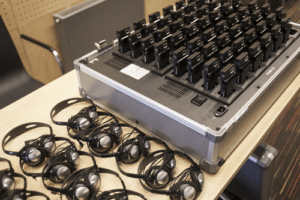
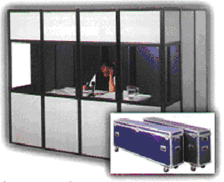
Full Soundproof Booth Large international conferences, high-profile summits Excellent — Completely isolates the interpreter’s voice from the audience and vice versa. Requires a minimum of two technicians for setup, monitoring, and teardown.
Desktop Glass Booth Limited budgets, smaller venue floor plans Moderate — Keeps the interpreter’s voice from directly disrupting attendees nearby, though minor ambient noise may leak through. Standard AV technical support recommended.
Portable Travel-Guide Systems Ultra-tight budgets, walking tours, breakout sessions Low — Background noise and distractions are common, requiring the audience to stay highly attentive. Simple plug-and-play setup; rarely requires a dedicated on-site engineer.

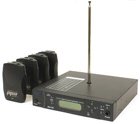
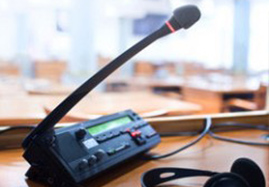
Technical Note: Regardless of the booth style you select, the entire system relies on a central mixer and console. The interpreter’s headset must be directly patched into the speaker’s microphone feed so they can monitor the audio with absolute clarity. The translated audio is then broadcast via a transmitter to the wireless receivers worn by the audience.


4. The Post-COVID Shift: Mastering Remote Simultaneous Interpretation (RSI)

Since the COVID-19 pandemic, remote simultaneous interpretation via platforms like Zoom has seen widespread adoption. Zoom features a native, paid interpretation module that allows hosts to establish specific audio channels. Attendees simply click a globe icon on their screen interface to choose and listen to their preferred language channel in real time.

However, executing this smoothly requires specialized technical oversight:

  • The Hosting Limitation: Zoom’s architecture dictates that only the paying host account holds the permission settings required to assign interpretation toggles and manage live language routing.

  • The Need for a Dedicated Engineer: Many event hosts mistakenly assume their translation agency can log in and fix configuration issues remotely on the fly. Because of Zoom’s structural restrictions, organizations must employ a designated technical engineer on their side who understands platform permissions to ensure seamless audio switching and prevent live execution errors.


Partner with a Trusted Provider

For over two decades, L.A. Translation and Interpretation, Inc. has provided dependable simultaneous interpreting services and high-quality equipment rentals to government agencies, multinational corporations, hospitals, and universities. Whether you need a full on-site booth installation with dedicated technicians or a streamlined remote Zoom configuration, we deliver reliable, expert solutions tailored to your event’s budget and scale.

국제 행사에서 우수한 통역사 선정 가이드

글로벌 비즈니스, 문화, 스포츠의 경계가 무너지면서 세계는 그 어느 때보다 밀접하게 연결되어 있습니다. 매년 수만 건의 주요 국제 협회 회의, 대규모 문화 전시회, 대기업 행사가 전 세계에서 개최되며, 전 세계적으로 연간 15,000회가 넘는 국제 회의와 수백만 건의 기업 행사가 열리는 것으로 추정됩니다. FIFA 월드컵이나 대규모 애니메 엑스포(Anime Expo)와 같은 전방위적 행사는 전 세계 수십만 명의 인파를 끌어모으며, 보안이 철저한 시장 조사 표적 집단 면접(Focus Group)이나 타깃 마케팅 행사에서도 매끄러운 국가 간 소통은 필수적입니다.

이러한 폭발적인 성장과 함께 복잡한 언어 장벽을 허물고 실시간으로 완벽한 소통을 조율해 줄 엘리트 통역사에 대한 수요도 날로 높아지고 있습니다. 국제 행사 주최자에게 검증된 통역사를 확보하는 일은 단순히 행정적인 체크박스를 채우는 일이 아닙니다. 행사 전체의 성패를 좌우하는 핵심 요소입니다. 그러나 전문 통역사를 섭외하고 협업하는 과정에는 고유한 업계 표준과 문화적 기대치를 조율하는 과정이 수반됩니다.

성공적인 국제 행사를 위해 최고 수준의 통역사를 찾고, 예약하고, 협업하는 방법을 종합 가이드로 정리했습니다.


1. 조기 예약 및 신속한 결제

최고 수준의 통역사들은 수요가 매우 많아 수개월 전에 일정이 마감됩니다. 행사 시작 최소 한 달 전에는 통역사 탐색을 시작하고 예약을 확정하는 것이 좋습니다.

또한, 재정적 계약 조건을 확정할 때 머뭇거리지 마십시오. 실력 있는 통역사들은 즉각적인 계약을 결정하는 기업들에 의해 빠르게 선점됩니다. 전문 통역 업계에서 구두 문의는 일정을 보장해 주지 않습니다. 신속한 결제로 예약을 확정해야 에이전시 측에서도 해당 날짜에 가장 우수한 전문가를 확실히 배치할 수 있습니다.

2. 에이전시 선택과 전문가 역량 신뢰하기

프리랜서를 처음부터 직접 소싱하기보다는 오랜 경험과 명성을 지닌 언어 서비스 제공업체(LST)와 파트너십을 맺는 것이 현명합니다. 예컨대 20년 이상 통역사를 엄격하게 스크리닝하고 검증 및 관리해 온 엘에이트랜스레이션(L.A. Translation and Interpretation, Inc.)과 같이 수십 년의 노하우를 가진 에이전시를 선택하십시오.

검증된 파트너를 선택했다면, 그들의 인재 선발 프로세스를 신뢰하십시오. 오랜 경력의 에이전시들은 까다로운 현장 환경에서 요구되는 빠른 인지 처리 능력, 언어적 유연성, 전문적인 체력을 갖춘 통역사가 누구인지 정확히 파악하고 있습니다.

3. 소통의 간결화: “이메일 피로” 방지

미국 비즈니스 문화에서는 효율성과 명확성을 가장 중요하게 여깁니다. 에이전시를 통해 통역사를 예약할 때 클라이언트는 일반적으로 다음과 같은 핵심 물류 사항을 담은 간결하고 정형화된 이메일을 보냅니다.

  • 일시 및 기간

  • 정확한 장소 또는 디지털 플랫폼 (온라인 행사의 경우)

  • 출발어 및 도착어 (언어 쌍)

신뢰할 수 있는 에이전시는 이 정보를 신속하게 처리하여 결제를 진행하고 적합한 통역사를 배정합니다.

반면, 일부 해외 클라이언트들은 수십 통의 이메일을 주고받으며 예약 단계를 지나치게 복잡하게 만들곤 합니다. 과도한 이력서(CV) 요구, 사전 캐주얼 인터뷰 요청, 끝없는 가격 흥정, 또는 비표준적인 대금 분할(예: 선금 50% 지급 등)을 요구하는 경우가 이에 해당합니다. 이러한 잦은 소통은 서비스의 질을 높이지 못할 뿐 아니라, 오히려 예약 프로세스를 지연시켜 결단력 있게 움직이는 다른 클라이언트에게 우수한 통역사를 빼앗기는 결과를 초래합니다.

4. 미국 비즈니스 문화 및 에티켓 준수

미국 내에서 행사를 개최하거나 조직할 때는 현지 비즈니스 문화가 다른 국가의 관행과 크게 다를 수 있음을 인지해야 합니다. 표준적인 미국 비즈니스 관행을 상호 존중하는 것이 원활한 협력 환경을 조성하는 첫걸음입니다.

미국에서 계약은 포괄적이며 법적 구속력을 지닌 것으로 간주되고, 업무 흐름은 극도로 효율화되어 있으며, 전문적인 경계가 엄격하게 유지됩니다. 에이전시와 통역사를 대할 때 이러한 프로페셔널 규범을 이해하고 접근한다면 상호 신뢰가 구축되어 시작부터 끝까지 매끄러운 진행이 가능해집니다.

5. 통역사의 전문 분야를 지나치게 좁히지 말 것

국제 클라이언트들이 자주 범하는 실수 중 하나는 통역사가 특정 기술 분야의 깊은 내부자이거나 평생의 전문가여야만 한다고 고집하는 것입니다. 클라이언트들은 종종 자신이 발표할 주제와 완전히 똑같은 내용을 통역해 본 경험이 없다는 이유만으로 훌륭한 통역사를 놓치곤 합니다.

실제 엘리트 통역사들은 언어와 소통 분야의 최고 전문가들입니다. 이들은 복잡한 개념을 빠르게 흡수하고 분석하여 전달하는 고도로 정제된 인지 능력을 갖추고 있습니다. 전문 통역사에게 행사 일주일 전에 적절한 참고 자료와 용어집을 제공한다면, 어떤 산업 분야이든 상관없이 탁월한 통역을 선보일 것입니다. 조건을 지나치게 좁히다 보면 해당 분야의 배경지식은 조금 있으나 언어 능력이 떨어지는 통역사를 고용하게 되어, 오히려 행사 당일 소통 망치게 되는 결과를 낳을 수 있습니다.

6. 행사 전 인터뷰 및 개인정보 보호 모범 사례

DO’S (권장 사항) DONT’S (금지 사항)
인터뷰는 15분 이내로 짧게 진행하십시오. 통역사의 개인 연락처를 요구하지 마십시오.
모든 문의는 반드시 에이전시를 통해 전달하십시오. 에이전시 요율을 우회하려 시도하지 마십시오.

인터뷰는 간결하게

소통 궁합을 확인하거나 발음을 점검하기 위해 행사 전 통역사와의 사전 미팅이 필요한 경우, 인터뷰를 요청하는 것은 완전히 정당한 권리입니다. 다만, 이 인터뷰는 strictly 15분 이내로 제한해야 합니다. 미국 비즈니스 관행은 시간과 효율성을 매우 가치 있게 여깁니다. 관계를 형성하고 기본 확인을 하는 데는 짧은 소개만으로도 충분합니다.

전문적인 경계와 프라이버시 존중

통역사에게 개인 전화번호, 집 주소, 개인 이메일 주소를 요구하거나 직접 전화하는 행동은 삼가야 합니다. 행사 전에 업데이트된 일정, 용어집, 참고 자료 등을 전달해야 할 때는 항상 에이전시를 통해 소통하십시오. 이는 깔끔한 업무 경계를 유지하고 통역사의 프라이버시를 보호하기 위함입니다.

더불어, 에이전시 몰래 통역사에게 개인적으로 연락하여 더 저렴한 ‘직거래’ 요율을 협상하려는 행위는 엄격히 금지됩니다. 전문 에이전시는 소속 인재들과 명확한 우회 금지(Non-circumvention) 계약을 맺고 있으며, 이 프로토콜을 위반할 경우 서비스가 즉각 중단되거나 법적 문제가 발생할 수 있습니다.

7. 현장 규칙 이해: 시간, 식사, 그리고 팁 문화

시간은 연속으로 계산됩니다

통역사의 청구 시간은 현장 행사장에 도착한 순간부터 시작되어 퇴근 허가를 받을 때 종료됩니다. 해외 클라이언트와 자주 발생하는 갈등 중 하나는 점심시간 1시간을 인보이스 총액에서 제외하려는 시도입니다.

중요 기준: 점심시간이나 휴식 시간을 차감하는 것은 미국의 통상적인 관행이 아닙니다. 통역사는 현장에 대기하며 언제든 투입될 수 있는 상태로 행사 시간에 온전히 기여하고 있습니다. 따라서 중간 휴식 시간도 모두 청구 가능한 근무 시간에 포함됩니다.

팁은 정중히 사양합니다

미국의 환대(Hospitality) 산업에는 팁 문화가 깊게 자리 잡고 있지만, 회의나 기업 통역사에게는 해당하지 않습니다. 통역사는 변호사, 컨설턴트, 회계사와 마찬가지로 고도의 교육을 받은 공인 전문가입니다. 하루 일과가 끝난 후 팁을 건네는 것은 불필요하며, 때로는 어색한 프로페셔널적 마찰을 유발할 수 있습니다.

8. 청중 또는 고객과 직접 소통하기

실시간 통역이 진행되는 동안에는 통역사가 아닌 상대방(고객 또는 청중)을 직접 바라보며 대화해야 함을 기억하십시오. 예를 들어, 통역사에게 *”우리가 계약 조건에 동의한다고 저 분에게 전해주세요”*라고 말해서는 안 됩니다. 대신 통역 파트너를 바라보며 *”저희는 계약 조건에 동의합니다”*라고 직접 말씀하십시오. 통역사는 자연스럽게 여러분의 말을 타깃 언어로 미러링해 줄 것입니다. 이러한 간단한 시선의 전환이 인간적인 유대감과 대화의 자연스러운 흐름을 지켜줍니다.

9. 취소 규정 미리 숙지하기

국제 행사를 아무리 치밀하게 계획하더라도 예기치 못한 비자 문제, 일정 지연, 갑작스러운 스케줄 변경 등이 발생할 수 있습니다. 귀사의 투자 비용을 보호하고, 해당 날짜를 완전히 비워둔 전문가에게 정당한 보상을 제공하기 위해 업계 표준인 24시간 취소 규정을 항상 염두에 두어야 합니다. 에이전시에 적절한 기간 내에 변경 사항을 통보하는 것은 계약 준수뿐만 아니라 향후 언어 파트너십을 건강하게 유지하는 지름길입니다.


📋 통역사 예약 요약 체크리스트

  • [ ] 타임라인: 행사 시작 최소 4주일 전에 통역사를 소싱하고 예약을 확정하십시오.

  • [ ] 검증: 프리랜서를 직접 검증하는 번거로움을 줄이기 위해 L.A. Translation and Interpretation, Inc.와 같은 공인된 파트너와 협력하십시오.

  • [ ] 물류 및 정보: 장소, 날짜, 정확한 시간, 대상 언어 쌍이 포함된 단 한 통의 간결한 이메일을 발송하십시오.

  • [ ] 사전 준비: 초세분화된 전문가만을 고집하기보다, 발표용 슬라이드 덱, 전문 용어집, 요약본을 행사 전에 에이전시에 미리 제공하십시오.

  • [ ] 에티켓: 연속 시간 청구 방식(점심시간 포함)을 인정하고, 모든 사전 조율은 에이전시 코디네이터를 통하는 등 미국의 표준 비즈니스 관행을 준수하십시오.

How to Secure the Right Interpreter for Global Events

Connecting Worlds: How to Secure the Right Interpreter for Global Events

The landscape of global business, culture, and sports is more interconnected than ever before. Every single year, tens of thousands of major international association meetings, massive cultural exhibitions, and major corporate events take place around the globe—with estimates indicating over 15,000 international congresses and millions of smaller corporate functions annually. High-profile spectacles like the FIFA World Cup and the massive Anime Expo draw hundreds of thousands of people from different corners of the Earth, while behind closed doors, essential market research focus groups and targeted marketing events require seamless cross-border communication.

With this explosive growth comes an ever-growing demand for elite interpreters who can break down complex language barriers and facilitate flawless, real-time communication. For an international event organizer, securing a highly qualified interpreter isn’t just an administrative checkbox—it can make or break the entire operation. However, the process of reserving and working with professional interpreters involves navigating unique professional standards and cultural expectations.

Here is a comprehensive guide on how to successfully find, reserve, and collaborate with top-tier interpreters for your next international event.


1. Reserve and Pay Early

The highest caliber interpreters are in high demand and their schedules fill up months in advance. A good rule of thumb is to begin your search and lock in your reservation at least a month ahead of the event.

Furthermore, do not hesitate when it comes to finalizing the financial terms. Good interpreters are snatched up early by organizations willing to commit immediately. In the professional interpretation industry, a verbal inquiry does not guarantee availability. By securing your booking with an early payment, you ensure that the agency can firmly reserve the absolute best professionals for your required dates.

2. Choose an Agency and Trust Their Expertise

Rather than attempting to source independent freelancers from scratch, partner with a seasoned, reputable language service provider. Look for an agency with decades of experience under its belt—such as L.A. Translation and Interpretation, Inc., which has spent more than 20 years rigorously screening, vetting, and managing top-quality interpreters.

Once you choose a verified partner, trust their selection process. Long-standing agencies understand which interpreters possess the rapid mental processing, linguistic fluidity, and professional stamina required for demanding live environments.

3. Streamline Communication: Avoid “Email Fatigue”

In the United States, business operations value efficiency and clarity. When booking an interpreter through an agency, clients typically send a brief, standardized email outlining the core logistics:

  • Date and time

  • Exact location or digital platform

  • Target and source languages

A reliable agency will quickly process this information, take payment, and handle the dispatching of the appropriate interpreter.

Conversely, some foreign clients frequently overcomplicate the booking phase by sending dozens of emails. They may demand exhaustive CVs, request informal pre-interviews, haggle endlessly over price, or request non-standard financial splits (like half-payments upfront). This high-volume back-and-forth does not improve the quality of service. In fact, it often slows down the booking process, causing you to lose premium interpreters to other clients who operate more decisively.

4. Align with U.S. Business Culture and Etiquette

When hosting or organizing an event within the United States, it is essential to understand that local business culture may differ significantly from practices in other countries. Mutual respect for standard American business practices is critical to fostering a collaborative environment.

In the U.S., contracts are viewed as binding and comprehensive, workflows are heavily streamlined, and professional boundaries are strictly maintained. Approaching the agency and the interpreter with an understanding of these professional norms creates mutual trust and ensures a smoother operation from start to finish.

5. Don’t Over-Narrow the Interpreter’s Field

A common mistake made by international clients is demanding an interpreter who is exclusively an “insider” or lifelong specialist in a hyper-specific technical niche. Clients will often bypass phenomenal interpreters simply because they are searching for someone who has previously interpreted a carbon-copy of their exact presentation topic.

The reality is that elite interpreters are language and communication experts first. They possess highly refined cognitive skills that allow them to absorb, analyze, and translate complex concepts rapidly. Give a professional interpreter the proper reference materials a week before the event, and they will deliver an exceptional performance regardless of the industry. Constantly narrowing down the criteria often leads to hiring a weak linguist who happens to have a background in the field, resulting in poor communication at your event.


6. Best Practices for Pre-Event Interviews and Privacy

+------------------------------------+------------------------------------+
|               DO'S                 |              DONT'S                |
+------------------------------------+------------------------------------+
| Keep interviews under 15 minutes.  | Request private contact info.      |
| Route inquiries through the agency.| Attempt to bypass agency rates.    |
+------------------------------------+------------------------------------+

Keep Interviews Brief

If an advance conversation with the interpreter is necessary to gauge compatibility or review pronunciation, it is completely acceptable to request an interview. However, you should strictly limit this interview to under 15 minutes. American business practices highly value time and efficiency. A brief introduction is all that is needed to establish rapport.

Respect Professional Boundaries and Privacy

Never ask an interpreter for their personal phone number, home address, or private email address, and refrain from calling them directly. If you need to distribute updated schedules, glossaries, or background information prior to the event, always communicate through the agency. This maintains clean boundaries and protects the interpreter’s privacy.

Furthermore, attempting to contact an interpreter individually to negotiate a cheaper “direct” rate behind the agency’s back is strictly prohibited. Professional agencies maintain explicit non-circumvention agreements with their talent, and violating this protocol can result in termination of service and potential legal complications.


7. Understanding On-Site Rules: Timing, Meals, and Tipping

The Clock Runs Continuously

An interpreter’s billable hours begin precisely when they arrive at the venue and end when they are permitted to leave. A frequent point of friction with foreign clients is the attempt to deduct an hour from the invoice to account for the interpreter’s lunch break.

Important Standard: Deducting lunch or rest periods is not an established practice in the United States. Interpreters must remain on-site, are often on standby, and their time remains entirely committed to your event. Therefore, midday breaks are fully billable.

Skip the Tip

While tipping is heavily embedded in the American hospitality industry, it does not extend to conference or corporate interpreters. An interpreter is an accredited, highly educated professional—much like an attorney, consultant, or accountant. Tipping them at the end of the day is unnecessary and can occasionally create awkward professional friction.

8. Maintain Direct Client Communication

During a live event, always remember to speak directly to your client or audience, rather than to the interpreter. For example, avoid saying to the interpreter, “Tell him that we agree to the terms.” Instead, look at your international counterpart and say, “We agree to the terms.” The interpreter will naturally mirror your statements in the target language. This simple shift in perspective preserves the natural flow of human connection.

9. Know the Cancellation Policy

No matter how meticulously an international event is planned, unexpected delays, visa issues, or scheduling conflicts can arise. To protect your investment and remain fair to the professional whose day has been blocked out, always keep the industry-standard 24-hour cancellation policy in mind. Giving your agency proper notice ensures compliance with contractual terms and preserves a healthy relationship for your future linguistic needs.


Summary Checklist for Reserving an Interpreter

  • [ ] Timeline: Source and lock in your linguist at least 4 weeks prior to the event.

  • [ ] Vetting: Work with an established partner like L.A. Translation and Interpretation, Inc. to bypass independent vetting hurdles.

  • [ ] Logistics: Send a single, concise email containing the location, date, exact hours, and language pairs.

  • [ ] Preparation: Provide reference slide decks, specialized glossaries, or brief topic summaries to the agency ahead of time rather than filtering for hyper-specific specialists.

  • [ ] Etiquette: Respect standard U.S. billing practices, including continuous hourly tracking and routing all pre-event logistics through the agency coordinators.