
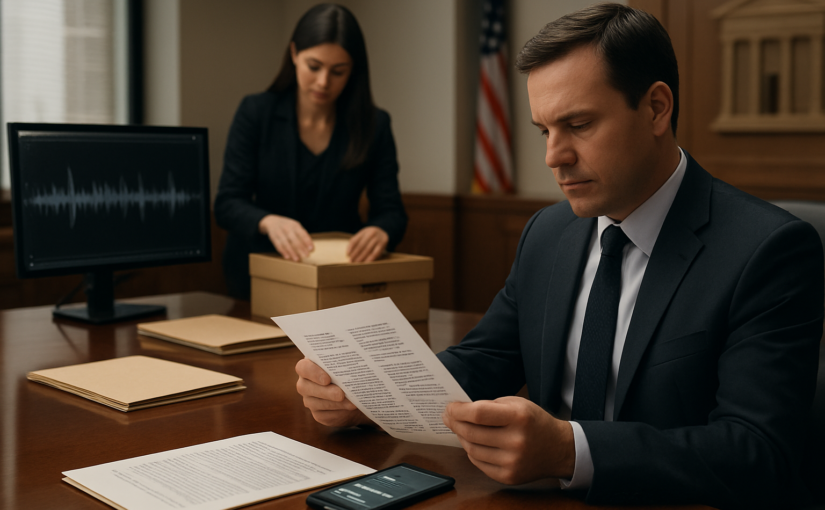
Vietnamese certified translation is a critical service for California attorneys, paralegals, law firms, and in-house legal teams handling matters that involve Vietnamese-speaking clients, witnesses, employees, or opposing parties. In a state with one of the nation’s largest Vietnamese-speaking populations, translation quality can directly affect case strategy, evidentiary reliability, procedural compliance, and client communication. This guide explains when certified translation matters, how California court standards work, and how legal teams can request dependable Vietnamese language support for high-stakes matters.
California’s Vietnamese-Speaking Population and Why Legal Demand Is High
California is home to the largest Vietnamese-speaking population in the United States, making Vietnamese one of the most important languages for legal service providers across the state. Demand is especially strong in major population centers and litigation hubs, including Los Angeles County, Orange County, the Bay Area, and the Central Valley.
Orange County, particularly Westminster, Garden Grove, and surrounding communities, has long been recognized as a major center of Vietnamese American life. Los Angeles County also has a substantial Vietnamese-speaking population spread across the San Gabriel Valley, South Bay, and other urban corridors. In Northern California, San Jose and the broader Bay Area represent another major concentration, while the Central Valley continues to see demand in employment, immigration, family law, and criminal matters.
For legal professionals, these demographics translate into recurring needs for precise language access. Matters may involve Vietnamese-language contracts, employment records, text messages, audio recordings, police interviews, medical records, family communications, or business correspondence. In litigation and investigations, the need is not merely conversational interpretation but accurate, defensible translation that can stand up to scrutiny from opposing counsel, judges, arbitrators, and agencies.
When Vietnamese Court Certified Translation Is Required
Not every legal matter requires the same level of formality, but many proceedings demand Vietnamese court certified translation or similarly rigorous documentation. The key issue is whether the translated material will be used in an official setting where accuracy, chain of custody, and translator qualifications may be challenged.
Civil Litigation and ADR
In civil matters, Vietnamese translation is often needed at multiple stages of a case. Common examples include:
- Privileged attorney-client meetings with Vietnamese-speaking clients or witnesses
- Discovery review of emails, chat logs, handwritten notes, and business records
- Depositions involving Vietnamese-language testimony or exhibits
- Trial exhibits such as contracts, invoices, medical records, and correspondence
- Arbitration submissions and hearing materials
- Mediation briefs and supporting documents
- Motions and declarations that rely on translated statements or exhibits
- Appellate records where translations must be clear, consistent, and traceable
For example, a wage-and-hour class action may hinge on Vietnamese-language supervisor messages sent through SMS or WhatsApp. A business dispute may involve bilingual purchase orders, side agreements, or recorded calls. A personal injury case may require translation of Vietnamese medical histories or family communications about care. In each scenario, translation quality can affect admissibility, credibility, and settlement leverage.
Criminal Cases
Criminal defense and prosecution also regularly require Vietnamese translation support. Typical use cases include:
- Police statements and incident reports containing Vietnamese-language content
- Recorded witness interviews and body-worn camera audio
- Jailhouse calls or interviews
- Arraignment preparation and client communication support
- Preliminary hearing exhibits and impeachment materials
- Probation reports and mitigation submissions
- Trial preparation, transcripts, and exhibit translation
In criminal matters, nuances matter. A mistranslated idiom, family term, or regional expression can alter meaning in ways that affect charging decisions, impeachment arguments, or sentencing narratives. That is why legal teams should avoid informal or unverified translation for any document or recording likely to become part of the court record.
Vietnamese Court Translators and California Judicial Council Standards
California courts distinguish between language access needs and the formal qualifications expected in court-related work. Depending on the county and proceeding, attorneys may encounter court interpreters listed on rosters or available through court systems, but availability can vary significantly by language, calendar, and region.
For Vietnamese, qualified professionals may have completed a credentialing pathway involving written and oral examinations associated with California court interpreter standards. These exams are designed to test not only bilingual fluency but also legal terminology, register, sight translation, consecutive interpretation, and professional ethics. The process is demanding because court language work requires far more than conversational ability.
For legal documents and evidentiary materials, verified credentials matter for a practical reason: they help support admissibility and reduce avoidable disputes. When a translator’s qualifications are documented and the translation is accompanied by a proper declaration or certification statement, counsel is in a stronger position to defend the accuracy of the translation if challenged. This can be especially important when translated evidence is attached to motions, used in depositions, presented in arbitration, or introduced at trial.
Credentials do not guarantee that every translation is beyond dispute, but they do provide a stronger foundation than ad hoc translation from an untested bilingual staff member, a relative, or a low-cost online vendor with no litigation experience. In high-stakes matters, that distinction can be decisive.
How to Request a Vietnamese Court Certified Translation from L.A. Translation
When requesting Vietnamese court certified translation from L.A. Translation, legal teams should begin by identifying the exact use case. The intended forum and document type will shape the workflow, certification format, and scheduling needs.
To streamline the request, be prepared to provide:
- The document type or media format, such as PDF, Word files, scanned records, SMS exports, WhatsApp chats, audio, or video
- The purpose of the translation, such as court filing, discovery, deposition prep, arbitration, mediation, internal investigation, or client communication
- Any deadline, hearing date, deposition date, or filing date
- Whether certification, a translator declaration, or notarization is needed
- Whether formatting must mirror the source document for exhibit use
- Whether names, slang, technical terms, or industry-specific terminology require special handling
For recordings, it is also important to disclose audio quality, number of speakers, approximate duration, and whether timestamps are required. For chat evidence, counsel should indicate whether message order, metadata, emojis, abbreviations, and attachments must be preserved. The more context the translation team has, the more defensible and useful the final product will be.
L.A. Translation can then assess scope, recommend the appropriate certification format, and build a workflow that aligns with litigation needs rather than treating the assignment like a generic commercial translation.
Transcription and Translation Workflow for Audio, Video, and Digital Evidence
Vietnamese legal evidence increasingly appears in audio, video, and mobile communications rather than in formal documents. That changes both timing and cost. For clear audio, a realistic planning estimate is often about one hour of professional work for each one minute of recorded content when transcription, review, translation, quality control, and formatting are all considered. Poor audio, overlapping speakers, dialect variation, background noise, or emotionally charged speech can increase that time substantially.
A careful workflow typically includes:
- Initial media review for audibility, speaker count, and subject matter
- Source-language transcription in Vietnamese where needed
- English translation of the transcript
- Timestamps at agreed intervals or speaker turns
- Quality review for consistency, names, dates, slang, and legal terminology
- Preparation of a translator declaration or certification statement
Text messages and chats require equal care. Evidence from SMS, WhatsApp, WeChat, Messenger, and similar platforms often includes shorthand, emojis, code-switching, typos, voice notes, screenshots, and fragmented context. A legally useful translation should preserve sequence, identify speakers where possible, and avoid “cleaning up” language in a way that changes tone or meaning. If a message is ambiguous, the translation should reflect that ambiguity rather than guessing.
Translator declarations are often a key finishing step. In litigation, a declaration can identify the translator, summarize qualifications, state that the translation is true and accurate to the best of the translator’s ability, and describe the source materials reviewed. This added formality can be valuable when the translation will be attached to a motion, exchanged in discovery, or used as an exhibit.
When Court Certification Is Not Required
Not every Vietnamese translation requires court certification. Two common examples are service abroad under the Hague Service Convention and USCIS filings.
For Hague Service Convention matters, the receiving country’s requirements control the needed translation format. In many cases, what matters is compliance with the destination authority’s rules, not California court certification. Legal teams should confirm the exact requirements for the country involved before ordering translation.
For USCIS filings, a formal court-certified translation is generally not required. Instead, USCIS typically accepts a complete English translation accompanied by a translator certification statement attesting that the translator is competent and that the translation is accurate. This is often described as an ATA-style translator statement, although the exact wording should match the filing context and document set.
Even where court certification is unnecessary, quality still matters. Immigration records, foreign service packets, and administrative filings can all be delayed or questioned if names, dates, seals, or substantive content are mistranslated.
Why AI and Cut-Rate Rush Translation Can Create Litigation Risk
AI tools and bargain translation services may appear efficient, but they can create substantial risk in legal matters involving Vietnamese. Vietnamese is rich in context, pronoun usage, regional variation, and implied meaning. Automated systems may mistranslate honorifics, omit ambiguity, flatten nuance, or misread slang and abbreviations. In chat evidence and recorded speech, these errors can materially change the perceived intent of a statement.
Low-cost rush vendors pose a different problem: lack of defensible process. If the translator’s identity, qualifications, review steps, and certification language are unclear, counsel may struggle to authenticate the translation or respond to a challenge from the other side. Any short-term savings can disappear quickly if a filing must be redone, a deposition is compromised, or an exhibit is excluded or attacked for inaccuracy.
For California legal teams, the safest approach is to use experienced professionals who understand both Vietnamese language issues and the procedural realities of litigation, arbitration, investigations, and court practice.
Choose a Translation Partner Built for Legal Scrutiny
Vietnamese certified translation is not a commodity purchase for legal matters in California. It is a specialized service that supports case preparation, evidentiary integrity, and effective advocacy across civil, criminal, and regulatory contexts. From Los Angeles and Orange County to the Bay Area and Central Valley, legal demand continues to grow alongside California’s Vietnamese-speaking communities.
If your matter involves Vietnamese documents, recordings, text messages, witness communications, or court-bound exhibits, contact L.A. Translation for a legally focused workflow, reliable certification options, and translation support designed for real-world scrutiny in litigation and beyond.