
Introduction
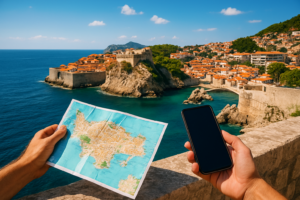
Croatia has become one of Europe’s most captivating travel destinations, and it is easy to see why. With its sparkling Adriatic coastline, ancient walled cities, island-studded seascapes, dramatic waterfalls, and rich cultural heritage, Croatia offers an unforgettable mix of nature, history, and Mediterranean charm. Whether you are dreaming of strolling through medieval streets, sailing between islands, or tasting fresh seafood by the sea, this country has something for every kind of traveler.
If you are planning your next European getaway, this guide will help you discover some of the most remarkable sights the country has to offer. Below, you will find 10 must-see places in Croatia, along with practical travel advice, useful Croatian phrases, and smart tips for staying connected and informed during your trip.
10 Must-See Places in Croatia
-
Dubrovnik Old Town
Often called the “Pearl of the Adriatic,” Dubrovnik Old Town is one of the most iconic places in Croatia. Enclosed by massive stone walls and overlooking the deep blue sea, this UNESCO World Heritage Site is filled with polished limestone streets, baroque buildings, historic churches, and lively squares. Walking the city walls offers spectacular panoramic views of red rooftops and the Adriatic coastline. It is a must for history lovers, photographers, and anyone seeking Croatia’s most famous urban landscape.
-
Plitvice Lakes National Park
Plitvice Lakes National Park is one of Croatia’s greatest natural treasures. Famous for its chain of terraced lakes connected by waterfalls, the park dazzles visitors with vivid turquoise water, lush forests, and wooden walkways that seem to float above the landscape. Every season brings a different mood, from vibrant green summers to snowy winter scenes. If you want to experience Croatia’s natural beauty at its finest, Plitvice should be high on your itinerary.
-
Split and Diocletian’s Palace
Split is a dynamic coastal city where ancient history and modern life exist side by side. At its heart is Diocletian’s Palace, a vast Roman complex built in the 4th century that now forms the city center. Inside its stone walls, you will find cafes, shops, homes, courtyards, and narrow alleys full of life. Split is also an excellent base for island hopping, making it one of the most practical and exciting destinations in Croatia.
-
Hvar Island
Hvar is known for its sunshine, elegant harbor, lavender fields, and stylish atmosphere. This Croatian island attracts visitors looking for both relaxation and nightlife, but it also offers historic charm, scenic hilltop views, and beautiful coves. Hvar Town is especially popular for its waterfront promenade and impressive fortress overlooking the sea. If you want a glamorous island experience with plenty of character, Hvar is a top choice.
-
Rovinj
Located on the Istrian Peninsula, Rovinj is one of the most romantic towns in Croatia. Its pastel-colored houses cluster around a hill crowned by the Church of St. Euphemia, while the old town’s winding lanes invite slow exploration. The harbor is picturesque at any hour, especially at sunset. Rovinj is ideal for travelers who appreciate art, seafood, charming architecture, and a more intimate coastal atmosphere.
-
Zadar Sea Organ and Greeting to the Sun
Zadar offers a unique blend of ancient ruins and modern creativity. Two of its most famous attractions are the Sea Organ, an architectural installation that creates music from the movement of the waves, and Greeting to the Sun, a solar-powered light display that glows after dark. The city also has Roman remains, medieval churches, and a pleasant waterfront. Zadar is a wonderful stop for travelers who want culture, innovation, and beautiful sunsets in one destination.
-
Krka National Park
Krka National Park is another of Croatia’s celebrated natural wonders, best known for its waterfalls and serene river landscapes. The park features scenic walking paths, wooden bridges, and viewpoints where visitors can admire cascades framed by greenery. It is often considered a more accessible complement to Plitvice, and it makes an excellent day trip from Split or Šibenik. Nature lovers will appreciate its peaceful beauty and photogenic scenery.
-
Pula Arena
In the city of Pula, you will find one of the best-preserved Roman amphitheaters in the world. The Pula Arena is a striking reminder of Croatia’s ancient past and remains one of the country’s most impressive historical monuments. Walking around its stone arches, you can imagine gladiatorial contests from centuries ago. Pula also offers beaches, a relaxed atmosphere, and easy access to the wider Istrian region.
-
Korčula Old Town
Korčula is a beautiful island destination often associated with medieval architecture and local traditions. Its old town, set on a small peninsula, is a compact maze of stone streets, towers, and elegant buildings. Many travelers are drawn to Korčula for its quieter, refined charm and excellent local wine. It is a wonderful place to slow down, enjoy the sea, and explore a lesser-known but deeply rewarding side of Croatia.
-
Zagreb Upper Town
Croatia’s capital city, Zagreb, deserves a place on any well-rounded itinerary. The Upper Town, or Gornji Grad, is the historic heart of the city and features cobbled streets, colorful rooftops, museums, churches, and government buildings. It offers a different perspective from the coastal destinations, with a Central European atmosphere and vibrant local culture. If you want to experience Croatia beyond the beaches, Zagreb is an essential stop.
Useful Travel Phrases in Croatia
The main local language in Croatia is Croatian. While many people in tourist areas speak English, learning a few basic phrases can make your trip smoother and more enjoyable. It also shows respect for local culture and often leads to warmer interactions.
- Hello — Bok — bohk
- Good day — Dobar dan — doh-bar dahn
- Thank you — Hvala — hva-lah
- Please — Molim — moh-leem
- Sorry — Oprostite — oh-pros-tee-teh
- Excuse me — Oprostite — oh-pros-tee-teh
- How much is it? — Koliko košta? — koh-lee-koh kosh-tah
- Where is the restroom? — Gdje je toalet? — gdyeh yeh toh-ah-let
- Yes — Da — dah
- No — Ne — neh
- I do not understand — Ne razumijem — neh rah-zoo-mee-yem
- Do you speak English? — Govorite li engleski? — goh-voh-ree-teh lee en-gles-kee
- Help! — Upomoć! — oo-poh-moch
- I would like this — Želio bih ovo — zheh-lee-oh beeh oh-voh
- Bye — Doviđenja — doh-vee-jen-yah
Tip: Save these phrases on your phone or in a notes app so you can quickly access them when ordering food, asking directions, or shopping in local markets.
How to Use a Translation App on Your Phone
A phone translation app can be incredibly useful when traveling in Croatia, especially outside major tourist zones. Even if many locals speak some English, a translation app can help with menus, transportation, signs, and everyday conversations.
-
Download a trusted translation app before your trip
Choose a well-known app such as Google Translate, Microsoft Translator, or another reliable language tool. Install it before departure so you are not scrambling to download it at the airport.
-
Download offline Croatian language packs
Before you leave home, open the app and download Croatian for offline use. This is essential in case you have weak service, no mobile data, or are traveling through rural areas and islands.
-
Use voice translation for simple conversations
Most translation apps have a microphone feature. Tap the microphone, speak clearly in English, and let the app translate your sentence into Croatian. This is especially useful for asking directions, checking into accommodations, or ordering at restaurants.
-
Try conversation mode
Conversation mode allows two people speaking different languages to communicate more easily. You speak in English, the other person responds in Croatian, and the app translates both sides. This can be helpful in taxis, shops, or small family-run businesses.
-
Use the camera feature for signs and menus
Point your phone camera at printed text to translate menus, museum labels, schedules, and street notices. This feature is especially handy when reading local information boards or understanding ingredients in food items.
-
Save common phrases
Many apps let you bookmark or star useful phrases. Save items like “Where is the bus station?” or “I have a reservation” so you can access them instantly.
-
Double-check important information
Machine translation is convenient, but it is not perfect. For important details such as medical instructions, legal matters, travel documents, or contract terms, ask for human help or use a professional interpreter or translator.
If your travel plans involve official paperwork, business meetings, or legal documents, professional language support is far more reliable than an app alone.
How to Get a Good Cell Phone Rate Overseas
Staying connected in Croatia does not have to be expensive. With a little planning, you can avoid high roaming fees and enjoy affordable service for maps, messaging, booking confirmations, and translation apps.
-
Check your carrier’s international plan before departure
Some mobile providers offer daily or monthly international options that include data, calls, and texts in Croatia. Compare the cost with local SIM or eSIM alternatives to see what makes the most sense for your trip length.
-
Consider a local SIM card
If your phone is unlocked, buying a local prepaid SIM card can be one of the most economical choices. You can usually find SIM cards at airports, kiosks, convenience stores, or mobile provider shops. This option often gives you better local data rates.
-
Use an eSIM for convenience
If your phone supports eSIM, you can activate a data plan digitally without swapping physical cards. This is a popular choice for international travelers because it is fast, flexible, and easy to set up before arrival.
-
Rely on Wi-Fi when possible
Hotels, cafes, restaurants, and many public spaces in Croatia offer Wi-Fi. Use Wi-Fi for larger downloads, video calls, and app updates to reduce mobile data usage.
-
Turn off roaming if you do not have a plan
If you are not using an international package, disable data roaming in your phone settings. This simple step can prevent surprise charges.
-
Download what you need in advance
Save offline maps, translation packs, travel guides, and booking confirmations before heading out for the day. This reduces data use and helps if your signal drops.
-
Monitor your data usage
Streaming video, uploading photos, and using navigation constantly can consume data quickly. Check your usage regularly so you do not exceed your plan limits.
For most travelers to Croatia, an eSIM or local prepaid SIM is often the best balance of convenience and affordability.
How to Check the Weather in Croatia
Croatia’s weather can vary significantly depending on the season and region. The coast is generally Mediterranean, with hot summers and mild winters, while inland areas such as Zagreb can be cooler and more continental. Checking the weather regularly will help you pack appropriately and plan day trips more effectively.
-
Use a reliable weather app
Install a trusted weather app such as AccuWeather, The Weather Channel, Apple Weather, or Weather Underground. These apps provide hourly forecasts, radar, wind conditions, and alerts.
-
Search by city or island
Weather can differ between Dubrovnik, Split, Zagreb, Hvar, and Plitvice. Always check the exact destination rather than assuming conditions are the same across the country.
-
Check wind conditions for coastal travel
If you are taking ferries, boat tours, or island excursions, pay attention to wind and sea conditions. Strong winds can affect schedules, especially along the Adriatic coast.
-
Review both current weather and forecast
Morning sunshine can turn into afternoon rain in some seasons, especially inland. Looking at both current conditions and the multi-day forecast helps you plan sightseeing, hiking, and transport.
-
Learn a few local weather terms
- Weather — vrijeme
- Rain — kiša
- Sun — sunce
- Wind — vjetar
- Hot — vruće
- Cold — hladno
-
Ask locals when planning outdoor activities
Hotel staff, hosts, and tour operators often know how local conditions may affect your plans. This is especially helpful for national parks, mountain areas, and ferry routes.
In summer, lightweight clothing, sunscreen, and a hat are essential for the coast. In spring and fall, layers are a smart choice. If you are visiting inland or going to higher elevations, bring something warmer even if coastal temperatures look mild.
Travel Smarter in Croatia with Professional Language Support
Croatia is an extraordinary destination for leisure travel, family visits, study, and business. From the walled beauty of Dubrovnik to the waterfalls of Plitvice and the energy of Split, the country offers unforgettable experiences at every turn. A little preparation with local phrases, translation tools, mobile connectivity, and weather planning can make your trip smoother and more enjoyable.
If your journey involves more than sightseeing, such as visa paperwork, academic records, business documents, legal forms, or other official materials, professional translation matters. latranslation.com provides certified translation and interpreting services to help travelers, students, professionals, and companies communicate clearly and meet formal requirements with confidence. Whether you need certified document translation before departure or interpreting support for international business, latranslation.com is here to help make your Croatia-related plans easier and more secure.