
Vietnam Apostille Starts September 11, 2026: Why This Matters Now
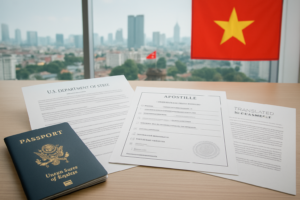
Beginning September 11, 2026, Vietnam is expected to start recognizing apostilles under the Hague Apostille Convention framework, a major change for U.S. clients handling international paperwork. For Americans dealing with immigration, marriage, dual-national family matters, education, business expansion, adoption, inheritance, or legal filings in Vietnam, this shift can significantly simplify how official U.S. documents are accepted abroad.
That said, easier does not mean automatic. U.S. documents still need to be prepared correctly, and in many cases they will also require a Vietnam apostille certified translation before they can be submitted to Vietnamese authorities, schools, employers, banks, courts, or business registries. If the original document is wrong, the notarization is incomplete, or the translation is not accepted by the receiving institution, delays can still happen.
This guide explains what U.S. clients should translate, apostille, and submit now, how the process usually works, and how to avoid the most common mistakes when requesting a Vietnam apostille certified translation for official use.
What Is an Apostille and How Does It Affect U.S. Documents for Vietnam?
An apostille is a government-issued certificate that authenticates the origin of a public document so it can be recognized in another Hague Convention country. For U.S. clients, that usually means one of two things:
- State-issued documents, such as birth certificates, marriage certificates, and many notarized records, typically receive an apostille from the Secretary of State in the state where the document originated.
- Federal documents, such as FBI background checks, typically receive an apostille from the U.S. Department of State.
When Vietnam begins accepting apostilles, the legalization chain for many documents may become more straightforward than traditional embassy or consular legalization. However, the apostille only confirms the authenticity of the signature or seal on the underlying document. It does not translate the document, verify the truth of its contents, or guarantee acceptance by the receiving authority.
That is why Vietnam apostille certified translation services remain essential. Vietnamese institutions often need the document contents in a readable, formally translated format, and they may impose specific requirements on whether the translation must be certified, notarized, or formatted in a certain way.
Who Needs Vietnam Apostille Certified Translation Services?
The demand for Vietnam apostille certified translation is likely to come from several high-intent client groups in the United States. If you fall into one of these categories, preparing early is smart.
1. Individuals Applying for Marriage or Family Registration
U.S. citizens marrying in Vietnam or registering family-related records may need apostilled and translated birth certificates, divorce decrees, single status affidavits, name change records, or passport-related documents.
2. Vietnamese Americans Handling Civil Records
Many Vietnamese Americans need U.S. records recognized in Vietnam for inheritance matters, land issues, household registration, family sponsorship, or updates to civil status records. In these cases, a professionally prepared Vietnam apostille certified translation can help reduce rejection risk.
3. Students and Academic Applicants
Students applying to Vietnamese schools, exchange programs, or licensing boards may need apostilled diplomas, transcripts, enrollment verifications, or degree confirmations, along with certified translations.
4. Employers, Teachers, and Work Permit Applicants
Teaching contracts, diplomas, TEFL certificates, criminal background checks, and employment verification letters are frequently requested for work permit or hiring purposes. These documents often require both apostille processing and a compliant translation package.
5. Businesses Expanding into Vietnam
U.S. companies opening entities, appointing representatives, registering trademarks, entering contracts, or handling compliance filings may need apostilled corporate records such as certificates of formation, certificates of good standing, board resolutions, powers of attorney, and signed agreements. A business-focused Vietnam apostille certified translation is especially important where terminology and formatting affect legal interpretation.
What Documents Should U.S. Clients Prepare Now?
If Vietnam begins apostille recognition on September 11, 2026, demand will likely rise quickly. That means processing times for apostilles, certified translations, and related notarization services may become longer. The best strategy is to identify your document set now.
Common documents that may require a Vietnam apostille certified translation include:
- Birth certificates
- Marriage certificates
- Divorce decrees
- Death certificates
- Adoption records
- Court orders
- Single status affidavits
- Name change documents
- Academic diplomas
- Academic transcripts
- School enrollment or graduation letters
- FBI background checks
- State police background checks
- Employment verification letters
- Powers of attorney
- Corporate formation documents
- Certificates of good standing
- IRS letters or federal agency documents
- Medical records when required for legal or immigration use
Not every document follows the same workflow. Some must be obtained as certified copies from a state vital records office. Others may need notarization first. Some institutions in Vietnam may accept an apostilled original plus a certified translation, while others may ask for a notarized translation package. Confirming the end-use requirement before submission can save time and money.
How the Vietnam Apostille Certified Translation Process Usually Works
For most U.S. clients, the process involves more than just translation. A reliable service provider should help you understand the order of operations, because the sequence matters.
- Identify the receiving authority in Vietnam. Determine whether the document is for marriage registration, school admission, work permit processing, court use, business registration, or another purpose.
- Obtain the correct original or certified copy. For example, a hospital souvenir birth record is usually not acceptable, while a certified state-issued birth certificate may be.
- Complete notarization if needed. Some private documents, affidavits, and business records must be notarized before they can be apostilled.
- Request the apostille from the correct authority. State documents go through the relevant Secretary of State, while federal documents may go through the U.S. Department of State.
- Prepare the Vietnam apostille certified translation. The translation should accurately reflect names, dates, seals, annotations, and formatting relevant to official review.
- Add certification or notarization of the translation if required. Depending on the receiving office, a translator certification statement or notarized certificate of accuracy may be necessary.
- Submit the final package. This may include the apostilled original, the certified translation, copies of identification, application forms, and agency-specific supporting documents.
In many cases, clients ask whether translation should happen before or after apostille. The answer depends on the document type and the receiving authority’s rules. Often, the original document is apostilled first, and then translated as part of the final submission package. But because requirements vary, professional review is important.
Why Certified Translation Quality Matters for Vietnam Submissions
A Vietnam apostille certified translation is not the same as a casual or general-purpose translation. Official documents require precision. Even a small inconsistency in a name, date, place of birth, company title, or court reference can create problems.
For example, if a U.S. birth certificate shows a middle name, but the translation omits it, the receiving authority may question whether the document matches the passport. If a corporate resolution is translated with vague wording, the business registration office may ask for clarification or reject the filing. If a divorce decree includes multiple stamped pages and only part of the content is translated, the package may be deemed incomplete.
High-quality Vietnam apostille certified translation work should account for:
- Exact spelling of names as shown on passports and source documents
- Consistent rendering of dates and places
- Complete translation of seals, stamps, annotations, and marginal notes
- Proper handling of legal and academic terminology
- A certification statement suitable for official use
- Formatting that supports easy review by government or institutional staff
Common Mistakes U.S. Clients Should Avoid
As September 11, 2026 approaches, more U.S. clients will look for apostille and translation help. To avoid delays, watch out for these common issues.
Using the Wrong Version of the Document
Photocopies, scans, or unofficial printouts are often not acceptable for apostille. Always verify whether you need an original certified copy, a notarized copy, or a newly issued record.
Assuming All Vietnamese Authorities Have the Same Rules
Requirements may vary by province, agency, school, employer, or court. One office may accept a certified translation, while another may request notarization or additional supporting documents.
Waiting Too Long to Order an FBI Background Check
Background checks can be time-sensitive, especially for employment and immigration-related use. If you expect to need one, start early and plan your apostille and Vietnam apostille certified translation timeline carefully.
Ignoring Name Discrepancies
If your passport, birth certificate, marriage certificate, and academic records use different names or spellings, resolve that issue before submission whenever possible.
Choosing Translation Based on Price Alone
Low-cost translation providers may not understand apostille workflows, certification requirements, or official document formatting. Rejection often costs more than doing it right the first time.
How Long Should You Expect the Process to Take?
Processing times vary based on document type, issuing state, federal backlog, shipping method, and whether corrections are needed. A simple state-issued vital record plus apostille and certified translation may move relatively quickly, while federal documents and multi-document business packages can take longer.
For that reason, U.S. clients should begin gathering documents well before they plan to submit them in Vietnam. If your transaction is tied to a wedding date, school enrollment deadline, visa appointment, court hearing, or commercial closing, build in extra time for document retrieval, apostille processing, and Vietnam apostille certified translation.
What to Look for in a Vietnam Apostille Certified Translation Provider
Not all providers offer the same level of support. If your documents are important, choose a service that understands both apostille logistics and translation standards for official use.
Look for a provider that can help with:
- Document review before submission
- State and federal apostille coordination
- Certified translation for civil, academic, legal, and business documents
- Notarization guidance when needed
- Rush processing options
- Clear communication on expected timelines and requirements
- Quality control for names, dates, seals, and attachments
A strong provider should also be transparent about what they can and cannot guarantee. No legitimate service can promise acceptance by every receiving institution, but an experienced team can greatly reduce avoidable errors.
Prepare Now for September 11, 2026
Vietnam’s apostille start date on September 11, 2026 is important news for U.S. clients with personal, academic, legal, and commercial document needs. The change may simplify international recognition, but successful submission still depends on careful preparation. In many cases, that means obtaining the correct original record, securing the proper apostille, and completing a compliant Vietnam apostille certified translation.
If you know you will need to present U.S. documents in Vietnam, now is the time to act. Make a list of required records, verify the end-use requirements, and start the apostille and translation process before peak demand begins. Early preparation can help you avoid missed deadlines, rejected filings, and unnecessary stress.
Whether you are getting married, applying for a job, enrolling in school, handling family records, or expanding a business into Vietnam, professional Vietnam apostille certified translation support can make the process faster, clearer, and more reliable.