
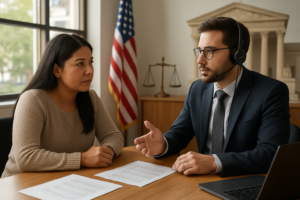
 A Spanish certified translator is often essential when California attorneys, paralegals, and in-house legal teams must present, evaluate, or rely on Spanish-language documents in litigation, arbitration, investigations, transactions, and compliance matters. In legal settings, translation is not simply bilingual writing. It is evidence handling, terminology control, procedural accuracy, and risk management. A mistranslated contract clause, medical record, corporate filing, or witness statement can affect admissibility, negotiation leverage, discovery strategy, and client outcomes.
Because California legal practice frequently intersects with Spanish-language records from the United States, Mexico, Central America, South America, and Spain, firms need a practical framework for selecting the right professional. This guide explains the role of a Spanish certified translator, the credentials that matter, common Spanish-specific challenges, how to vet a provider, what to expect on pricing and turnaround, and why many legal teams turn to L.A. Translation for high-stakes assignments.
The role of a Spanish certified translator in California litigation and transactional work
In legal matters, the translator’s work must do more than communicate general meaning. It must preserve the legal effect, factual nuance, formatting, and source-document integrity of the original text. California matters commonly involve Spanish-language birth certificates, marriage records, police reports, medical charts, employment files, bank statements, contracts, emails, WhatsApp messages, immigration documents, corporate records, and notarized declarations. Each document type raises different accuracy and handling requirements.
In litigation, a Spanish certified translator may support:
- Complaint and answer preparation involving foreign-language exhibits
- Discovery review, including emails, chats, invoices, and personnel files
- Deposition preparation and impeachment analysis
- Motions, declarations, and evidentiary submissions
- Arbitration and mediation binders
- Expert reliance materials and damages documentation
- Trial exhibits and demonstratives derived from Spanish-language source records
In transactional and corporate work, translators often assist with:
- Bilingual contract review and certified translations of executed agreements
- M&A diligence involving foreign corporate records and licenses
- Employment policies, investigations, and acknowledgments
- Real estate and finance documentation
- Regulatory filings, compliance records, and internal investigations
- Cross-border board materials and shareholder documents
For attorneys, the key point is that legal translation must be fit for purpose. A rough internal gist translation may be sufficient for preliminary issue spotting, but a filing, exhibit, or closing set may require a polished, fully certified translation accompanied by a signed declaration of accuracy. Knowing the intended use at the outset helps avoid duplicate work, delays, and disputes over reliability.
Credentials explained: what legal teams should know
ATA certification
American Translators Association certification is one of the most recognized professional credentials in the United States. An ATA-certified Spanish translator has passed a rigorous exam demonstrating translation competence in a designated language pair. For law firms, ATA certification is a strong indicator of professional skill, but it is not the same as a court appointment, government license, or automatic authority to interpret in judicial proceedings.
ATA certification is especially useful when evaluating translators for contracts, corporate records, discovery documents, and certified written translations. It signals tested ability, commitment to professional standards, and continuing professional engagement.
Judicial Council court certification
California also has court interpreter credentialing administered through the Judicial Council system. This credential is distinct from ATA certification and primarily concerns oral interpretation in court proceedings. Attorneys should not assume that a court-certified interpreter is automatically the best choice for complex written translation, nor that an ATA-certified translator is automatically qualified to interpret in court. The disciplines overlap, but they are not identical.
When a matter involves both oral proceedings and written exhibits, firms often benefit from engaging professionals whose credentials match the task: interpreters for hearings, depositions, and client meetings; translators for written evidence and filings.
Sworn declarations of accuracy for foreign-language exhibits
For many legal uses, what matters most is a signed certification or declaration from the translator stating that the translation is true and accurate to the best of the translator’s knowledge and ability. This declaration typically identifies the translator, the language pair, the translated document, and the date. It may be attached to the translation itself and formatted to support filing or submission with a court, agency, arbitrator, or opposing counsel.
Legal teams should confirm in advance whether they need:
- A standard certificate of translation accuracy
- A declaration under penalty of perjury
- Notarization of the translator’s signature
- Specific captioning or exhibit labeling
- Formatting that mirrors the source document for evidentiary clarity
Requirements vary by forum, judge, agency, and use case. A capable provider will ask these questions before work begins.
Spanish-specific challenges that affect legal accuracy
Dialect and regional usage
Spanish is not monolithic. Legal and administrative documents from Mexico may use terms that differ materially from those used in Colombia, Argentina, Spain, or Guatemala. Even everyday words can shift meaning by region. In witness communications, slang, abbreviations, and colloquial phrasing can create ambiguity that matters in employment, harassment, fraud, or criminal-adjacent investigations.
A qualified translator identifies regional usage and translates for legal clarity without flattening important distinctions in the source text.
Handwriting, seals, stamps, and legacy scripts
Many legal records arrive as scans, photographs, handwritten certificates, or aging civil registry documents with stamps, marginal notes, and partially legible signatures. Translating these materials requires more than language skill. It requires document forensics discipline: identifying illegible portions, preserving line breaks where needed, and marking uncertain text appropriately rather than guessing.
Legal terms without direct equivalents
Some Spanish legal terms do not map neatly onto California or U.S. legal concepts. A translator may need to choose between a literal rendering and a functional equivalent, depending on the purpose of the translation. For example, foreign corporate forms, notarial acts, civil status categories, and procedural terms may require a translation that is accurate yet carefully neutral to avoid implying a U.S. legal status the original document does not actually confer.
This is where legal translation judgment matters most. Over-translation can be as dangerous as under-translation.
Name order, diacritics, and transliteration issues
Spanish-language names often include two surnames, particles, accents, and jurisdiction-specific formatting conventions. Inconsistent treatment of names across passports, birth records, contracts, and court filings can create chain-of-identity problems. A careful translator preserves the source spelling, including diacritics where appropriate, and flags discrepancies rather than silently normalizing them. For law firms, this can be critical when matching records to parties, beneficiaries, account holders, or witnesses.
How to vet a Spanish certified translator
Choosing the right provider should be a legal operations decision, not a commodity purchase. Ask targeted questions before assigning sensitive work.
Questions to ask
- What credentials do you hold for Spanish translation, and in which language direction?
- Do you regularly handle litigation, arbitration, employment, corporate, or regulatory documents?
- Can you provide a signed certification or declaration of accuracy tailored to the matter?
- How do you handle illegible text, handwritten notes, stamps, and annotations?
- What is your quality-control process for legal terminology and proper names?
- Can you preserve source formatting, exhibit numbering, and pagination?
- How do you protect confidentiality and privileged information?
- Are you willing to sign an NDA and comply with client security protocols?
- What is your process for rush jobs and after-hours requests?
- Have you worked with California law firms and court-related submissions before?
Sample declarations
A professional provider should be able to furnish a standard certificate of accuracy and, when needed, adapt it for filing requirements. Attorneys should review sample language in advance, especially if the translation may be attached to a declaration, motion, or evidentiary packet.
Confidentiality and NDAs
Legal translations often involve privileged communications, trade secrets, personnel records, health information, and pre-litigation investigative materials. Confirm that the translator or agency uses secure transmission methods, controlled file access, and documented confidentiality procedures. NDAs should be routine, not exceptional.
Chain of custody for evidence
When documents may become exhibits, chain of custody matters. Law firms should know who received the files, where they were stored, who worked on them, what version was translated, and whether any OCR or retyping was performed. A disciplined provider can document file handling and version control, reducing later disputes over whether the translation corresponds to the source document actually produced in discovery or lodged with the court.
Pricing, turnaround, and rush options
Spanish legal translation is typically priced by word count, page count, hourly review time, or project minimum, depending on the material. Straightforward certificates may be billed differently from dense contracts, handwritten records, or image-heavy exhibits requiring formatting recreation.
Factors that affect cost include:
- Document complexity and subject matter
- Legibility and scan quality
- Need for certification, notarization, or declaration language
- Formatting requirements and exhibit preparation
- Volume and repetition
- Turnaround speed
- Weekend, evening, or same-day rush service
For legal teams, the lowest quote is rarely the lowest-risk option. A bargain translation that must be redone for filing, challenged by opposing counsel, or corrected after attorney review often costs more in the end. It is better to define the use case, deadline, and certification requirements upfront and obtain a clear scope and delivery plan.
Rush options are common, but firms should be realistic. High-quality legal translation under extreme deadlines may require team staffing, expedited QA, and premium pricing. If a filing deadline is immovable, disclose it at intake so the provider can allocate the right resources.
Why law firms choose L.A. Translation for Spanish certified translators
L.A. Translation is a practical choice for California legal professionals who need dependable Spanish certified translator support for litigation, transactions, investigations, and compliance. Law firms and legal departments value providers that understand not only language, but also deadlines, declarations, document sensitivity, and evidentiary use.
L.A. Translation supports legal teams with:
- Experienced Spanish legal translators for certified written translations
- Declarations of accuracy tailored to legal and business use
- Careful handling of names, formatting, stamps, and handwritten records
- Confidential workflows and NDA-ready engagement
- Responsive turnaround, including rush matters when available
- Clear communication with attorneys, paralegals, and legal operations staff
When the stakes involve admissibility, diligence, compliance, or settlement posture, precision matters. The right translation partner helps legal teams move faster with more confidence and less rework.
If your firm or legal department needs a Spanish certified translator for court filings, foreign-language exhibits, contracts, employment matters, or urgent document review, contact L.A. Translation today to discuss your deadline, certification needs, and scope of work.