

Apostille Marriage Certificate Translation in 2026: When You Need Notarization, Certified Translation, and Hague-Compliant Document Prep

Apostille Marriage Certificate Translation in 2026: What You Need to Know

If you are submitting a marriage certificate for use in another country, an apostille marriage certificate translation may be one of the most important steps in your document process. In 2026, international authorities are paying closer attention to document accuracy, chain of authentication, and whether translations meet local legal standards. A simple translation is often not enough. Depending on the country and the purpose of your filing, you may also need certified translation, notarization, and Hague-compliant document preparation.

This matters for high-stakes situations such as spouse visas, family reunification, dual citizenship applications, residency permits, foreign court filings, overseas inheritance matters, and international name change updates. If your paperwork is rejected, the result can be missed deadlines, postponed travel, legal delays, or repeated government fees. That is why understanding the full apostille marriage certificate translation process is essential before you submit anything.

In this guide, we explain when you need an apostille marriage certificate translation, when notarization applies, what certified translation means in practice, and how to prepare your documents correctly for Hague Convention countries in 2026.

What Is an Apostille Marriage Certificate Translation?

An apostille marriage certificate translation is the translation of a marriage certificate that will be used together with an apostille or in support of an apostille-related international filing. The exact requirement depends on the receiving country and agency. In many cases, the original marriage certificate must first be obtained in an acceptable official format, then authenticated with an apostille if the destination country is a member of the Hague Apostille Convention.

The translation itself may need to be:

  • Certified by the translator or translation company
  • Notarized, if requested by the receiving authority
  • Attached to a copy of the original document
  • Prepared in a format accepted by immigration, consular, court, or civil registry offices

Many people assume the apostille covers the translation automatically. It usually does not. The apostille authenticates the signature or seal on the public document, not the content of the translation unless the translation has been separately notarized and submitted for authentication where allowed.

Why Marriage Certificates Often Require Special Handling

Marriage certificates are vital records, and vital records are among the most frequently rejected international documents when formatting rules are ignored. Authorities may reject documents for reasons that seem minor, including:

  • The certificate is a plain photocopy instead of a certified copy
  • The certificate is too old under local submission rules
  • Names do not match passport spellings
  • The translation omits stamps, marginal notes, or handwritten annotations
  • The translator certification statement does not meet local standards
  • The notarization is missing or improperly worded

Because a marriage certificate often supports identity, family status, and legal eligibility, agencies tend to review it carefully. That is why an accurate apostille marriage certificate translation is not just a language service. It is part of a legal document compliance workflow.

When You Need an Apostille for a Marriage Certificate

You generally need an apostille when your marriage certificate was issued in one Hague Convention country and will be used in another Hague Convention country. The apostille confirms that the issuing official, registrar, or public authority is genuine.

Common use cases include:

  • Marriage-based immigration petitions
  • Applying for residency abroad
  • Registering a foreign marriage in another country
  • Changing marital status with a foreign civil authority
  • Claiming spousal pension, inheritance, or insurance rights overseas
  • Dual citizenship or descent-based nationality applications

If the destination country is not part of the Hague Apostille Convention, you may need legalization instead of an apostille. In that case, the process often involves state authentication, federal authentication, and embassy or consular legalization. The translation requirements may also differ.

Do You Need a Certified Translation?

In many cases, yes. A certified translation is usually required when the marriage certificate is not in the official language of the receiving authority. A certified translation typically includes a signed statement from the translator or translation provider confirming that the translation is complete and accurate to the best of their knowledge.

For an apostille marriage certificate translation, certified translation is commonly required for:

  • USCIS and immigration-related filings
  • Foreign civil registry submissions
  • Family court proceedings
  • Consular applications
  • International adoption or parental status matters
  • Tax residency or dependent registration abroad

Certified translation does not always mean notarized translation. These are separate concepts. Some authorities accept a properly signed certification statement without notarization, while others specifically require the translator’s affidavit to be notarized.

When Notarization Is Required

Notarization may be required when the receiving authority wants additional formality for the translator’s declaration or when the translation itself will be submitted for further authentication. This is where confusion often arises.

You may need notarization if:

  • The destination country requires a notarized translator affidavit
  • The translation will be separately apostilled where local rules permit
  • A court, consulate, or registrar specifically asks for notarized translation
  • Your filing package includes sworn statements or supporting affidavits

However, not every apostille marriage certificate translation needs notarization. In fact, unnecessary notarization can sometimes complicate the process if it is done incorrectly or if the wrong party signs before the notary. The key is to verify the exact requirement of the receiving authority before proceeding.

Certified Translation vs. Notarized Translation vs. Apostille

These terms are often used interchangeably, but they are not the same:

  1. Certified translation: The translator or agency certifies accuracy and completeness.
  2. Notarized translation: A notary acknowledges the identity of the person signing the translator’s certification or affidavit.
  3. Apostille: A government-issued certificate that authenticates the signature or seal on a public document for use in another Hague Convention country.

Understanding this distinction is critical when ordering an apostille marriage certificate translation. If you request the wrong service, you may pay extra and still end up with a noncompliant document set.

What Hague-Compliant Document Preparation Means in 2026

Hague-compliant document preparation means organizing your marriage certificate and translation package so it aligns with the apostille rules of the issuing jurisdiction and the acceptance standards of the destination country. In 2026, this increasingly includes both paper and digital workflow considerations, because many agencies now pre-screen scans before accepting originals.

Proper Hague-compliant preparation may include:

  • Obtaining a recent certified copy from the correct vital records office
  • Confirming whether the document must be long-form or full-form
  • Checking whether county, state, or national level apostille authority applies
  • Preparing a certified translation that mirrors names, dates, seals, and annotations exactly
  • Using a compliant certification statement
  • Adding notarization only when required
  • Keeping document order consistent for submission and review

In practice, Hague compliance is about reducing rejection risk. Even a perfect translation can fail if the underlying vital record is not the right version for apostille processing.

Common 2026 Scenarios for Apostille Marriage Certificate Translation

Immigration and Family Reunification

Marriage certificates are central to spouse visa and family reunification cases. Applicants often need both the apostilled original and a certified translation for immigration departments, border ministries, or consulates.

Dual Citizenship Applications

Many citizenship-by-descent programs require proof of family relationships. If your marriage certificate connects generations or explains a surname change, an accurate apostille marriage certificate translation can be essential.

Foreign Marriage Registration

Some countries require residents or citizens to register a marriage that took place abroad. This frequently involves an apostille on the original certificate plus translation into the local language.

International Probate and Inheritance

When a surviving spouse is asserting rights overseas, courts and notaries may request a translated and apostilled marriage certificate to establish legal standing.

How to Prepare Your Documents Step by Step

  1. Confirm the destination country’s requirement. Check whether the receiving country is a Hague Convention member and whether it requires translation, notarization, or both.
  2. Order the correct marriage certificate. Request an official certified copy from the appropriate vital records office. If available, confirm whether a long-form version is preferred.
  3. Verify apostille eligibility. Make sure the certificate bears the signature and format required by the apostille authority in the issuing jurisdiction.
  4. Obtain a professional certified translation. Use a provider experienced with vital records and international submissions. Accuracy in names, dates, seals, and notes is critical.
  5. Add notarization if needed. If the receiving authority requires a notarized translator affidavit, ensure the notarization is completed correctly.
  6. Review the full packet. Check consistency across passports, IDs, visa forms, and the marriage certificate translation.
  7. Submit according to agency instructions. Some agencies want originals, some accept certified copies, and some require translated documents in a specific sequence.

Frequent Mistakes That Cause Delays

Delays often happen because applicants underestimate the technical details of an apostille marriage certificate translation. Watch out for these common errors:

  • Using machine translation for a legal document
  • Submitting a hospital record or ceremonial certificate instead of the official civil marriage certificate
  • Getting a translation before confirming the final version of the certificate
  • Misspelling names that must match passports exactly
  • Ignoring handwritten notes, stamps, or registrar remarks
  • Assuming every country accepts the same certification format
  • Requesting an apostille for a document that actually needs consular legalization

Each of these mistakes can lead to rejection, resubmission, and extra fees. For time-sensitive applications, that can be costly.

How Long Does the Process Take?

Timing varies by jurisdiction, but in 2026 the full process may include several separate turnaround windows: obtaining the certified marriage certificate, completing the certified translation, arranging notarization if required, and receiving the apostille from the competent authority. Expedited options may be available, but not for every step.

If your filing has a deadline, start early. International agencies may also have validity expectations for recently issued civil records, so waiting too long after obtaining the certificate can create another problem.

How to Choose the Right Service Provider

Because this is a high-intent legal document service, choosing the right provider matters. Look for a company or professional who understands both translation and authentication workflows, not just one or the other.

A reliable provider for apostille marriage certificate translation should be able to explain:

  • Whether your destination country is under Hague apostille rules or legalization rules
  • Whether your translation needs certification, notarization, or both
  • What type of marriage certificate copy is acceptable
  • How names, dates, and official seals will be handled in translation
  • Typical processing times and shipping options
  • How document review helps reduce rejection risk

Clear communication is a strong sign of competence. If a provider cannot distinguish between a certified translation and an apostille, that is a red flag.

Final Thoughts

An apostille marriage certificate translation in 2026 is more than a basic translation request. It is a document compliance process that may involve certified translation, notarization, and Hague-compliant preparation depending on where the certificate was issued and where it will be used. The right approach can save time, prevent rejection, and make your immigration, citizenship, court, or civil registration process much smoother.

If your marriage certificate will be used internationally, verify the destination country’s rules first, obtain the correct official record, and work with professionals who understand apostille and vital records requirements. When accuracy and legal acceptance matter, careful preparation is not optional. It is the fastest way to get your documents accepted the first time.

Hospital ASL Interpreter Services After the September 2026 HHS Enforcement Action: What Healthcare Providers Must Do Now

The September 2026 HHS enforcement action has changed the compliance conversation for hospitals, health systems, emergency departments, outpatient campuses, and specialty clinics. For healthcare leaders, risk managers, compliance officers, patient experience teams, and operations directors, the message is clear: hospital ASL interpreter services can no longer be treated as an occasional accommodation or a last-minute scheduling issue. They are a core part of lawful, safe, patient-centered care.
In practical terms, this means providers must review whether their communication access policies actually work in real clinical settings. A written policy alone is not enough. If a Deaf or hard of hearing patient cannot understand triage questions, treatment options, discharge instructions, consent discussions, or medication changes, the organization may face serious legal, financial, and reputational consequences.

This article explains what the September 2026 HHS enforcement action means, why hospital ASL interpreter services are receiving increased scrutiny, and what healthcare providers should do now to reduce risk and improve outcomes.

Why the September 2026 HHS Enforcement Action Matters

HHS enforcement actions often serve as a warning to the broader healthcare market. Even when a case focuses on one system or one set of facts, the underlying expectation applies across the industry: covered entities must provide effective communication under federal disability law. That includes timely, accurate, and appropriate auxiliary aids and services for patients and, in many cases, companions.

For hospitals, the significance is immediate. Emergency care moves fast. Inpatient care involves frequent handoffs. Surgical episodes require informed consent. Behavioral health settings demand nuanced communication. Labor and delivery, oncology, cardiology, and discharge planning all depend on clarity. When hospital ASL interpreter services are delayed, denied, or replaced with inadequate alternatives, the risk is not merely technical noncompliance. It can affect diagnosis, consent, safety, and trust.

The September 2026 action likely reinforced a point healthcare providers have heard before but sometimes fail to operationalize: relying on ad hoc solutions, such as lip reading, written notes, or family members, is often insufficient. Effective communication must be individualized and reliable.

The Legal Foundation Behind Hospital ASL Interpreter Services

Healthcare organizations should view hospital ASL interpreter services through the lens of both compliance and quality. The main legal framework typically includes:

  • Section 1557 of the Affordable Care Act, which prohibits discrimination in covered health programs and activities.
  • Section 504 of the Rehabilitation Act, which applies to recipients of federal financial assistance.
  • The Americans with Disabilities Act, especially for public hospitals and other covered entities.

These laws generally require providers to ensure effective communication with individuals who are Deaf or hard of hearing. In many hospital encounters, that means providing a qualified ASL interpreter. The word “qualified” matters. Not every bilingual signer, staff member, or family member meets the legal or practical standard for medical interpretation.

A qualified interpreter must be able to interpret effectively, accurately, and impartially, using any necessary specialized vocabulary. In medical settings, that includes terminology related to symptoms, procedures, risks, benefits, medications, anatomy, mental health, and post-discharge instructions.

What HHS and Regulators Commonly Look For

When regulators examine hospital ASL interpreter services, they usually look beyond whether an interpreter was technically offered. They assess whether the communication access system is timely, dependable, documented, and appropriate to the clinical context.

1. Timeliness of Access

If a patient waits hours for language access during a critical point of care, the hospital may have failed even if an interpreter eventually appears. Delays are especially problematic in the emergency department, labor and delivery, urgent consent discussions, psychiatric evaluation, and discharge.

2. Appropriateness of the Modality

Video remote interpreting may be useful in some settings, but it is not always enough. If the patient has limited visibility, the connection is unstable, the screen is too small, or the situation is complex and emotionally charged, an on-site interpreter may be necessary. Hospital ASL interpreter services should include a clear process for determining when remote interpreting is insufficient.

3. Staff Knowledge and Escalation Procedures

Policies fail when frontline staff do not know how to activate them. Registrars, nurses, charge nurses, house supervisors, social workers, and physicians should know how to request interpreter services immediately and how to escalate urgent needs after hours.

4. Documentation

Hospitals should document communication needs, interpreter requests, the modality provided, wait times, refusals if any, and any transition from video to on-site support. Weak documentation creates compliance exposure and makes quality improvement difficult.

5. Use of Family Members or Minors

Providers should be extremely cautious about using relatives to interpret. In many cases, it is inappropriate, unreliable, or prohibited except in limited emergencies or when specifically requested by the patient after being offered a qualified interpreter. Using children is particularly risky.

Operational Gaps That Put Hospitals at Risk

Many organizations assume they are compliant because they have a vendor contract. In reality, several operational failures can undermine hospital ASL interpreter services:

  • No 24/7 coverage plan for emergency and inpatient settings
  • Overreliance on video remote interpreting without quality checks
  • No service-level expectations for response times
  • Lack of interpreter availability for high-demand departments
  • No process for companion communication access when legally required
  • Failure to train staff on when written notes are inadequate
  • No auditing of complaints, delays, or failed encounters
  • Discharge workflows that do not verify patient understanding through accessible communication

After the September 2026 HHS enforcement action, these gaps are harder to defend. Regulators and plaintiff attorneys increasingly expect hospitals to show not just intent, but performance.

What Healthcare Providers Must Do Now

If your organization is reassessing hospital ASL interpreter services, the most effective response is a structured compliance and operations plan. The following steps are practical and urgent.

Conduct an Immediate Accessibility Risk Assessment

Start with a realistic review of where communication breakdowns occur. Map the patient journey from scheduling and registration through treatment, consent, inpatient rounds, discharge, and follow-up. Include the emergency department, surgery, imaging, pharmacy counseling, telehealth, and behavioral health.

Ask questions such as:

  • How quickly can staff obtain a qualified ASL interpreter at 2 a.m.?
  • What happens if VRI fails during an emergency consult?
  • How are Deaf patients identified in the EHR for future visits?
  • Who monitors vendor performance and complaint trends?

Review and Update Policies

Your policy should clearly define when hospital ASL interpreter services are required, how to request them, when on-site support is necessary, and what alternatives are unacceptable except in narrow circumstances. It should also explain how to handle urgent care, companion access, refusals, and equipment failure.

Policies should be operational, not merely legalistic. A nurse or registrar should be able to follow them under pressure.

Strengthen Vendor Agreements and Coverage Models

Many hospitals need a hybrid model that combines on-site interpreters, scheduled support, and high-quality video remote interpreting for immediate access. Review whether your current vendor can meet actual hospital demand, including nights, weekends, trauma cases, and specialty appointments.

Strong contracts for hospital ASL interpreter services should address:

  • Guaranteed response times
  • Escalation procedures for urgent requests
  • Interpreter qualifications and medical experience
  • Technology standards for VRI
  • Coverage across service lines and campuses
  • Performance reporting and accountability metrics

Train Frontline Staff and Clinical Leaders

Training is one of the fastest ways to reduce risk. Staff should understand that effective communication is not optional and that Deaf patients should not have to repeatedly fight for access. Training should cover legal obligations, patient rights, how to access hospital ASL interpreter services, when to avoid ad hoc communication methods, and how to document the encounter.

Department leaders should also be trained to recognize high-risk scenarios, such as informed consent, end-of-life discussions, psychiatric crises, and discharge education.

Improve Documentation and EHR Workflows

Hospitals should standardize how communication preferences and accommodations are recorded. Ideally, the EHR should flag interpreter needs at registration and carry them across future visits. Documentation templates can help capture whether hospital ASL interpreter services were requested, provided, delayed, declined, or escalated.

This matters for both patient safety and defensibility. If a complaint arises, precise records are essential.

Audit Real Encounters, Not Just Policies

Compliance teams should test the system through chart reviews, mystery-patient exercises where appropriate, incident analysis, and patient feedback. Audit whether interpreters actually arrive on time, whether VRI functions correctly, and whether key conversations are interpreted effectively.

The goal is continuous improvement, not box-checking.

Why Better ASL Access Also Makes Business Sense

Although the legal urgency is high, hospital ASL interpreter services are not only about avoiding enforcement. They also support better operations and patient experience.

When communication is accessible, hospitals can reduce misunderstandings, repeated explanations, avoidable complaints, and potential adverse events. Patients are more likely to understand care plans, follow medication instructions, and trust the organization. In value-based and reputation-sensitive environments, that matters.

There is also a brand advantage. Hospitals that invest in accessible communication can differentiate themselves as inclusive, responsive, and patient-centered. For health systems competing on experience, community trust, and specialty referrals, that is commercially meaningful.

Common Mistakes to Avoid Right Now

  1. Assuming VRI alone solves the problem. It is a tool, not a universal answer.
  2. Waiting for a complaint before acting. Post-enforcement, reactive compliance is expensive compliance.
  3. Treating ASL access as an outpatient scheduling issue only. The highest-risk failures often happen in emergency and inpatient settings.
  4. Using family members for complex medical discussions. This creates accuracy, privacy, and consent concerns.
  5. Ignoring companion communication needs. In some situations, companions must also receive effective communication.
  6. Failing to assign ownership. Hospital ASL interpreter services need executive oversight, not diffuse responsibility.

How to Choose the Right Hospital ASL Interpreter Services Partner

If your current process is inconsistent, now is the time to evaluate providers. Look for a partner with true healthcare expertise rather than general language access capacity alone.

The right hospital ASL interpreter services partner should offer:

  • Qualified interpreters with medical interpreting experience
  • 24/7 availability and urgent response capability
  • On-site and remote options
  • Clear service-level commitments
  • Support for compliance documentation and reporting
  • Scalable coverage for hospitals, clinics, and system-wide operations
  • Training support for staff adoption

Do not evaluate solely on price. Inadequate service can cost far more in complaints, delays, risk exposure, and damaged patient trust.

Final Takeaway

The September 2026 HHS enforcement action should be a wake-up call for every healthcare provider. Hospital ASL interpreter services are not peripheral. They are central to effective communication, disability compliance, informed consent, patient safety, and equitable care.

Healthcare organizations that act now should assess risk, update policies, strengthen vendor coverage, train staff, improve documentation, and audit actual performance. Those that delay may find themselves exposed not only to enforcement but also to preventable breakdowns in patient care.

If your hospital or health system is reviewing its next steps, the priority is simple: make hospital ASL interpreter services fast, qualified, consistent, and available wherever critical care conversations happen. That is what regulators expect, what patients deserve, and what modern healthcare operations now require.

Birth Certificate Translation for Green Card Application: 2026 USCIS & Consular Processing Checklist

Birth Certificate Translation for Green Card Application: What You Need in 2026

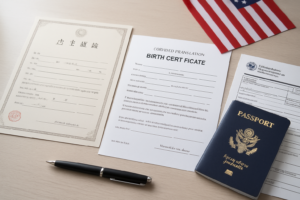
If you are applying for lawful permanent residence, one of the most common supporting documents you may need is a birth certificate translation for green card application filing. Whether you are adjusting status inside the United States through USCIS or completing immigrant visa processing through a U.S. consulate abroad, your birth certificate is a core civil document used to verify identity, parentage, date of birth, and place of birth.

In 2026, the basic rule remains straightforward: if your birth certificate is not in English, you generally must submit a full English translation along with a certification from the translator stating that the translation is complete and accurate and that the translator is competent to translate from the foreign language into English. While the requirement sounds simple, many applicants face delays because of incomplete translations, missing certifications, inconsistent names, poor scans, or confusion about whether USCIS and the Department of State expect the same format.

This guide explains how to prepare a compliant birth certificate translation for green card application purposes, what to include for USCIS and consular processing, and how to avoid the errors that often trigger Requests for Evidence, document rejection, or interview delays.

Why Birth Certificate Translation Matters in a Green Card Case

A birth certificate is more than a routine identity document. In family-based immigration, employment-based immigration with dependents, and certain humanitarian categories, it helps establish the applicant’s biographical history and legal identity. It may also be used to confirm a qualifying relationship, especially where parents, children, or derivative beneficiaries are involved.

If the original document is issued in Spanish, Portuguese, Arabic, Chinese, French, Russian, Hindi, or any other non-English language, USCIS will not evaluate the foreign-language text on its own. That is why a proper birth certificate translation for green card application submission is essential. An accurate translation reduces the risk of confusion about names, registration dates, annotations, marginal notes, or official seals that may affect how your case is reviewed.

For consular processing, the stakes are similar. National Visa Center document review and consular interviews often depend on civil records being legible, complete, and translated correctly. A weak translation can slow document qualification or create unnecessary follow-up at the interview stage.

Who Needs a Birth Certificate Translation for Green Card Application Filing?

You likely need a translated birth certificate if:

  • Your birth certificate is entirely in a language other than English.
  • Your birth certificate is bilingual, but key entries, stamps, handwritten notes, or marginal remarks are not in English.
  • Your birth certificate includes non-English abbreviations, registry comments, or legalization text.
  • You are filing Form I-485 with USCIS and your civil document is not in English.
  • You are completing immigrant visa processing through the National Visa Center and a U.S. embassy or consulate.

Even if only part of the record is in a foreign language, it is often safest to obtain a complete professional translation. In practice, immigration officers and document reviewers prefer a clean, fully translated version rather than a partial translation that leaves room for interpretation.

USCIS Requirements in 2026

For USCIS filings, the general translation standard is well known: any document containing foreign language submitted to USCIS must be accompanied by a full English translation and a translator’s certification. For a birth certificate translation for green card application packets, that means the translated document should reflect all visible text that is relevant on the original record.

What USCIS Typically Expects

  • A complete English translation of the birth certificate.
  • A certification signed by the translator.
  • The translator’s statement that the translation is accurate and complete.
  • The translator’s statement that they are competent to translate from the source language into English.
  • A copy of the original foreign-language birth certificate.

USCIS does not usually require notarization of the translation certification unless specifically requested elsewhere, but some applicants still choose notarized translations for added formality. In most cases, certification is the key requirement, not notarization.

Does the Translator Need to Be Certified by the Government?

Usually no. For USCIS purposes, the translator generally does not need a government-issued translator license. What matters is that the translator is competent and provides the required certification. However, competence, formatting quality, and consistency are crucial. A sloppy translation done by someone unfamiliar with civil documents can create avoidable problems.

Consular Processing Requirements in 2026

If you are applying through a U.S. embassy or consulate, the rule can be slightly more nuanced. The Department of State and the National Visa Center often require translations of documents not written in English or in the official language of the country where the visa application is being processed. Because local post instructions can vary, applicants should always check the current embassy or consulate guidance in addition to the general rules.

For most applicants, a birth certificate translation for green card application consular processing will still need to be complete, readable, and properly certified. If the consular post accepts documents in the local official language without translation, you may not need an English version for that stage. However, many applicants still order one because it can help with legal review, attorney preparation, and future USCIS use after entry.

Best Practice for Consular Cases

Even where a translation may not be strictly required by a local post, submitting a professional English translation can reduce confusion and help keep your immigration file consistent. This is especially useful if your case involves multiple agencies, prior petitions, derivative family members, or later adjustment-related filings.

What a Proper Birth Certificate Translation Should Include

A high-quality birth certificate translation for green card application cases should do more than convert obvious printed text. It should capture the structure and substance of the original document accurately.

Checklist of Essential Elements

  • Name of the document.
  • Full name of the person named on the birth certificate.
  • Date of birth and place of birth.
  • Names of parents, if listed.
  • Certificate number, registry number, or entry number, if visible.
  • Date of registration or issuance.
  • All stamps, seals, signatures, and annotations that contain text.
  • Handwritten notes or marginal remarks, if legible.
  • A translator certification statement.

Professional translators also preserve the meaning of official terms rather than guessing. For example, distinctions between date of registration and date of birth, or between municipality and province, can matter in immigration review. Consistency with passports, marriage certificates, and prior immigration filings is equally important.

Common Mistakes That Cause Delays

Many applicants assume that any translation is good enough. Unfortunately, that is not always true. Here are the most common issues that can affect a birth certificate translation for green card application package.

1. Incomplete Translation

Leaving out seals, side notes, registry comments, or handwritten corrections can make the document look altered or incomplete.

2. Missing Certification

A translation without the required certification statement may be rejected or lead to a request for more evidence.

3. Name Inconsistencies

If the translation spells the applicant’s name differently from the passport, prior visa records, or petition forms, the discrepancy can raise questions.

4. Poor Image Quality

If the original scan is blurry, cut off, or too dark, even an accurate translation may not cure the problem. Immigration officers need to see the source document clearly.

5. DIY Translation Without Professional Review

While rules do not always prohibit a competent translator who is not formally licensed, self-translation by the applicant is risky. It can undermine credibility and increase the chance of errors.

6. Partial Bilingual Assumptions

Some certificates appear bilingual but still contain foreign-language stamps or handwritten remarks. Those portions should not be ignored.

2026 Checklist for USCIS and Consular Processing

Use this practical checklist before submitting your birth certificate translation for green card application materials.

  1. Obtain a clear copy of the original birth certificate, front and back if applicable.
  2. Confirm whether the document is the correct civil record for your country of birth.
  3. Check whether all text is already in English. If not, order a full translation.
  4. Make sure the translation includes all printed text, stamps, notes, and annotations.
  5. Verify that names, dates, and places match your passport and immigration forms.
  6. Ensure the translator signs a certification of accuracy and competence.
  7. Review the final translation for formatting, completeness, and legibility.
  8. For USCIS, include the foreign-language copy and the English translation together.
  9. For consular processing, review National Visa Center and embassy-specific document instructions.
  10. Keep digital and printed copies for your records and future immigration steps.

Should You Use a Professional Translation Service?

In most cases, yes. A professional service familiar with immigration documents can help reduce risk, especially when timing matters. Since a green card case often involves filing fees, medical exams, attorney fees, and strict deadlines, the cost of a reliable birth certificate translation for green card application is usually small compared with the cost of delay.

What to Look for in a Translation Provider

  • Experience with USCIS and consular document standards.
  • Certified translations for immigration use.
  • Fast turnaround options if you are near a filing deadline.
  • Clear formatting that mirrors the original document.
  • Human review rather than raw machine translation.
  • Responsive customer support for questions about names, seals, and annotations.

If your birth certificate is old, damaged, handwritten, or difficult to read, choosing an experienced provider is even more important. These documents often require careful interpretation and notation of illegible sections.

How Long Does It Take?

Turnaround times vary by provider, language, and document complexity. A standard one-page birth certificate translation for green card application may be completed within 24 to 48 hours by many professional services, while rare languages or heavily annotated records may take longer. If you are filing urgently, ask whether expedited service is available and whether the provider can deliver both digital and printable copies.

How Much Does a Birth Certificate Translation Cost?

Pricing usually depends on the language pair, document length, urgency, and whether certification is included. Many providers charge a flat rate for standard civil documents such as birth certificates. Be cautious with very low-cost offers that do not clearly mention certification, human review, or immigration formatting. In immigration matters, value matters more than the absolute lowest price.

Frequently Asked Questions

Can I translate my own birth certificate?

It is not recommended. Even if you are fluent, self-translation can create credibility concerns and increase the risk of mistakes.

Does the translation need to be notarized?

Usually, certification is what matters for USCIS. Notarization is not typically required unless a specific authority asks for it.

Do I need to translate the back of the certificate?

If the back contains stamps, notes, official language, or any relevant text, it should be translated as well.

What if my birth certificate has spelling differences from my passport?

You should identify the discrepancy before filing. Depending on the facts, you may need a corrected civil record, an explanatory affidavit, or legal guidance.

Final Thoughts

A properly prepared birth certificate translation for green card application filing is a small document with a big impact. It helps USCIS officers, National Visa Center reviewers, and consular staff understand your civil record clearly and consistently. In 2026, the smartest approach is to use a complete, certified, professionally reviewed translation that matches your immigration paperwork and includes every relevant detail on the original record.

If you want to avoid delays, treat your birth certificate translation as an essential part of your case strategy, not a last-minute administrative task. A clean, accurate submission can save time, reduce stress, and help keep your green card process moving forward.

Terms of Service

Terms of Service
Last Updated: September 8, 2026
Welcome to L.A. Translation (“we,” “us,” or “our”). By accessing or using our website (latranslation.com) and our translation, interpretation, and related language services (collectively, the “Services”), you agree to be bound by these Terms of Service. If you do not agree to these terms, please do not use our Services.

1. Description of Services

L.A. Translation provides professional language services, including but not limited to document translation, in-person and remote interpretation, and court interpreting training. All Services are subject to the specific terms outlined in any individual quote, proposal, or contract provided to you.

2. Client Responsibilities & Source Materials

  • Accuracy of Source Material: You are responsible for providing legible, accurate, and complete source materials. We are not liable for translation errors resulting from ambiguous, poorly written, or illegible source texts.
  • Right to Translate: By submitting documents to us, you warrant that you own the copyright or have the necessary legal rights to commission a translation of the materials.
  • Lawful Use: You agree not to submit any materials that are illegal, defamatory, or otherwise infringe upon the rights of third parties.

3. Quotes, Fees, and Payment Terms

  • Estimates: All quotes provided are estimates based on the initial review of the source material. Final pricing may be adjusted if the scope of work changes or if the provided materials differ from the initial sample.
  • Payment: Payment terms will be specified in your invoice or contract. Unless otherwise agreed upon in writing, full payment or a specified deposit is required before the commencement of Services.
  • Cancellations: If you cancel a project after work has commenced, you will be billed for the percentage of the work already completed, plus any non-refundable expenses incurred by L.A. Translation up to the time of cancellation.

4. Intellectual Property Rights

  • Client IP: You retain all intellectual property rights to your original source materials.
  • Translated Works: Upon receipt of full payment, all intellectual property rights and copyrights to the translated deliverables are transferred to you. Until full payment is received, L.A. Translation retains ownership of the translated works.

5. Confidentiality

We treat all client documents and communications with strict confidentiality. Our linguists and staff are bound by non-disclosure agreements (NDAs). We will not share your source materials or translated documents with unauthorized third parties, except as required by law.

6. Warranties and Limitation of Liability

  • Standard of Care: We strive to provide accurate and professional language services conforming to industry standards. However, language translation is a subjective process, and we do not warrant that our translations will perfectly meet your stylistic preferences if no specific glossary or style guide was provided in advance.
  • Liability Cap: In no event shall L.A. Translation’s total liability to you for any damages, losses, or causes of action exceed the total amount paid by you for the specific Service giving rise to the claim. We are not liable for any indirect, incidental, or consequential damages.

7. Governing Law

These Terms of Service and any separate agreements whereby we provide you Services shall be governed by and construed in accordance with the laws of the State of California, without regard to its conflict of law provisions.

8. Contact Information

If you have any questions about these Terms of Service, please contact us at:
L.A. Translation
2975 Wilshire Blvd #205
Los Angeles, CA 90010
Email: info@latranslation.com
Phone: (213) 385-7781 / (213) 368-0700