
DV-2026 Deadline on September 30, 2026: Which Civil Documents Need Certified Translation Before Your Visa Interview

The Diversity Visa process moves on a strict fiscal-year deadline, and for DV-2026 selectees, that deadline is September 30, 2026. If your immigrant visa is not issued by that date, the opportunity is lost. That is why preparing your civil records early matters so much. One of the most overlooked issues is whether your documents require certified translation before the consular interview. For many applicants, missing or incorrect DV-2026 certified translation documents can lead to delays, requests for additional evidence, or administrative processing that consumes valuable time.

This guide explains which civil documents usually need translation, how consular officers generally view foreign-language records, and how to organize your paperwork well before your appointment. If you want to reduce risk and move through the interview process with confidence, understanding DV-2026 certified translation documents is essential.

Why the September 30, 2026 Deadline Matters for DV-2026 Cases

Diversity Visa cases are unlike many other immigration categories because they are controlled by a hard statutory deadline. Once September 30, 2026 passes, no DV-2026 visa can be issued, even if your case is otherwise approvable. That means every delay matters. If a consular officer cannot complete review of your file because civil records are missing, inconsistent, or untranslated, your case may be postponed until you submit corrected documents.

In practical terms, applicants with incomplete DV-2026 certified translation documents are taking a serious risk. Even a small problem, such as an untranslated birth certificate or divorce decree, can slow the process when interview slots are limited and visa numbers are finite. The safest strategy is to prepare every potentially relevant document in advance and confirm whether a certified translation is needed.

What Are DV-2026 Certified Translation Documents?

DV-2026 certified translation documents are civil or legal records submitted for a Diversity Visa case that have been translated into English, accompanied by a certification from the translator stating that the translation is complete and accurate and that the translator is competent to translate. In immigration practice, a certified translation usually does not mean notarization is always required. Instead, it generally refers to a signed certification statement from a qualified translator.

These translated documents are used so the consular officer can review records that are not originally in English or, in some cases, not in the official language accepted by the U.S. embassy or consulate handling the interview. Because local embassy procedures can vary, applicants should always review the instructions for their specific post in addition to general Department of State guidance.

General Rule: When Is a Certified Translation Required?

As a general rule, any civil document not written in English or in the official language of the country where you are applying may need a certified translation. For example, if your visa interview is in a country where the official language is French, and your document is in Arabic, the consular post may require an English or French translation depending on its local rules. If your document is already in the official language accepted by the embassy, a translation may not be required.

However, applicants should not guess. Embassy-specific instructions, reciprocity schedules, and interview notices should all be checked carefully. If there is any uncertainty, many applicants choose to obtain English certified translations anyway because it reduces the chance of confusion at the window and can simplify document review.

Which Civil Documents Usually Need Certified Translation Before the Visa Interview?

The exact list depends on your personal history, but the following are the most common DV-2026 certified translation documents applicants should review before the interview.

1. Birth Certificates

Your birth certificate is one of the most important records in a Diversity Visa case. It establishes identity, date of birth, and parentage. If the original birth certificate is not in English or another accepted language for your consular post, a certified translation is usually required.

You should make sure the translation includes all annotations, stamps, marginal notes, corrections, and official seals appearing on the original. Incomplete translation of side notes or registry remarks can create unnecessary questions.

2. Marriage Certificates

If you are married and your spouse is immigrating with you or was listed in your DV entry, your marriage certificate is critical. A certified translation is commonly needed if the certificate is in a non-accepted language.

Marriage records often contain handwritten entries, registration numbers, and local terminology that should be translated accurately. If names differ slightly from passports or birth certificates, that discrepancy should be addressed before the interview.

3. Divorce Decrees or Annulment Records

If either spouse was previously married, proof of legal termination of every prior marriage is required. Divorce judgments, certificates of divorce, and annulment orders are common DV-2026 certified translation documents. Because these records often contain legal findings, dates, and court language, accuracy is especially important.

If a divorce record has multiple pages, all pages should be translated, not just the first page or summary page.

4. Death Certificates of Former Spouses

Where a prior marriage ended because a spouse died, a death certificate may be required to prove current marital eligibility. If the document is not in English or the accepted local language, a certified translation should be prepared.

5. Adoption Records

Applicants or derivative children with an adoption history may need to present adoption decrees, custody orders, or amended birth records. These are highly sensitive legal documents and should be translated by someone experienced with immigration terminology.

6. Police Certificates

Police certificates are often required for applicants above the relevant age thresholds who have lived in qualifying countries long enough to trigger the requirement. If the police certificate is issued in a language not accepted by the embassy, it may need certified translation.

Because police certificates can expire for practical interview purposes depending on travel and residence history, it is wise to time both the certificate request and translation carefully.

7. Court and Prison Records

If you have ever been arrested, charged, convicted, or incarcerated, court and prison records may be required even if the matter was later dismissed or resolved. These are among the most important DV-2026 certified translation documents because legal details can affect admissibility.

Every page should be translated completely, including sentencing language, disposition details, and clerk certifications. Partial translation can lead to follow-up requests.

8. Military Records

Applicants who served in the military may need to present military records depending on local requirements and case facts. If those records are not in an accepted language, certified translation may be necessary.

9. Name Change Documents

If your current legal name differs from the name on your birth certificate, passport, school records, or marriage documents, you may need legal proof of the change. Name change orders, civil registry amendments, and similar records should be translated if required.

Documents That Applicants Commonly Forget to Translate

Many applicants focus only on the birth certificate and marriage certificate, but several other records are frequently missed. Overlooked DV-2026 certified translation documents often include:

  • Divorce decrees from older marriages
  • Adoption paperwork for derivative children
  • Court dispositions for minor or old criminal matters
  • Military discharge records
  • Registry extracts showing corrections or late registration notes
  • Name change judgments
  • Custody orders related to children immigrating with one parent

If a document helps explain your identity, family relationship, marital history, or legal background, review whether translation is needed.

What Makes a Translation “Certified” for Immigration Purposes?

For U.S. immigration use, a certified translation generally includes:

  • A full and accurate English translation of the original document
  • The translator’s signed statement certifying completeness and accuracy
  • A statement that the translator is competent to translate from the source language into English
  • The translator’s name, signature, and date

Some providers also include contact information, company letterhead, and formatting that mirrors the original document. While notarization is not always required, some applicants prefer it for added formality. The key issue is whether the translation is complete, readable, and credible for consular review.

Should You Use a Professional Translation Service?

For most applicants, the answer is yes. A professional service familiar with immigration standards can reduce errors, improve consistency across documents, and provide proper certification language. This is especially valuable when dealing with complex legal records, handwritten civil certificates, or documents from countries with non-Latin alphabets.

Because this is a high-stakes immigration process with a fixed end date, professional help is often a worthwhile investment. Reliable providers of DV-2026 certified translation documents can also help you handle urgent timelines, multi-document packages, and formatting for embassy submission.

How to Prepare Your DV-2026 Certified Translation Documents Efficiently

  1. List every civil document in your case. Include records for both the principal applicant and all derivatives.
  2. Check the interview post’s language rules. Review the embassy website and reciprocity information.
  3. Gather clear scans or originals. Poor-quality images lead to translation mistakes.
  4. Translate early. Do not wait until the interview is scheduled, especially if your case number may become current soon.
  5. Review names and dates carefully. Ensure consistency with passports and the DS-260.
  6. Keep originals and translations together. Organize them in the same order for easy presentation at the interview.
  7. Bring extra copies. Some posts may retain copies or ask for additional sets.

Common Mistakes That Cause Delays

Applicants often lose valuable time due to avoidable document problems. The most common issues include:

  • Submitting a translation that covers only part of the document
  • Using an uncertified translator statement
  • Presenting inconsistent spellings of names across records
  • Failing to translate stamps, seals, annotations, or handwritten notes
  • Assuming a local-language document will be accepted without checking embassy rules
  • Waiting until the last minute to order DV-2026 certified translation documents

Any of these mistakes can result in a 221(g) refusal pending additional documents, which may be difficult to resolve before the fiscal-year deadline.

When Should You Order Your Translations?

The best time is as soon as you know which documents your case requires. Do not wait for the interview email if your civil records are already available. Since DV scheduling can move quickly once case numbers become current, early preparation gives you flexibility. It also leaves time to correct registry errors, replace damaged originals, or obtain updated police certificates.

Given the September 30, 2026 cutoff, applicants should treat document readiness as urgent. If you expect to interview in 2026, your DV-2026 certified translation documents should ideally be completed well in advance, not days before the appointment.

Final Checklist Before the Visa Interview

  • Original passport for each applicant
  • Interview appointment letter
  • DS-260 confirmation page
  • Birth certificates and certified translations if required
  • Marriage certificate and certified translation if required
  • Divorce, annulment, or death records for prior marriages with translations if required
  • Police certificates with translations if required
  • Court, prison, or military records with translations if required
  • Adoption, custody, or name change records with translations if required
  • Financial and supporting documents requested by the post

Conclusion

The Diversity Visa process rewards preparation and punishes delay. With the DV-2026 deadline fixed on September 30, 2026, there is little room for document mistakes. Knowing which civil records require translation can help you avoid interview delays and protect your chance of visa issuance. For many selectees, properly prepared DV-2026 certified translation documents are a small but decisive part of a successful case.

If your records involve multiple languages, prior marriages, legal history, or derivative children, it is wise to review everything early and use a trusted professional translation provider. In a deadline-driven immigration category, clear and accurate certified translations are not just paperwork. They are part of your strategy to reach the visa interview fully prepared.
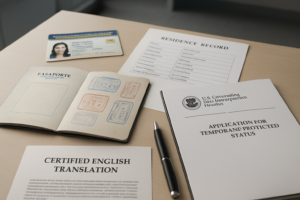
TPS Venezuela Document Translation in 2026: How to Translate Identity, Entry, and Residence Records Correctly for USCIS

Why TPS Venezuela Document Translation Matters in 2026

For Venezuelan nationals and eligible individuals seeking Temporary Protected Status, paperwork is not just a formality. It is the foundation of the case. In 2026, applicants filing with U.S. Citizenship and Immigration Services must present clear, credible evidence of identity, nationality, date of entry, and continuous residence. If any supporting record is in Spanish, USCIS generally requires a full English translation accompanied by a translator certification.

That is why TPS Venezuela document translation is a high-stakes step, not an afterthought. A poor translation can create inconsistencies in names, dates, places, or legal terms. Even small errors can trigger a Request for Evidence, slow adjudication, or raise doubts about whether the documents match the application. A professional, USCIS-compliant translation helps present your case accurately and reduces avoidable risk.

This article explains how to translate identity, entry, and residence documents correctly for USCIS in 2026, what certification language is typically needed, which records often require translation, and how to avoid the most common mistakes.

What USCIS Expects from Foreign-Language Documents

USCIS requires that any document containing foreign language submitted to support an immigration benefit request be accompanied by a full English translation and a certification from the translator stating that the translation is complete and accurate and that the translator is competent to translate from the foreign language into English.

For TPS Venezuela document translation, this means applicants should not submit partial summaries, machine-generated excerpts, or informal translations that leave out stamps, handwritten notes, marginal text, or official seals referenced in the document. USCIS officers review documentary evidence closely, especially when they need to confirm identity and timeline details.

In practice, a proper translation package should include:

  • A complete English translation of the original document
  • Consistent spelling of names across all translated records
  • Accurate rendering of dates, locations, and document numbers
  • Translation of visible annotations, stamps, and seals when relevant
  • A signed translator certification

Applicants often assume a bilingual friend or relative can handle everything. While USCIS rules focus on competence and certification rather than licensing in every case, high-intent immigration filings are not the place to gamble on quality. Professional immigration translation services are usually the safer choice, especially when documents contain legal, civil registry, or border-entry terminology.

Which Documents Usually Need Translation for TPS Venezuela Cases

The exact evidence in a TPS filing varies by case history, but most applicants need to translate records falling into three core categories: identity, entry, and residence. These categories align directly with what USCIS must verify.

1. Identity and Nationality Documents

Identity records establish who the applicant is and often help prove Venezuelan nationality. Common examples include:

  • Venezuelan passport biographic page
  • Cedula or national identity card
  • Birth certificate
  • National civil registry records
  • Marriage certificate, if used to explain a name change
  • Divorce decree or court order related to name differences

For TPS Venezuela document translation, identity documents must be translated with extreme consistency. If one record shows two surnames and another shows an abbreviated version, the translation should reflect the original faithfully while preserving consistency in formatting and notes. Translators should not “correct” the original document. Instead, they should translate exactly and, where appropriate, indicate the original wording clearly.

2. Entry and Presence Documents

USCIS may require evidence showing when and how the applicant entered the United States or demonstrating physical presence by the required dates. These documents may include:

  • I-94 travel record printouts, if relevant
  • Passport admission stamps from Spanish-language passports
  • Airline itineraries or boarding records
  • Travel history records
  • Foreign exit or entry records
  • Border-related paperwork issued abroad

Dates are especially important here. A translation error involving day-month-year format can create major confusion. Venezuelan and Latin American records often present dates differently from U.S. conventions. A qualified translator handling TPS Venezuela document translation should preserve the original meaning and avoid ambiguity.

3. Continuous Residence and Physical Presence Documents

To support continuous residence and physical presence, applicants may submit a wide range of records. When those records are in Spanish, they generally need translation. Examples include:

  • Residential leases
  • Utility bills
  • School records
  • Medical records
  • Employment letters
  • Bank statements
  • Church or community organization letters
  • Receipts showing regular activity in the United States

These records may seem routine, but they are often what ties the timeline together. If an address is mistranslated, a month omitted, or an issuer’s title rendered inaccurately, the evidentiary value can weaken. Good TPS Venezuela document translation helps USCIS follow the applicant’s presence in the United States without unnecessary confusion.

How to Translate Identity Documents Correctly

Identity documents are among the most scrutinized records in any immigration filing. They must be translated fully and carefully.

  1. Translate every visible text element. This includes headings, issuing authority names, document numbers, dates of issuance, expiration dates, and any notes or observations.
  2. Keep names exactly aligned with the original. Do not anglicize or simplify names. If the passport says “María Fernanda González Pérez,” the translation should reflect the original name accurately, including accents if the service style allows them consistently.
  3. Preserve place names accurately. Cities, states, and municipalities should be translated or transliterated in a consistent way.
  4. Include seals and stamps when material. If a birth certificate has a registrar stamp or civil authority notation, it should be identified in the translation.
  5. Address name discrepancies with supporting evidence. If different identity records show variations, legal documents explaining the difference should also be translated.

One of the biggest risks in TPS Venezuela document translation is inconsistency across multiple documents. A professional translator or translation agency should create a terminology sheet for names, locations, and recurring official terms so the entire filing package reads consistently.

How to Translate Entry Documents Without Creating Timeline Problems

Entry records often determine whether the applicant can clearly establish presence in the United States by the required TPS dates. Because of that, translation precision is essential.

Best practices include:

  • Use a consistent date format. If the original says 05/07/2023, the translation should make clear whether that means July 5 or May 7.
  • Translate immigration and travel annotations literally. Avoid guesswork on abbreviations or handwritten border notations.
  • Do not omit stamps that appear faint or repetitive. Even a partial stamp may support the timeline.
  • Match passport details exactly. Passport number, issuing country, and traveler name should align with the application and other evidence.

For applicants relying on passport pages with multiple stamps, a complete, line-by-line translation is usually better than a summary. In a commercial context, this is where a specialized provider of TPS Venezuela document translation adds value: they understand that what seems minor to a general translator can be decisive in an immigration review.

How to Translate Residence Evidence for USCIS

Residence documents often come from many different issuers and can vary in format. Some are formal, such as lease agreements. Others are less standardized, such as letters from churches, schools, clinics, or employers. The challenge is not only translating the text but preserving the evidentiary meaning.

When translating residence records, pay attention to:

  • Addresses. Street names, apartment numbers, and ZIP codes must be reproduced accurately.
  • Date ranges. Lease periods, service periods, and treatment dates should be easy to understand in English.
  • Institution names. Schools, clinics, and community organizations should be translated consistently.
  • Signatures and titles. The role of the person signing a letter can affect credibility.
  • Partial bilingual documents. Even if part of the record appears in English, any Spanish text still may need translation.

Effective TPS Venezuela document translation helps transform a stack of mixed records into a coherent timeline. That can make adjudication smoother and help avoid an officer’s concern that the evidence is incomplete or hard to verify.

What a USCIS Translation Certification Should Include

USCIS generally expects a certification from the translator affirming competence and accuracy. While wording can vary, the certification typically states that the translator is competent to translate from Spanish to English and that the translation is complete and accurate to the best of the translator’s ability.

A standard certification usually includes:

  • Translator’s full name
  • Statement of language competence
  • Statement that the translation is complete and accurate
  • Date of certification
  • Signature of the translator
  • Contact information, depending on provider practice

For TPS Venezuela document translation, it is wise to use a provider familiar with USCIS submissions so the certification format does not become a problem in itself. While notarization is not always required by USCIS for translations, some applicants choose it for added formality. The key point is that notarization does not replace a proper translator certification.

Common Translation Mistakes That Cause Delays

Many TPS applicants lose time and money because of preventable translation errors. The most common issues include:

  • Submitting incomplete translations. Missing seals, notes, or reverse-side text can trigger questions.
  • Using inconsistent spellings. Names and places must match across all records.
  • Relying on machine translation. Automated tools often mishandle civil and legal terminology.
  • Misreading handwritten entries. A single wrong digit in a date can alter the timeline.
  • Failing to certify the translation properly. USCIS may reject or question uncertified translations.
  • Translating summaries instead of full documents. Officers need the full content, not selective excerpts.

Because TPS filings can involve multiple civil and supporting documents, quality control matters. A reputable TPS Venezuela document translation service should have proofreading, formatting review, and immigration-specific quality checks before delivery.

Should You Use a Professional Translation Service?

If your case includes only one simple document, you may be tempted to look for the cheapest option. But TPS is an immigration benefit request with real consequences. In most cases, a professional translation service is worth it because it offers:

  • USCIS-compliant certification
  • Consistent terminology across all documents
  • Experience with Venezuelan civil documents
  • Better handling of stamps, seals, and handwritten notes
  • Faster turnaround for filing deadlines
  • Reduced risk of RFEs caused by translation problems

When choosing a provider, ask whether they have experience with immigration submissions, whether they provide certified translations, whether they translate scanned civil documents regularly, and whether they can maintain consistency across a multi-document TPS package.

Practical Checklist for TPS Venezuela Document Translation in 2026

Before filing, use this checklist to reduce errors:

  1. Gather all identity, entry, and residence records you plan to submit.
  2. Separate documents already fully in English from those containing any Spanish.
  3. Request full certified English translations for every foreign-language document.
  4. Review names, dates, addresses, and document numbers for consistency.
  5. Make sure stamps, seals, annotations, and handwritten notes are addressed.
  6. Confirm the translator certification is signed and complete.
  7. Keep copies of both originals and translations for your records.
  8. If there are name variations, include supporting legal documents and their translations.

This process may seem tedious, but careful preparation helps present a stronger and cleaner case to USCIS.

Final Thoughts

In 2026, TPS Venezuela document translation remains a critical part of building a credible USCIS filing. Identity records prove who you are. Entry records help establish your immigration timeline. Residence records support continuous presence. If those documents are in Spanish, they must be translated accurately, completely, and with proper certification.

The safest approach is to treat translation as part of your legal-document strategy, not as a last-minute administrative task. High-quality translations can reduce confusion, lower the chance of delays, and help USCIS evaluate your TPS evidence more efficiently. For applicants facing deadlines, complex document histories, or inconsistent records, working with a professional immigration translation provider is often the smartest investment.

If you are preparing a filing now, review every Spanish-language document before submission and make sure your TPS Venezuela document translation package meets USCIS expectations from the start.

Vaccination Record Translation for I-693: The 2026 Guide for Green Card Applicants and Families

Why Vaccination Record Translation for I-693 Matters in 2026

If you are applying for permanent residence in the United States, Form I-693 is one of the most important medical documents in your case. For many applicants, one overlooked issue causes unnecessary stress: vaccination records issued in another language. A proper vaccination record translation for I-693 can help you present clear immunization history to the civil surgeon, reduce repeat shots, and avoid delays in your adjustment of status process.

In 2026, green card applicants and families continue to face tight filing timelines, changing public health guidance, and strict document expectations. If your immunization card, pediatric records, hospital booklet, or government vaccine certificate is not in English, you will usually need an accurate English translation for the doctor reviewing your case. That is where professional medical translation becomes essential.

This guide explains what Form I-693 is, when a vaccination record translation for I-693 is needed, what must be included, common mistakes to avoid, and how to choose a professional translation service that understands immigration and medical terminology.

What Is Form I-693?

Form I-693, Report of Immigration Medical Examination and Vaccination Record, is used in many green card cases to document that the applicant has completed the required immigration medical examination. The exam must be performed by a USCIS-designated civil surgeon in the United States. One major part of the form is the vaccination assessment.

The civil surgeon reviews your vaccine history and determines whether you meet the vaccination requirements that apply to your age and immigration category. If your records are complete and understandable, the doctor may be able to transfer qualifying vaccines onto the form. If your records are unclear, incomplete, or not translated properly, you may be asked to receive additional vaccines, obtain blood tests for immunity when appropriate, or return with better documentation.

Do You Need a Vaccination Record Translation for I-693?

In general, yes. If your vaccination records are in any language other than English, you should obtain a complete and accurate vaccination record translation for I-693 before your medical exam or before submitting supporting documents requested by the civil surgeon.

USCIS generally requires foreign-language documents submitted in immigration matters to be accompanied by a full English translation and a certification from the translator stating that the translation is complete and accurate and that the translator is competent to translate from the foreign language into English. Even when the civil surgeon, clinic staff, or applicant can recognize some of the entries, relying on informal interpretation is risky. A professional translation helps ensure consistency and clarity.

You may need translation for:

  • Childhood immunization cards
  • Hospital vaccine logs
  • School vaccination certificates
  • National immunization booklets
  • Pediatric clinic records
  • Regional public health records
  • Handwritten vaccine notes from physicians

If your family is applying together, each person may need a separate vaccination record translation for I-693, especially when records differ by age, country, or provider.

Why Professional Medical Translation Is Better Than DIY Translation

Some applicants assume they can translate their own records or ask a relative to do it. That approach creates avoidable risk. Vaccine documentation often includes abbreviations, lot references, handwritten notes, date formats, and medical shorthand that can be misunderstood. A mistranslated vaccine name or date can affect whether a dose is counted.

A professional service specializing in medical translation is better equipped to handle:

  • Foreign vaccine brand names and equivalent generic names
  • Abbreviations for dose number, route, and series completion
  • Date formatting differences such as day-month-year versus month-day-year
  • Handwritten physician entries
  • Immunization schedules for children and adults
  • Certification statements commonly expected for immigration use

When the goal is a successful medical exam, a precise vaccination record translation for I-693 is not just a language task. It is a medical-document accuracy task with immigration consequences.

What Information Should the Translation Include?

A high-quality vaccination record translation for I-693 should be complete, not selective. In most cases, the translation should mirror the original document as fully as possible so the civil surgeon can evaluate it confidently.

Typical elements include:

  • Applicant or patient name
  • Date of birth
  • Name of clinic, hospital, school, or health authority
  • Vaccine names
  • Administration dates
  • Dose sequence, if listed
  • Physician or nurse notes
  • Stamps, seals, signatures, and annotations
  • Any remarks about immunity, contraindications, or prior disease history

The translator should also provide a certification of accuracy. While translation providers may format certifications differently, the key point is that the translation should clearly state that it is complete and accurate and that the translator is qualified to translate the document.

Common Vaccines That Often Appear on Foreign Records

Applicants frequently bring records that include vaccines known by local brand names or abbreviations. The civil surgeon may need to identify whether these correspond to vaccines relevant to immigration requirements. A careful vaccination record translation for I-693 can help bridge that gap.

Examples of vaccines commonly documented include:

  • MMR: measles, mumps, rubella
  • Tdap or DTP-related series
  • Polio
  • Varicella
  • Hepatitis A and Hepatitis B
  • Influenza, when seasonally required
  • COVID-19, if applicable under current requirements
  • Pneumococcal, rotavirus, Hib, and meningococcal vaccines depending on age

Not every vaccine on a foreign record will be relevant to the I-693 vaccination assessment, but the translation should still be complete so the reviewing physician can make that determination.

When to Get Your Vaccination Record Translation for I-693

The best time to order a vaccination record translation for I-693 is before your appointment with the civil surgeon. Waiting until after the exam can lead to delays, follow-up visits, or duplicate vaccines that might have been avoidable with proper documentation.

Consider this timeline:

  1. Collect all vaccine records from your home country, schools, doctors, and family files.
  2. Scan or photograph the documents clearly, including stamps and handwritten notes.
  3. Order a professional certified translation.
  4. Review the translated document for correct names and dates.
  5. Bring both the original-language records and the English translation to your civil surgeon appointment.

If your records are fragmented across multiple documents, submit all of them for translation together. A complete set gives the physician a better chance of recognizing a full vaccine series.

How a Good Translation Can Save You Time and Money

Many applicants focus only on the translation fee, but the real cost issue is what happens if records are not accepted. An inadequate vaccination record translation for I-693 can result in:

  • Additional clinic visits
  • Extra vaccine doses
  • Lab testing for immunity
  • Delays in the sealed I-693 packet
  • Rescheduling due to incomplete documentation

By contrast, a reliable medical translation can make your appointment more efficient. The civil surgeon can review your history faster, identify valid doses more easily, and determine what, if anything, is still needed. For families with multiple applicants, that efficiency can make a major difference.

Common Mistakes to Avoid

1. Bringing untranslated records

Even if the document looks simple, untranslated records may not be usable. Do not assume the clinic can translate it for you.

2. Using machine translation only

Automatic tools may misread handwriting, abbreviations, and vaccine names. For immigration-related medical use, human review is strongly recommended.

3. Omitting stamps or notes

Seals, signatures, and side notes can matter. A complete vaccination record translation for I-693 should reflect all material content on the document.

4. Ignoring date format confusion

One of the most common errors involves reversed month and day. This can make a vaccine appear invalid or out of sequence.

5. Waiting until the last minute

Rush situations increase the chance of errors and may leave no time to correct missing pages or unclear scans.

How to Choose a Translation Service for I-693 Vaccine Records

Not all translation providers are equally suited for immigration medical documents. When selecting a service, look for a provider with experience in both certified translation and medical terminology.

Ask these questions:

  • Do you provide certified translations for USCIS-related use?
  • Do you have experience with vaccination and medical records?
  • Can you translate handwritten entries and stamps?
  • Will the translation include a signed certification?
  • What is your turnaround time?
  • Do you protect sensitive health information?

A trustworthy provider should be transparent about process, pricing, confidentiality, and delivery format. Since vaccine records contain personal health information, secure handling is especially important.

What Families Should Know

Families applying together often have mixed documentation. Parents may have old paper records, while children may have school forms, digital printouts, and pediatric notes. In many cases, each family member needs individualized review. A professional vaccination record translation for I-693 can help organize everyone’s records clearly.

For family-based green card cases, planning ahead is especially useful because:

  • Children may have age-specific vaccine requirements
  • Records may come from different countries or regions
  • Names may appear differently across passports and medical documents
  • Some family members may have complete records while others do not

Working with one translation provider for the whole family can also improve consistency in spelling, formatting, and certification.

What If Your Vaccination Records Are Incomplete?

Translation helps only if records exist. If your history is incomplete, the civil surgeon will decide what is needed based on age, medical guidance, and available evidence. In some situations, you may receive missing vaccines or be advised to obtain serologic testing for certain diseases where acceptable.

Still, partial records should not be ignored. Even an incomplete vaccination record translation for I-693 may help document doses you have already received and reduce unnecessary repetition.

Practical Tips Before Your Civil Surgeon Appointment

  • Bring the original records and the English translation
  • Check that your name matches your immigration documents as closely as possible
  • Organize records in chronological order if you have multiple pages
  • Keep digital backups of all files
  • Ask the clinic in advance whether they prefer printed copies
  • Do not alter or rewrite entries on the original record

If any part of your record is difficult to read, let your translation provider know in advance. Clear scans and context notes can improve accuracy.

Final Thoughts: Get Your Vaccination Record Translation for I-693 Right the First Time

For green card applicants and families, the immigration medical exam is too important to leave to guesswork. A professional vaccination record translation for I-693 can help your civil surgeon understand your immunization history, reduce the chance of delays, and support a smoother path through the adjustment process.

In 2026, applicants are wise to prepare early, gather every available immunization document, and use a qualified medical translation service that understands both accuracy and immigration compliance. Whether your records are neatly typed, handwritten, or spread across several documents, investing in a complete and certified translation is one of the smartest ways to protect your timeline.

If you need fast, accurate, and professionally prepared medical translations, choosing an experienced provider for your vaccination record translation for I-693 can save time, reduce stress, and help you move forward with confidence.

FBI Background Check Apostille Translation: What Expats, Teachers, and Overseas Workers Need in 2026

FBI Background Check Apostille Translation: Why It Matters in 2026

If you are moving abroad for work, teaching, residency, immigration, marriage, or long-term travel, there is a good chance you will be asked to provide a criminal history record from the United States. For many countries, that record is not enough on its own. You may also need an apostille and, in many cases, a certified translation. That is where FBI background check apostille translation becomes essential.

In 2026, document compliance is more important than ever. Immigration offices, public schools, private employers, visa agencies, and foreign ministries are enforcing stricter paperwork standards. A missing apostille, an incorrect translation, or a mismatch in names or dates can delay your visa, your job start date, or even your relocation plans. For expats, teachers, digital nomads, healthcare workers, and corporate transferees, understanding the process early can save time, money, and stress.

This guide explains what an FBI background check is, when apostille services are required, when translation is necessary, and how to prepare your documents correctly for international use.

What Is an FBI Background Check?

An FBI background check, often called an FBI Identity History Summary, is a federal criminal history record issued by the Federal Bureau of Investigation. It may show arrests, charges, or other reportable entries associated with your fingerprints, or it may confirm that no record exists.

Foreign governments and institutions commonly request this document for:

  • Work visas
  • Teaching positions abroad
  • Residency permits
  • Immigration applications
  • Adoption procedures
  • Citizenship or naturalization processes
  • Marriage registration overseas
  • Professional licensing

Because the FBI is a U.S. federal agency, its background check is often preferred over a state police clearance when the receiving country wants a nationwide record.

What Is an Apostille and Why Is It Required?

An apostille is a form of authentication used for documents that will be presented in countries that are members of the Hague Apostille Convention. It confirms the legitimacy of the signature and seal on the original public document so that it can be accepted abroad without further embassy legalization.

For an FBI background check, the apostille is typically issued by the U.S. Department of State because the document is federal, not state-level. This is a critical distinction. Many applicants mistakenly assume that any apostille office can process an FBI document, but federal documents follow a different legalization path.

Without the apostille, a foreign authority may reject your FBI report even if the report itself is genuine. That is why FBI background check apostille translation is often part of a larger compliance package for international use.

When Do You Need FBI Background Check Apostille Translation?

Not every country requires translation, but many do. Whether you need FBI background check apostille translation depends on the destination country, the receiving agency, and the purpose of your application.

You may need translation if:

  • The destination country does not accept documents in English
  • The immigration office specifically requests a certified translation
  • The employer or school needs both the original and translated version
  • The apostille certificate itself must also be translated
  • You are applying through a local municipal office that requires documents in the national language

For example, a teacher relocating to Spain, South Korea, Italy, or France may be asked to submit an apostilled FBI check plus a translation for local processing. An expat applying for residency in Latin America may need both the FBI report and apostille translated into Spanish by a certified translator. Overseas workers in regulated industries may face even stricter formatting requirements.

Who Commonly Needs This Service?

Expats

Expats applying for residency, dependent visas, or family reunification often need an apostilled FBI background check. Since immigration offices may operate in the local language, translation is frequently required as well.

Teachers

International schools, public school programs, and language academies regularly ask for criminal background checks before hiring foreign teachers. In 2026, many education employers want a recent FBI report, apostille authentication, and a translation ready for labor or education authorities.

Overseas Workers

Professionals in healthcare, engineering, energy, aviation, construction, and corporate relocation often need a fully legalized document set. Delays in FBI background check apostille translation can hold up onboarding, work permits, and travel arrangements.

Digital Nomads and Remote Workers

Some digital nomad visa programs now require proof of clean criminal history. As these programs expand globally, translated apostilled background checks are becoming more common.

Does the FBI Background Check Get Translated Before or After the Apostille?

This is one of the most common questions. In most cases, the FBI background check should be apostilled first, and then the complete document package can be translated. That package may include:

  • The FBI background check itself
  • The apostille certificate attached to it
  • Any cover page or supporting certification if required by the destination authority

This order matters because the apostille becomes part of the final document set used abroad. If you translate too early, you may end up paying for a second translation after the apostille is issued.

However, requirements vary. Some agencies want only the FBI report translated, while others require the apostille to be translated too. A professional service that handles FBI background check apostille translation can confirm the correct sequence for your destination country.

Common Mistakes That Cause Delays

International document processing can be unforgiving. Even a small error can create significant delays. Here are the most common problems applicants face:

  • Submitting a state background check when the country requires an FBI check
  • Requesting a state apostille instead of a federal apostille
  • Using a translation that is not certified or not accepted locally
  • Translating the FBI report but not the apostille certificate
  • Misspelled names that do not match the passport
  • Waiting too long and letting the background check expire
  • Assuming all countries have the same legalization rules

Many foreign authorities impose validity windows, often 3 to 6 months from the issue date. If your paperwork takes too long, you may need to start over. That is why timing is a major part of successful FBI background check apostille translation.

How the Process Usually Works in 2026

  1. Obtain the FBI background check. You submit fingerprints and request your Identity History Summary from the FBI or an approved channeler, depending on your eligibility and timeline.
  2. Confirm destination requirements. Check whether the receiving country is part of the Hague Apostille Convention and whether translation is required.
  3. Get the federal apostille. The FBI document is sent for authentication through the U.S. Department of State.
  4. Translate the finalized document set. A professional translator prepares a certified translation of the FBI report, apostille, or both, depending on the requirement.
  5. Submit to the foreign authority. You provide the apostilled and translated documents to the employer, school, consulate, immigration office, or licensing body.

In non-Hague countries, embassy or consular legalization may be required instead of an apostille. A qualified document service can help determine the correct route.

How to Choose a Reliable Apostille and Translation Service

Because these documents affect visas, employment, and legal status, accuracy matters. Not all providers understand federal apostille rules or country-specific translation standards. When comparing services, look for:

  • Experience with federal documents and FBI background checks
  • Clear turnaround times
  • Certified translation options
  • Knowledge of country-specific requirements
  • Secure handling of sensitive personal information
  • Transparent pricing with no hidden fees
  • Responsive customer support

A strong provider should be able to explain the full FBI background check apostille translation workflow, including whether the apostille, translation, notarization, or additional legalization steps are needed for your destination.

How Long Does FBI Background Check Apostille Translation Take?

Processing times vary based on several factors:

  • How quickly you obtain the FBI report
  • Current federal apostille backlog
  • Shipping method and destination
  • Language pair and translation complexity
  • Whether rush service is available

In 2026, applicants should avoid last-minute processing whenever possible. Peak hiring seasons for teachers, immigration surges, and international recruitment cycles can all increase demand. If your move depends on document approval, start early and build in extra time for corrections or reissuance.

What Countries Commonly Request It?

Requirements change often, but apostilled and translated FBI background checks are commonly requested across Europe, Asia, Latin America, and the Middle East. Typical use cases include:

  • Teaching English in Spain, Italy, South Korea, or Japan
  • Residency or visa applications in Portugal, Mexico, or Colombia
  • Professional licensing in the UAE or other regulated markets
  • Corporate relocation to countries with strict immigration screening

Always verify current rules with the receiving authority. A school, employer, or local immigration office may have stricter standards than the national government website suggests.

Translation Quality Matters More Than Many Applicants Realize

Some people assume a simple translation is enough. In reality, official use abroad often requires a certified translation with a signed statement of accuracy. In some jurisdictions, the translator must meet local certification standards or the translation may need notarization.

Good FBI background check apostille translation should preserve every detail exactly as it appears in the original document, including names, dates, seals, headers, and notations such as “no arrest data” or similar record language. Even small inconsistencies can raise questions during visa review.

Final Tips for Expats, Teachers, and Overseas Workers

If you expect to live or work abroad in 2026, do not treat your background check as a last-minute task. Plan your paperwork early, confirm the exact destination requirements, and use professionals who understand both apostille processing and certified translation.

  • Check whether the country requires an FBI report or accepts a state clearance
  • Confirm whether an apostille or embassy legalization is needed
  • Ask whether the apostille itself must be translated
  • Make sure your passport name matches every document exactly
  • Watch expiration windows closely
  • Use a trusted provider for secure, accurate processing

The right preparation can make your move abroad smoother and faster. Whether you are an expat applying for residency, a teacher preparing for a contract overseas, or a worker relocating for a new opportunity, proper FBI background check apostille translation helps ensure your documents are accepted the first time.

Conclusion

FBI background check apostille translation is a critical step for many international applications in 2026. It connects three essential needs: proving identity and criminal history, authenticating the document for foreign use, and making it understandable to the receiving authority. For high-stakes situations like visas, jobs, and residency permits, getting this process right is not optional.

If you are preparing documents for use abroad, take the time to verify the rules for your destination and work with a service that specializes in apostille and translation support. A well-prepared FBI background check can help you move forward with confidence, avoid delays, and start your next chapter overseas on schedule.

September 2026 Visa Bulletin Document Translation Guide: Which Civil Documents Need Certified Translation Before NVC or USCIS Filing

September 2026 Visa Bulletin Document Translation: What Applicants Need to Know

The September 2026 visa bulletin document translation question matters for families, employment-based applicants, and attorneys preparing immigrant visa and adjustment of status cases. When a priority date becomes current or close to current, many applicants shift from waiting to document gathering. At that stage, one of the most common and costly mistakes is submitting foreign-language civil documents without a proper certified translation.

If you are filing through the National Visa Center (NVC) for consular processing or through U.S. Citizenship and Immigration Services (USCIS) for adjustment of status, your supporting records must be complete, legible, and compliant with the agency’s translation rules. Missing or defective translations can trigger delays, checklist notices, Requests for Evidence (RFEs), or even interview rescheduling.

This article explains which civil documents usually need certified translation, when translations are required, how NVC and USCIS generally treat foreign-language records, and what to check before submission. If you are searching for practical guidance on September 2026 visa bulletin document translation, this guide is designed to help you prepare the right documents the first time.

Why the September 2026 Visa Bulletin Triggers a Translation Review

The Visa Bulletin determines when many applicants may move forward with immigrant visa processing or file adjustment-related paperwork, depending on the category and the applicable chart. Once a case becomes actionable, document preparation suddenly becomes urgent. That is why interest in September 2026 visa bulletin document translation tends to rise around cutoff date movement.

Applicants often discover they have the core civil records already, but not in a format accepted by NVC or USCIS. A birth certificate in Spanish, a marriage certificate in Portuguese, a police certificate in French, or a divorce judgment in Arabic may all be valid documents in the issuing country, but they usually still need an English certified translation before they can support a U.S. immigration filing.

Translation problems often appear at exactly the wrong time: after fees are paid, after an interview is scheduled, or after a filing deadline becomes urgent. Reviewing your document set early can reduce stress and improve turnaround time.

What Is a Certified Translation for Immigration Purposes?

For immigration filings, a certified translation is generally an English translation accompanied by a signed statement from the translator or translation provider confirming that the translation is complete and accurate, and that the translator is competent to translate from the foreign language into English.

A proper certification usually includes:

  • The translator’s name
  • A statement of fluency or competency in both languages
  • A statement that the translation is complete and accurate to the best of the translator’s ability
  • The translator’s signature
  • The date
  • Contact information, depending on provider practice

For most immigration purposes, the translation does not usually need notarization unless specifically requested or unless a local practice makes notarization useful. However, the translation must be clear, complete, and attached to the source document copy in an organized way.

When people research September 2026 visa bulletin document translation, they are often really asking a practical question: “Which of my records must be translated before I upload or mail them?” The answer depends on whether the document is in English and whether it is being submitted to NVC or USCIS.

General Rule: Any Non-English Civil Document Submitted to NVC or USCIS Needs Translation

The safest rule is simple: if a civil document you plan to submit is not entirely in English, it should be translated into English by a qualified translator and accompanied by a certification. This applies whether the document is partly in English and partly in another language or entirely in a foreign language.

For September 2026 visa bulletin document translation planning, assume that the following types of civil records will need certified translation if they are not in English:

  • Birth certificates
  • Marriage certificates
  • Divorce decrees
  • Death certificates
  • Adoption records
  • Police certificates
  • Court and prison records
  • Military records
  • Name change documents
  • Household registration documents
  • National identity or family relation records used to prove civil status

In short, if the document helps prove identity, family relationship, admissibility, or legal history, translation is usually required when the record is not in English.

Which Civil Documents Most Commonly Need Certified Translation?

1. Birth Certificates

Birth certificates are among the most frequently translated documents in immigration cases. They establish parentage, date of birth, and place of birth. If your birth certificate is in any language other than English, a certified translation is generally needed before submission to NVC or USCIS.

Make sure the translation includes all visible text, stamps, marginal notes, annotations, and handwritten entries. Omitting side notes or registry comments can create issues if those notations affect legitimacy, amendments, or delayed registration details.

2. Marriage Certificates

Marriage certificates are required in spousal immigration, derivative beneficiary, and many family-based filings. For September 2026 visa bulletin document translation purposes, this is one of the first documents couples should review. If the certificate is not in English, a certified translation is usually necessary.

Translators should reproduce registration numbers, dates, issuing authority names, and any observations on the certificate. If there are multiple pages, all relevant pages should be translated.

3. Divorce Decrees and Annulment Records

USCIS and consular officers often examine prior marriages carefully. If either spouse had a previous marriage, foreign-language divorce judgments, decrees absolute, annulment records, or termination certificates should generally be translated in full.

This is especially important because officers may need to verify the finality date of the divorce and whether the marriage was legally terminated before the current marriage took place.

4. Police Certificates

Police certificates are central in immigrant visa processing through the NVC and a U.S. consulate. If a police certificate is issued in a foreign language, it usually needs certified translation. Even if the certificate uses a standard form, any non-English entries, remarks, seals, and dispositions should be translated.

Because police certificates can expire for case-processing purposes depending on travel and residence history, applicants should coordinate timing carefully and not wait until the interview stage to address translation.

5. Court Records and Prison Records

If you have ever been arrested, charged, convicted, or involved in a court matter that must be disclosed, all supporting foreign-language records should generally be translated into English. This includes judgments, dismissal orders, sentencing documents, probation records, and prison release papers.

These records are highly sensitive in admissibility analysis, so incomplete translation can lead to serious delays. Accuracy matters more than speed.

6. Adoption Documents

Adoption decrees, custody orders, guardianship records, and related civil records often require certified translation. These documents may be essential in proving legal parent-child relationships for derivative immigration benefits or family-based petitions.

Because adoption files can be lengthy and contain multiple authorities’ stamps and endorsements, applicants should review them early as part of their September 2026 visa bulletin document translation checklist.

7. Death Certificates

Death certificates may be required to document termination of a prior marriage or to explain family relationships. If the certificate is not in English, a certified translation is usually needed.

8. Military Records

Some applicants must provide military service records. If these records are in a foreign language, they generally need certified translation before submission. This may include discharge papers, service history, or exemption records.

9. Name Change Documents

If your current legal name differs from the name on your birth certificate, passport, or petition, foreign-language name change orders or civil registry amendments should usually be translated. This helps avoid identity mismatch issues.

Do Passports Need Certified Translation?

Applicants often ask whether passports require full translation. In many cases, the biographic page of a passport is already presented in English and another language, or in a machine-readable standardized format. If the relevant page is already in English or clearly bilingual, a separate translation may not be necessary. However, if a passport contains important non-English annotations, amendments, or identity details you plan to rely on, translation may still be appropriate.

When in doubt, especially in a time-sensitive September 2026 visa bulletin document translation scenario, a professional review can help determine whether translation is advisable.

NVC vs. USCIS: Is the Translation Standard Different?

The core principle is similar: documents submitted in a foreign language generally require a full English translation and certification. However, case workflow differs.

NVC Cases

For consular processing, applicants upload civil documents to the CEAC system after the case reaches the NVC document stage. If a civil document is not in English, the applicant typically uploads the foreign-language document and the certified English translation together, following document category instructions.

NVC review is document-driven. If translations are missing or unclear, the case may be marked incomplete or receive a checklist-type deficiency notice, delaying documentary qualification.

USCIS Cases

For adjustment of status and related filings with USCIS, any document containing foreign language submitted with the application should generally include a certified English translation. If not, USCIS may issue an RFE or, in some situations, reject the evidentiary value of the document.

So while the platforms differ, the practical answer to the September 2026 visa bulletin document translation issue is the same: prepare compliant translations before filing or uploading.

Common Translation Mistakes That Cause Delays

  • Submitting a foreign-language document without any English translation
  • Using an incomplete translation that omits stamps, notes, or back-page text
  • Providing a summary instead of a full translation
  • Missing the translator certification statement
  • Using poor-quality scans that make names or dates unreadable
  • Translating only the “main page” when the document has multiple relevant pages
  • Assuming a bilingual appearance means every field is already in English
  • Waiting until the deadline to order certified translation

These errors are avoidable with an organized review of every civil document before submission.

How to Prepare Your September 2026 Visa Bulletin Document Translation Package

  1. List every civil document you may need for NVC or USCIS.
  2. Check the language of each document, including stamps and annotations.
  3. Identify records that are not fully in English.
  4. Order certified translations from a qualified provider familiar with immigration standards.
  5. Review names, dates, and places for consistency with passports and petitions.
  6. Keep source scans clear and complete, including front and back if relevant.
  7. Upload or submit documents in organized sets so the translation stays attached to the source record.

This process is especially useful when movement in the Visa Bulletin creates urgency and multiple family members need document preparation at once.

Should You Use a Professional Immigration Translation Service?

For high-stakes immigration filings, many applicants choose a professional certified translation service rather than relying on an informal translator. A specialized provider can help reduce risk by formatting translations correctly, including the required certification language, and preserving details such as seals, handwritten notes, and registry remarks.

That matters because September 2026 visa bulletin document translation is not just about converting words from one language to another. It is about producing submission-ready evidence that supports a time-sensitive immigration case. A professional service may also offer faster turnaround, consistent terminology across multiple family documents, and support for urgent filing windows.

Final Thoughts on September 2026 Visa Bulletin Document Translation

If your priority date is becoming current, now is the time to audit your civil documents. The most reliable rule is straightforward: if you will submit a civil document to NVC or USCIS and it is not in English, obtain a complete certified English translation before filing or uploading.

Birth certificates, marriage certificates, divorce decrees, police certificates, court records, adoption papers, military records, and name change documents are among the most common records that need attention. By addressing September 2026 visa bulletin document translation early, you can reduce the risk of delays, avoid preventable RFEs, and keep your immigration case moving smoothly.

For applicants with tight deadlines, multiple foreign documents, or complex legal histories, professional certified translation support can be a practical investment. In immigration processing, accuracy is not optional, and timely preparation can make a meaningful difference.

Apostille Translation for Immigrant Visa Documents: When You Need It, When You Don’t, and How to Avoid NVC Upload Delays

Apostille Translation for Immigrant Visa Documents: What Visa Applicants Need to Know

If you are preparing an immigrant visa case, one of the most common points of confusion is apostille translation for immigrant visa documents. Many applicants assume every foreign record must be apostilled, translated, and uploaded in the same way. In reality, U.S. immigrant visa processing has specific rules, and misunderstanding them can lead to rejected uploads, checklist delays, and unnecessary expenses.

Whether you are filing through a family petition, marriage-based case, employment sponsorship, or consular processing after I-130 or I-140 approval, it is important to know the difference between an apostille, a certified translation, and a standard civil document requirement. This guide explains when apostille translation for immigrant visa documents is needed, when it is not, and how to organize your paperwork to avoid National Visa Center, or NVC, delays.

What Is an Apostille and What Is a Certified Translation?

Before deciding whether you need apostille translation for immigrant visa documents, it helps to separate two very different services.

What an apostille does

An apostille is a form of authentication issued under the Hague Apostille Convention. It verifies the origin of a public document, such as a birth certificate, marriage certificate, police certificate, or court record, so that the document can be recognized in another country that is also a party to the convention.

In simple terms, an apostille confirms that the signature, seal, or stamp on the original public document is genuine.

What a certified translation does

A certified translation is a complete and accurate translation of a document into English, accompanied by a signed certification from the translator or translation provider stating that the translation is accurate and that the translator is competent to translate the language pair.

For U.S. immigrant visa processing, certified translation is often required when a document is not in English or not in the official language accepted by the specific U.S. embassy or consulate.

Why people confuse the two

Applicants often search for apostille translation for immigrant visa documents because they assume a foreign-language civil record must be both authenticated and translated for U.S. immigration. Sometimes that is true, but often only the translation is required. In many immigrant visa cases, the NVC and consular post care more about whether the document is the correct civil record and whether the English translation is complete than whether the document has an apostille.

Do You Need Apostille Translation for Immigrant Visa Documents for NVC?

In most immigrant visa cases, the answer is: not automatically.

The NVC generally requires applicants to submit the correct civil documents listed for their country in the Department of State reciprocity schedule, along with certified English translations when applicable. An apostille is not universally required just because a document is foreign-issued.

This is where many applicants waste time and money. They obtain apostilles on documents that the NVC never asked for, then delay uploading because they are waiting for apostille processing or for translation of the apostille page itself.

Usually required for NVC

  • A clear scan of the required civil document
  • A certified English translation if the document is not in English
  • A legible, complete copy including front and back if relevant
  • The exact document type accepted for your country under the reciprocity schedule

Not always required for NVC

  • An apostille on birth certificates
  • An apostille on marriage certificates
  • An apostille on police certificates
  • Translation of apostille pages when the apostille itself is not needed for the case

The key takeaway is that apostille translation for immigrant visa documents should only be ordered when the receiving authority actually requires the apostille, or when your attorney identifies a country-specific or case-specific reason to include it.

When You Do Need Apostille Translation for Immigrant Visa Documents

There are situations where apostille translation for immigrant visa documents makes sense and may be necessary.

1. When another authority besides NVC requires the apostilled document

Sometimes the immigrant visa case overlaps with another legal or administrative process. For example, you may need to present an apostilled marriage certificate for recognition abroad, a foreign court order for inheritance matters, or an apostilled police or civil record for use by a non-U.S. authority. In those situations, translation of both the underlying document and possibly the apostille may be useful.

2. When the consulate specifically requests authenticated records

Although not standard in every case, some consular posts may request additional proof if a document appears irregular, comes from a region with document fraud concerns, or is otherwise difficult to verify. If the post or your attorney instructs you to provide an apostilled version, then apostille translation for immigrant visa documents may become part of your evidence package.

3. When you are using the same documents across multiple jurisdictions

Many immigrant families use one set of civil records for several purposes at once: immigration, dual citizenship, overseas registration, marriage recognition, or school enrollment. If one of those uses requires apostille, it may be efficient to obtain apostille and translation together from a professional document service.

4. When the apostille itself contains relevant information in a foreign language

If you are submitting an apostilled document because it is specifically requested, the apostille page may also need translation so the receiving officer can understand the issuing authority, date, reference number, and authentication details. This is a narrower use case, but it does happen.

When You Usually Do Not Need Apostille Translation for Immigrant Visa Documents

For many applicants, this is the most important section.

1. Standard civil documents uploaded to NVC

If you are uploading a birth certificate, marriage certificate, divorce decree, adoption record, prison record, military record, or police certificate that is already the correct version according to the reciprocity schedule, you typically need a certified translation, not an apostille.

2. Documents already issued in English

If the original civil document is already in English, there is generally no need for translation. Likewise, there is no reason to pay for apostille translation for immigrant visa documents if the apostille is irrelevant to the visa stage.

3. Financial documents where apostille is not requested

Affidavit of Support materials, tax transcripts, W-2s, employment letters, and bank evidence usually do not involve apostille requirements. If they are in English, no translation is needed. If they are foreign-language documents submitted as supporting evidence, translation may be needed, but apostille usually is not.

4. Personal records not required by the reciprocity schedule

Applicants sometimes upload extra records, notarized statements, local extracts, church certificates, or unofficial copies. These additions can create confusion if they are not the document type the NVC expects. Apostilling and translating unnecessary records does not strengthen the case if the wrong document is being submitted.

How NVC Upload Delays Happen

Delays often happen not because the case is complicated, but because the document package is inconsistent or incomplete. Misunderstanding apostille translation for immigrant visa documents is a frequent cause.

Common mistakes

  • Uploading the wrong civil document for the country
  • Submitting a translation that is incomplete or missing certification
  • Scanning only part of the document
  • Including an apostille instead of the underlying civil record
  • Waiting for apostille processing when it was never required
  • Uploading poor-quality images that cut off seals or margins
  • Combining unrelated records into one confusing file

Even a small issue can trigger a request to re-upload documents, which may move your case back into review and extend the timeline.

How to Avoid NVC Upload Delays

The best strategy is to focus on accuracy, not over-documentation. Here is how to reduce the risk of delays.

Check the reciprocity schedule first

Before ordering apostille translation for immigrant visa documents, confirm the exact document format accepted for your country. The Department of State reciprocity schedule tells you what document is available, what version is valid, and whether there are special notes.

Use professional certified translation

Do not rely on informal translations, partial summaries, or machine-generated text. The translation should match the original document completely, including stamps, annotations, and marginal notes when relevant. A proper certification statement should be included.

Scan the full document clearly

Every page should be legible. Include front and back if there are seals, registry notes, or official markings. If the apostille is not required, do not let it distract from the core civil document.

Name files logically

Use simple file names such as Birth-Certificate-Applicant.pdf or Marriage-Certificate-Certified-Translation.pdf. Clear organization can help prevent upload errors.

Do not assume apostille equals stronger evidence

For immigrant visa processing, the correct document with the correct translation is usually more important than extra authentication. Apostille translation for immigrant visa documents should solve a requirement, not create more paperwork.

Follow attorney or consulate-specific instructions

If your immigration attorney or consular post gives case-specific guidance, follow that over general assumptions. Some countries and document types have unique issues that require tailored handling.

Choosing a Reliable Apostille and Translation Service

If you do need apostille translation for immigrant visa documents, choose a provider that understands immigration workflows, not just general document handling.

Look for these features

  • Experience with immigrant visa and NVC document standards
  • Certified translation that includes a signed accuracy statement
  • Clear explanation of whether apostille is actually necessary
  • Fast turnaround options for time-sensitive cases
  • Secure handling of personal records
  • Support for civil documents from multiple countries

A good service should help you avoid unnecessary steps. If a provider automatically pushes apostille for every immigrant visa file without asking where the documents will be used, that is a red flag.

A Simple Decision Framework

If you are unsure whether you need apostille translation for immigrant visa documents, use this quick framework:

  1. Identify the exact document you need to submit.
  2. Check whether the NVC or consulate actually requires that document type.
  3. Confirm whether the document is in English.
  4. If not in English, obtain a certified translation.
  5. Ask whether any authority in your process specifically requires apostille.
  6. If yes, determine whether the apostille page also needs translation.
  7. Upload only what is required, in clear and organized form.

This approach prevents over-ordering services while keeping your case compliant.

Final Thoughts on Apostille Translation for Immigrant Visa Documents

The phrase apostille translation for immigrant visa documents sounds straightforward, but the real answer depends on the stage of your case, the country of issuance, the specific civil record, and the instructions from NVC or the consular post. In many cases, certified translation is essential while apostille is optional or unnecessary. In other cases, apostille may be useful because of a parallel legal requirement or a post-specific request.

The safest path is to verify the document requirement first, then order only the services that match that requirement. That means using the correct civil record, obtaining a professional certified translation when needed, and avoiding apostille unless there is a clear reason for it. Done correctly, apostille translation for immigrant visa documents can support a smooth case. Done unnecessarily, it can add cost and delay.

If you are preparing an immigrant visa package and want to avoid rejected uploads, professional review of your civil documents, translations, and authentication needs can save time and reduce stress. The right document service will help you distinguish between what is mandatory, what is optional, and what may slow your case down.

Immigration Court in 2026: How to File Certified Translations Correctly and Request an Interpreter Without Delaying Your Hearing

Why Immigration Court Language Compliance Matters in 2026

If you are preparing for immigration court in 2026, one of the most important procedural issues is getting your language-related documents and services right the first time. An immigration court certified translation and interpreter request can directly affect whether your evidence is accepted, whether your hearing proceeds on schedule, and whether the judge fully understands your testimony and supporting records.

For many respondents, family members, and attorneys, language access is not just a convenience. It is a due process issue. Immigration court proceedings move quickly, and even small filing errors can create avoidable delays. Submitting an uncertified translation, leaving out a translator certification, or failing to request an interpreter early enough may lead to rejected evidence, continuances, or confusion during a master calendar or individual hearing.

This guide explains how to handle an immigration court certified translation and interpreter request correctly in 2026, including what certified translations usually need to include, when to submit them, how interpreter requests are commonly handled, and what practical steps can help you avoid disruption on your hearing date.

What Is an Immigration Court Certified Translation?

An immigration court certified translation is a complete English translation of a foreign-language document that includes a signed certification from the translator or translation provider. In immigration court, documents not written in English generally must be accompanied by an English translation and a certification stating that the translator is competent to translate and that the translation is complete and accurate.

Common documents that often require certified translation include:

  • Birth certificates
  • Marriage certificates
  • Divorce decrees
  • Police records
  • Court dispositions
  • Medical records
  • School records
  • Affidavits and declarations
  • Identity documents
  • Country condition evidence originally issued in another language

In practice, the court, government counsel, and your legal representative all need to be able to review the English version efficiently. That is why accuracy, legibility, and proper certification matter so much. A poor translation can create inconsistencies in your record. Even minor errors in dates, names, places, or legal terminology can raise questions that slow your case down.

What a Proper Certified Translation Should Include

When preparing an immigration court certified translation and interpreter request, start with the document side first. A proper certified translation should usually include several core elements.

  1. A complete English translation. The translation should reflect the full source document, not just selected excerpts, unless your attorney specifically advises otherwise for a strategic filing purpose.
  2. The original-language document. In most filings, the foreign-language document is submitted together with the English translation.
  3. A signed certificate of translation accuracy. This statement typically confirms that the translator is competent in both languages and that the translation is true, accurate, and complete to the best of the translator’s ability.
  4. The translator’s name and signature. The certification should clearly identify who completed the translation.
  5. The date of certification. This helps establish that the translation was prepared for the filing and is part of the formal record.
  6. Professional formatting. Clean page numbering, clear labels, and readable scans can make a significant difference in court review.

Not every immigration court or legal team uses identical formatting, but the principle is the same: the translation must be reliable, complete, and properly certified. If a document contains stamps, handwritten notes, seals, or marginal comments, those should generally be reflected in the translation as well.

Common Translation Mistakes That Delay Hearings

Many hearing delays are preventable. A rushed immigration court certified translation and interpreter request often leads to document problems that could have been corrected earlier. Some of the most common mistakes include:

  • Submitting a translation without a certification statement
  • Using machine translation for official court evidence
  • Translating only part of a document
  • Misspelling names or changing date formats inconsistently
  • Leaving out seals, annotations, or side notes
  • Providing low-quality scans that are unreadable
  • Waiting until the last minute to translate key exhibits
  • Using a translator unfamiliar with legal or immigration terminology

These issues can create evidentiary objections or force your attorney to explain discrepancies on the record. In a high-stakes case such as asylum, cancellation of removal, adjustment of status, or bond proceedings, that is not a risk worth taking.

How to File Certified Translations Correctly in 2026

Although exact filing practices can vary depending on the court, case posture, and whether you are represented, there are several best practices that apply broadly in 2026.

1. Identify every non-English document early

As soon as you begin preparing your evidence packet, make a list of every document that is not in English. Do not assume a partial English annotation on the document is enough. If the substantive content is in another language, you likely need a certified translation.

2. Use a professional legal translation provider

Choose a provider experienced with immigration court certified translation and interpreter request matters. Immigration filings often involve sensitive personal history, legal records, and tight deadlines. A specialized provider is more likely to understand formatting expectations, confidentiality, and certification language.

3. Review names, dates, and locations carefully

Before filing, compare the translation against passports, prior applications, notices to appear, and any earlier submissions. Consistency matters. If one document says a city name one way and another uses a different transliteration, your attorney may need to clarify that in the filing.

4. Keep the certification attached to the translation

Do not separate the translator certification from the translated document. The certification should travel with the translation as part of the exhibit set.

5. Organize exhibits clearly

Label each exhibit in a way that makes review easy. For example, the original foreign-language document can be followed immediately by its certified English translation. This reduces confusion for the judge and opposing counsel.

6. File within the court’s deadlines

Deadlines are critical. If your exhibits are late, even perfect translations may not solve the problem. Build in extra time for translation, attorney review, corrections, and service on the opposing side where required.

7. Keep digital and printed copies

In 2026, many legal workflows are digital, but hearing-day problems still happen. Maintain organized electronic files and bring clean printed copies if your attorney advises it. That can help if the court needs a replacement set or if a scan is difficult to read on short notice.

How to Make an Interpreter Request Without Delaying Your Hearing

The second half of the process is the interpreter side. An immigration court certified translation and interpreter request should be treated as a coordinated strategy, not two unrelated tasks. The goal is to ensure the court knows what language support is needed well before the hearing date.

If the respondent is not fully fluent in English, the court should be informed that an interpreter is needed for the proceeding. In many cases, the court provides interpreters for respondents in immigration hearings. However, that does not mean you should wait passively and assume every detail is already in place.

Best practices for interpreter requests

  • Tell your attorney immediately if you need an interpreter.
  • Specify the exact language and dialect, if relevant.
  • Raise the issue at the earliest hearing or filing opportunity.
  • Confirm the need again before the individual hearing date.
  • Do not assume that a family member or friend can interpret in court.
  • Alert counsel if you have trouble understanding prior proceedings.

Language specificity matters. Saying you need a Spanish interpreter may be enough in some cases, but other languages and dialects require more precision. If there are regional differences, indigenous language needs, or uncommon dialect issues, communicate that clearly and early. Interpreter scheduling can be one of the biggest practical reasons for avoidable delay when the request is vague or late.

When to Raise an Interpreter Request

Ideally, the interpreter need should be identified from the start of the case. If you are represented, your legal team should note it promptly. If you are unrepresented, you should state clearly at your court appearance or in appropriate communications that you need language assistance. Waiting until the hearing date itself can increase the chance of a continuance.

In 2026, courts continue to manage heavy dockets. That means administrative efficiency matters. A timely immigration court certified translation and interpreter request gives the court the best chance to arrange the right resources and keep your matter on calendar.

Why Certified Translation and Interpreter Planning Should Be Done Together

It is common for respondents to focus only on speaking needs and overlook documentary language requirements. But the strongest preparation addresses both. If you request an interpreter but submit untranslated exhibits, your hearing can still be disrupted. Likewise, if your documents are perfectly translated but your spoken testimony cannot be interpreted accurately, the court record may suffer.

Think of the process this way:

  • Certified translations help the court read your evidence.
  • Interpreter requests help the court understand your spoken testimony.
  • Early planning helps avoid continuances and confusion.

A coordinated immigration court certified translation and interpreter request is especially important in asylum and hardship-based cases, where credibility, chronology, and nuanced personal facts are central to the outcome.

How to Choose the Right Language Service Provider

If you are hiring outside help, choose a provider that works regularly with immigration matters rather than a general translation marketplace. Look for:

  • Experience with immigration court documents
  • Familiarity with certification requirements
  • Ability to handle urgent deadlines
  • Confidential document handling
  • Clear quality control procedures
  • Access to rare language specialists when needed
  • Responsive customer support for attorneys and individuals

Commercially, this is where many people make a costly mistake. The cheapest option is not always the safest option. If a low-cost provider delivers inaccurate or incomplete work, the real cost may be a delayed hearing, extra legal fees, or damage to your case presentation.

Practical Checklist Before Your Hearing

Use this checklist to reduce risk before your court date:

  1. Gather all non-English documents.
  2. Order certified translations early.
  3. Verify spelling of names, dates, and places.
  4. Make sure every translation includes a signed certification.
  5. Organize exhibits clearly with originals and translations.
  6. Confirm filing deadlines with your attorney or court instructions.
  7. Notify the court or counsel of interpreter needs as early as possible.
  8. Specify language and dialect accurately.
  9. Reconfirm interpreter arrangements before the hearing.
  10. Bring backup copies if advised.

Final Thoughts on Immigration Court in 2026

An immigration court certified translation and interpreter request is not a minor administrative detail. It is a core part of presenting your case effectively and protecting your ability to be heard. In 2026, with busy court calendars and strict procedural expectations, accuracy and timing matter more than ever.

If you want to avoid unnecessary delays, start early, use qualified professionals, and coordinate closely with your attorney or accredited representative. Proper certified translations help your documentary evidence get the attention it deserves. A timely interpreter request helps ensure your voice is understood in court. Together, they can make the hearing process smoother, more credible, and less stressful.

For individuals, families, and law firms handling high-stakes immigration matters, investing in a professional immigration court certified translation and interpreter request process is often one of the smartest steps you can take before your hearing date arrives.

USCIS Electronic Filing Certified Translation in 2026: How to Prepare Online-Ready Documents and Interpreter Certifications

USCIS Electronic Filing in 2026: Why Translation Accuracy Matters More Than Ever

As more immigration benefits move into digital workflows, applicants are increasingly expected to upload complete, legible, and properly formatted evidence through online portals. In 2026, USCIS electronic filing is no longer just a convenience for many applicants. It is often the fastest and most trackable way to submit forms, supporting documents, and follow-up evidence. But one issue continues to cause avoidable delays: incomplete or noncompliant translations.

If any civil document, affidavit, court record, school record, or supporting evidence is in a language other than English, USCIS generally requires a full English translation along with a certification from the translator stating that the translation is complete and accurate and that the translator is competent to translate from the foreign language into English. When applicants upload documents electronically, the same legal standard still applies. A scanned upload does not reduce the need for a compliant certification.

That is why understanding USCIS electronic filing certified translation requirements is essential for anyone filing online in 2026. Whether you are submitting a family-based petition, adjustment of status package, naturalization application, employment-related filing, or humanitarian application, your translations and interpreter-related paperwork must be prepared carefully before you click submit.

What Is a USCIS Electronic Filing Certified Translation?

A USCIS electronic filing certified translation is an English translation of a non-English document prepared for upload with an online USCIS filing, accompanied by the translator’s signed certification. The certified translation should reflect the entire contents of the original document, not just selected portions, unless the filing instructions or a qualified attorney specifically advises otherwise.

In practical terms, this usually means you need three components:

  • A clear copy of the original foreign-language document
  • A complete English translation
  • A translator certification statement signed by the translator

USCIS reviews uploaded evidence the same way it reviews mailed evidence. If the translation is missing, incomplete, difficult to read, or lacks proper certification, the agency may issue a Request for Evidence, delay adjudication, or reject the evidentiary value of the document.

Which Documents Commonly Need Certified Translation for USCIS Online Filing?

Many applicants underestimate how many supporting documents may require translation. A proper USCIS electronic filing certified translation process should cover every document submitted in a foreign language. Common examples include:

  • Birth certificates
  • Marriage certificates
  • Divorce decrees
  • Death certificates
  • Passports with annotations
  • National identity documents
  • Household registries
  • Police certificates
  • Court records
  • Military records
  • School transcripts and diplomas
  • Employment letters
  • Medical records used as evidence
  • Affidavits or declarations signed in another language
  • Adoption records

Even if only part of the document appears important, USCIS typically expects the translation to be complete. Omitting stamps, handwritten notes, marginal comments, or official seals can create questions about authenticity or completeness.

USCIS Translation Rules Applicants Should Know in 2026

The basic translation rule has remained consistent: any foreign-language document submitted to USCIS must include a full English translation and the translator’s certification. However, electronic filing adds practical concerns about file format, readability, organization, and naming conventions.

1. The translation must be complete

Summaries and informal paraphrases are risky. A certified translation should reproduce all material text from the original document into English. That includes stamps, seals, notations, and handwritten entries where legible.

2. The translator must certify competence and accuracy

The certification generally confirms two things: the translation is complete and accurate, and the translator is competent to translate from the source language into English.

3. The translator should not be careless about formatting

In online filing, formatting matters. If the uploaded file is blurry, cut off, rotated incorrectly, or assembled in the wrong order, USCIS officers may struggle to review it efficiently.

4. Every upload must be readable

A valid USCIS electronic filing certified translation is not just legally compliant. It also needs to be visually clear. Low-resolution scans, shadowed phone photos, and merged files with missing pages can lead to avoidable problems.

What Should a Proper Translator Certification Include?

Although wording can vary, a translator certification for USCIS should typically include:

  • The translator’s full name
  • A statement that the translator is competent to translate from the foreign language into English
  • A statement that the translation is complete and accurate to the best of the translator’s ability
  • The translator’s signature
  • The date of certification
  • Contact information, where appropriate

A simple example structure is:

I, [Translator Name], certify that I am competent to translate from [Language] into English, and that the attached translation is complete and accurate to the best of my ability.

For online filing, this certification is usually signed and then scanned or digitally prepared as part of the PDF package. If you use a professional language service, they often provide a certification page formatted specifically for immigration use.

How Interpreter Certifications Fit into USCIS Online Submission

Applicants often confuse document translation certifications with interpreter certifications. They are related but not identical. A translator certification applies to written documents translated into English. An interpreter certification may be required when an interpreter helps the applicant understand and complete a USCIS form.

Many USCIS forms include sections for the interpreter’s contact information, language, certification, and signature. If someone interpreted the form for the applicant, that section must usually be completed accurately. In an electronic filing environment, this means you should verify before submission that:

  • The interpreter section in the form is completed, if applicable
  • The interpreter’s name and contact details are accurate
  • The applicant and interpreter signatures meet the filing requirements for that form
  • The language listed matches the language actually used to interpret the form

Do not assume that because you uploaded a certified translation of supporting documents, the interpreter section of the form can be skipped. USCIS treats these as separate compliance issues.

Step-by-Step: How to Prepare USCIS Electronic Filing Certified Translation Documents

  1. Identify every non-English document. Review your entire filing package and flag each item that contains foreign-language text.
  2. Obtain a complete translation. Use a qualified translator or professional service familiar with immigration standards.
  3. Get a signed certification. Make sure the certification explicitly states completeness, accuracy, and translator competence.
  4. Scan the original and translation clearly. Use high resolution, straighten pages, and ensure all corners and seals are visible.
  5. Assemble files logically. In many cases, it helps to place the original document first, followed by the English translation, then the certification page.
  6. Name files clearly. Use labels such as Birth-Certificate-Original-and-Certified-Translation.pdf rather than generic names like scan001.pdf.
  7. Check portal size and format limits. USCIS online systems may restrict file size or accepted formats, so optimize PDFs without reducing readability.
  8. Review interpreter sections on forms. If an interpreter assisted with the form itself, confirm those parts are completed before submission.
  9. Do a final compliance review. Confirm every foreign-language page has a corresponding English translation and certification.

Common Mistakes That Trigger Delays or RFEs

Even strong cases can be slowed down by preventable document issues. The most common mistakes involving USCIS electronic filing certified translation include:

  • Uploading only the original foreign-language document without translation
  • Providing an English summary instead of a full translation
  • Missing translator certification
  • Using a certification that does not mention translator competence
  • Submitting blurry or cropped scans
  • Leaving out back pages, annotations, or stamps
  • Combining unrelated documents into one confusing file
  • Failing to complete the interpreter section of the USCIS form when someone helped interpret it
  • Waiting until the last minute and uploading unchecked files

These mistakes are especially costly in high-stakes filings where timing matters, such as work authorization, green card applications, or responses to Requests for Evidence.

Should You Use a Professional Certified Translation Service?

For many applicants, the answer is yes. A professional service experienced in USCIS electronic filing certified translation can reduce the risk of formatting errors, incomplete certifications, and terminology problems. This is particularly valuable for complex documents such as court judgments, adoption records, medical evidence, or multi-page civil records with handwritten entries.

When choosing a provider, look for:

  • Experience with USCIS and immigration submissions
  • Clear certification language included with each translation
  • Ability to deliver scan-ready or upload-ready PDFs
  • Fast turnaround options for urgent filings
  • Human translation rather than unedited machine output
  • Responsive customer support

While cost matters, the cheapest option is not always the safest. A flawed translation can create delays that are far more expensive than the original service fee.

Best Practices for Uploading Translations to USCIS Online Accounts

Once your documents are ready, submission technique matters. Here are practical best practices for online filing in 2026:

  • Preview every PDF before uploading
  • Keep each file focused on one document set
  • Use consistent naming conventions across all evidence
  • Retain original signed certification copies in your records
  • Save final uploaded versions exactly as submitted
  • Take screenshots or download confirmation receipts after filing
  • Monitor your USCIS account for notices or follow-up requests

If USCIS later asks for clarification, having organized records can help you respond faster and more confidently.

How Long Before Filing Should You Order Certified Translations?

Ideally, request translations as soon as you know which forms you will file. Routine civil documents may be translated quickly, but larger or more technical records can take longer. If your filing deadline is tied to visa status, age-out concerns, employment authorization timing, or response deadlines, build in extra time for quality review.

For online filing, it is wise to complete your USCIS electronic filing certified translation package several days before submission. That gives you time to review scans, compress large files properly, and verify that every upload is complete.

Final Checklist for USCIS Electronic Filing Certified Translation in 2026

Before submitting your case, use this final checklist:

  • Every non-English document has a full English translation
  • Every translation includes a proper signed certification
  • Original documents and translations are legible and complete
  • Stamps, seals, handwritten notes, and back pages are included where relevant
  • Files are clearly named and properly ordered
  • Interpreter sections on the USCIS form are completed if someone interpreted the form
  • All uploads meet USCIS file format and size requirements
  • You saved copies of everything submitted

Conclusion

In 2026, digital immigration filing is efficient, but it still demands precision. A strong USCIS electronic filing certified translation package is not just about converting words from one language to another. It is about presenting compliant, readable, and professionally organized evidence that supports faster review and fewer interruptions.

If your case includes foreign-language documents or interpreter assistance, taking the time to prepare translations and certifications correctly can make a meaningful difference. For many applicants, using a professional translation provider familiar with USCIS standards is the safest way to avoid delays and keep an important immigration filing on track.