
Vietnam Apostille Rules Effective September 11, 2026: What U.S. Document Users Need to Know
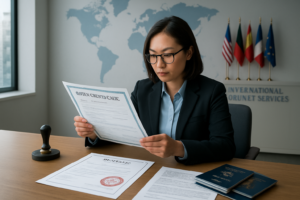
If you plan to present U.S. documents in Vietnam, the rules effective September 11, 2026 may change how you prepare your paperwork. For many individuals, companies, students, and families, the biggest question is not only whether a document needs an apostille, but also whether it needs a certified translation. That is where Vietnam apostille translation becomes essential.
In practical terms, an apostille helps verify the authenticity of a public document for international use between countries that recognize the Hague Apostille Convention. However, even when an apostille is accepted, the receiving authority in Vietnam may still require the content of the document to be translated for local review, filing, or adjudication. This is why understanding both apostille requirements and translation requirements can save you time, money, and frustration.
In this guide, we explain the Vietnam apostille rules effective September 11, 2026, when U.S. documents may need apostille certification, when Vietnam apostille translation is commonly required, and how to prepare your documents correctly the first time.
What Is an Apostille and Why Does It Matter for Vietnam?
An apostille is a certificate issued by a competent authority that authenticates the origin of a public document. In the United States, apostilles are commonly issued by the secretary of state for state documents and by the U.S. Department of State for certain federal documents. The apostille does not verify the truth of the document’s contents. Instead, it confirms that the signature, seal, or stamp on the document is genuine.
For use in Vietnam, apostilled U.S. documents may be presented for a variety of purposes, including:
- Marriage registration
- Birth registration and family records
- Academic admissions and diploma recognition
- Work permit and labor compliance filings
- Business incorporation and licensing
- Power of attorney and corporate authorization
- Criminal background checks
- Court, probate, and inheritance matters
Even if the apostille is valid, Vietnamese authorities, employers, schools, banks, notaries, or licensing bodies often need to read and retain the document in Vietnamese. That is why Vietnam apostille translation is frequently part of the process.
What Changes on September 11, 2026?
Effective September 11, 2026, users of international documents involving Vietnam should pay close attention to updated apostille recognition procedures, acceptance standards, and document handling expectations. While the exact administrative implementation may vary by agency, the key issue for document users is this: recognition of an apostille does not automatically eliminate translation requirements.
In other words, a U.S. document may be properly apostilled and still be rejected, delayed, or placed on hold if the receiving office in Vietnam requires a certified translation or a translation meeting local formatting standards. This is especially important in high-stakes commercial and legal contexts where incomplete paperwork can disrupt transactions or deadlines.
Businesses opening representative offices, families registering civil status documents, and professionals applying for permits should expect closer scrutiny of both document authentication and language accessibility. Vietnam apostille translation therefore becomes a compliance step, not merely a convenience.
When Is Vietnam Apostille Translation Usually Required?
As a general rule, if the receiving authority in Vietnam needs to evaluate the content of an English-language U.S. document, a translation is likely to be required. Whether that translation must be certified, notarized, or completed by a specific local provider depends on the authority involved.
Common situations where Vietnam apostille translation is often needed include:
1. Civil Documents
Birth certificates, marriage certificates, divorce decrees, death certificates, and affidavits are commonly used for family registration, marriage procedures, inheritance, and nationality matters. These documents may require both apostille and certified translation before submission in Vietnam.
2. Educational Documents
Diplomas, transcripts, enrollment verifications, and degree confirmations often need translation for schools, universities, licensing boards, or employers. If the institution in Vietnam needs to review course names, grades, dates, or academic standing, a clear certified translation is usually necessary.
3. Corporate Documents
Certificates of incorporation, bylaws, board resolutions, certificates of good standing, and powers of attorney often require Vietnam apostille translation for business registration, investment filings, banking, or contract execution. Vietnamese authorities generally need to understand the legal contents, not just the authenticity of signatures.
4. Criminal Background Checks
FBI background checks and state police clearances are frequently used for visas, employment, licensing, and residency matters. These documents may need apostille authentication and translation if submitted to a Vietnamese authority that processes eligibility or compliance decisions.
5. Court and Legal Records
Judgments, custody orders, adoption records, probate documents, and sworn statements may require translation because legal meaning must be conveyed accurately. In these cases, poor translation can create serious legal complications.
When an Apostille Alone May Not Be Enough
Many people assume that once a U.S. document has an apostille attached, it is ready for use anywhere abroad. That assumption can be costly. An apostille addresses document origin, but not language. Vietnamese officials or private institutions may still require a readable Vietnamese version before they can process the document.
Here are common reasons an apostille alone may not be enough:
- The receiving office operates primarily in Vietnamese
- The document contains legal or technical terminology that must be reviewed carefully
- The authority needs the translated version for filing or archiving
- The institution has internal rules requiring certified translation
- The document will be used in court, licensing, banking, or compliance settings
That is why Vietnam apostille translation should be considered early in the process, not as an afterthought after rejection.
What Does “Certified Translation” Mean in This Context?
Certified translation usually means the translation provider includes a signed statement attesting that the translation is complete and accurate to the best of the translator’s knowledge and ability. In the U.S., certified translation standards differ from notarization. A translation can be certified without being notarized, although some agencies request both.
For Vietnam apostille translation, the required format may depend on the end use. Some receiving offices may accept a U.S.-issued certified translation. Others may prefer or require translation by a translator, notary, or service recognized locally in Vietnam. Before ordering translation, confirm:
- Which language is required for submission
- Whether the translation must be certified
- Whether notarization is required
- Whether the apostille itself must also be translated
- Whether the receiving authority requires a local translation provider
These details matter because a technically correct translation may still be refused if it does not meet procedural expectations.
Which U.S. Documents Commonly Need Vietnam Apostille Translation?
The most frequently requested documents include:
- Birth certificates
- Marriage certificates
- Divorce decrees
- Death certificates
- Single status affidavits
- Diplomas and transcripts
- FBI background checks
- State police clearances
- Powers of attorney
- Corporate formation documents
- Certificates of good standing
- Board resolutions
- Court orders and judgments
- Medical or vaccination records when required by an institution
Each of these may involve different sequencing requirements. For example, some documents must be notarized first, then apostilled, then translated. Others may be issued as certified originals and then apostilled directly. An experienced service provider can help determine the right order.
Recommended Step-by-Step Process for U.S. Documents Going to Vietnam
If you want to minimize delays, follow a structured process:
- Confirm the receiving authority’s requirements. Ask whether the document needs an apostille, certified translation, notarization, or local legalization steps.
- Obtain the correct original or certified copy. Many authorities will not accept scans or unofficial copies.
- Complete notarization if needed. Some private documents, such as affidavits or powers of attorney, may need notarization before apostille.
- Request the apostille from the proper authority. State-issued documents usually go to the relevant secretary of state. Certain federal documents require federal processing.
- Order Vietnam apostille translation. Use a professional service familiar with legal, academic, or corporate terminology and document formatting.
- Check whether the apostille certificate itself must be translated. Some agencies want the entire packet translated, not just the underlying document.
- Review names, dates, and numbers carefully. Even small inconsistencies can cause rejection.
- Submit according to the authority’s instructions. Keep copies of the original, apostille, translation certification, and final packet.
Common Mistakes That Cause Rejection or Delay
When handling Vietnam apostille translation, these are the most common errors:
- Using the wrong version of the document
- Skipping notarization for a private document
- Getting an apostille from the wrong jurisdiction
- Assuming English documents will be accepted without translation
- Using a translator unfamiliar with legal document conventions
- Misspelled names or inconsistent passport details
- Translating only part of the document packet
- Waiting until the filing deadline to start the process
In commercial matters especially, delays can affect licensing, hiring, investment timing, or contract execution. That is why high-intent users often prefer a full-service provider that can coordinate apostille handling and certified translation together.
How Long Does Vietnam Apostille Translation Take?
Timing depends on the type of document, the issuing state, apostille processing speed, and translation volume. Simple civil documents may move quickly, while corporate packets or court records can take longer due to complexity. Expedited options may be available for both apostille processing and translation, but rush service should not come at the expense of accuracy.
If your deadline is tied to a visa appointment, school enrollment, wedding registration, or business filing, start early. A realistic timeline should account for document retrieval, notarization, apostille issuance, translation, quality review, and shipping if physical originals are required.
How to Choose a Reliable Vietnam Apostille Translation Service
Not all providers are equally equipped to handle cross-border document compliance. Look for a service that offers:
- Experience with U.S. apostille procedures
- Certified translation for official documents
- Familiarity with Vietnam document acceptance practices
- Clear turnaround times and pricing
- Quality control for names, seals, dates, and formatting
- Secure handling of personal and corporate information
- Responsive customer support for urgent cases
A strong provider should also be able to identify when your case involves special considerations, such as federal documents, multi-state records, or documents intended for court, immigration, or regulated industries.
Final Thoughts on Vietnam Apostille Rules Effective September 11, 2026
The most important takeaway is simple: apostille and translation serve different functions. An apostille helps prove that a U.S. document is authentic. Vietnam apostille translation helps ensure that the receiving authority can actually read, evaluate, and accept that document for the intended purpose.
With the Vietnam apostille rules effective September 11, 2026, individuals and businesses should prepare for a process that may require both authentication and language compliance. If you are submitting U.S. documents in Vietnam for marriage, education, work, investment, licensing, or legal matters, do not assume the apostille alone will be enough.
Instead, verify the exact requirements in advance and use a professional service for Vietnam apostille translation when needed. Doing so can reduce rejections, avoid delays, and help your documents move smoothly through the system the first time.
If your case is time-sensitive or high value, professional guidance is often the fastest path to compliance. The right support can make the difference between a seamless filing and a costly administrative setback.