
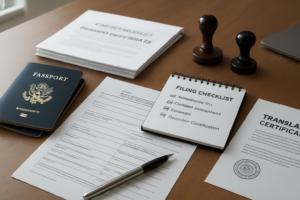
Form I-9 Translation Services in 2026: Why They Matter More Than Ever
For employers in 2026, onboarding is no longer a one-language process. Businesses across healthcare, manufacturing, hospitality, logistics, construction, retail, and professional services are hiring workers who may speak limited English or feel more confident reviewing employment documents in another language. That reality creates both an operational challenge and a compliance risk, especially when completing Form I-9.
Form I-9 is a mandatory employment eligibility verification document for nearly every new hire in the United States. While the form itself has strict rules, timelines, and document review requirements, the practical issue many employers face is simpler: how do you ensure a multilingual employee understands what they are signing and how to complete the process accurately?
That is where Form I-9 translation services and interpreter support can make a real difference. Used correctly, they help employers reduce errors, improve the employee experience, and create a more consistent onboarding workflow. For high-volume hiring teams and organizations expanding into multilingual labor markets, these services are increasingly valuable in 2026.
What Form I-9 Requires From Employers
Before discussing language support, it helps to understand the basics. Employers must ensure that every new hire completes Section 1 of Form I-9 no later than the first day of employment for pay. The employer or authorized representative must then complete Section 2 within the required timeframe after examining the employee’s documents.
Common compliance issues include:
- Missing fields or signatures
- Incorrect dates
- Document information entered inaccurately
- Employees misunderstanding attestation options in Section 1
- HR staff unintentionally over-documenting or requesting the wrong documents
- Poor recordkeeping for remote or decentralized onboarding
When language barriers are added to the process, these mistakes become more likely. Employees may not fully understand instructions, legal attestations, or document list options. HR teams may assume comprehension when the employee is actually confused. In an audit, those preventable errors can become expensive.
Why Multilingual Hiring Changes the I-9 Conversation
In 2026, employers are recruiting more broadly than ever. Tight labor markets, distributed workforces, and demographic shifts have pushed companies to engage candidates from diverse linguistic backgrounds. In many industries, multilingual hiring is not a niche scenario. It is standard practice.
That shift has made Form I-9 translation services more commercially relevant for employers that want to scale hiring without scaling risk. Translation and interpreter support can help bridge communication gaps during onboarding, especially when employees need clarification on instructions, attestations, or supporting document choices.
Importantly, employers should think of these services as a compliance support measure, not just a courtesy. If an employee does not understand the form, the chance of incomplete or inaccurate information rises. That affects both legal compliance and operational efficiency.
When Form I-9 Translation Services Matter Most
Not every hiring scenario requires formal language assistance. However, there are several situations where employers should strongly consider Form I-9 translation services or interpreter support.
1. High-volume multilingual onboarding
If your company hires dozens or hundreds of workers across multiple locations, even a small error rate can create major administrative burdens. Translation support helps standardize instructions and reduce repeated confusion.
2. Industries with frontline or seasonal workforces
Construction, warehousing, food production, hospitality, agriculture, and healthcare support roles often involve employees with varied levels of English proficiency. In these settings, clear communication during onboarding is essential.
3. Remote hiring and distributed HR teams
When onboarding takes place virtually, misunderstandings are harder to catch. Employees may hesitate to ask questions, and HR may not realize instructions were unclear. Interpreter support can reduce friction in remote identity and document review workflows.
4. Employees who request language assistance
If a new hire indicates they do not fully understand the form in English, employers should take that seriously. Providing access to language support can help the employee complete the process more confidently and accurately.
5. Employers focused on audit readiness
Organizations with strong compliance programs know that consistency matters. If your goal is to reduce technical errors and create cleaner records, language support is a practical investment.
Translation vs. Interpretation: What Employers Should Know
Many HR teams use these terms interchangeably, but they are not the same. Understanding the difference helps employers choose the right support.
Translation
Translation refers to written language support. In the context of Form I-9 translation services, this may include translated onboarding instructions, explanatory materials, policy summaries, or employee guidance documents that help a worker understand the process.
Interpretation
Interpretation refers to spoken language support. An interpreter may assist during a live onboarding session, answer verbal questions, or help explain what information the employee is being asked to provide.
For many employers, the best approach is a combination of both. Written guidance improves consistency, while live interpreter support helps address employee-specific questions in real time.
How Interpreter Support Can Reduce I-9 Errors
One of the biggest benefits of interpreter assistance is error prevention. When employees understand each step clearly, they are less likely to make mistakes that delay onboarding or create compliance issues later.
Interpreter support can help with:
- Explaining the purpose of Form I-9
- Clarifying the employee attestation in Section 1
- Helping employees understand that they may choose which acceptable documents to present
- Reducing confusion around preparer and translator certification sections when applicable
- Ensuring dates, names, and personal information are entered correctly
- Improving confidence for employees who may otherwise feel intimidated by legal forms
For employers, this means fewer corrections, fewer back-and-forth communications, and a more professional onboarding experience.
Best Practices for Using Form I-9 Translation Services in 2026
Employers should approach language support carefully. The goal is to improve understanding while preserving the integrity of the I-9 process.
- Use qualified language professionals. Avoid relying casually on coworkers or untrained staff for sensitive compliance communication. Professional Form I-9 translation services are more reliable and consistent.
- Standardize translated onboarding materials. Create approved multilingual instructions for recurring use so HR teams are not improvising explanations.
- Train HR staff on language-access protocols. Your team should know when to offer interpreter support, how to document assistance appropriately, and how to avoid giving improper document advice.
- Keep the process employee-centered. Language support should help the employee understand the form, not pressure them or influence document selection.
- Integrate support into digital onboarding. If you use electronic I-9 systems, make sure multilingual instructions and interpreter workflows are built into the platform or process.
- Document internal procedures. A written policy for multilingual onboarding can improve consistency across locations and help demonstrate a good-faith compliance approach.
Common Mistakes Employers Should Avoid
Even well-intentioned employers can create risk if they handle language assistance improperly. Watch for these common mistakes:
- Assuming the employee understands enough English. Basic conversational ability does not always mean the employee understands legal or compliance terminology.
- Using unverified machine translation alone. Automated tools may be useful for drafts, but they can miss nuance or create inaccurate instructions.
- Letting supervisors explain the form inconsistently. Without standardized guidance, explanations vary and errors increase.
- Failing to account for preparer or translator involvement when applicable. If someone assists the employee in completing Section 1, that support may need to be reflected appropriately.
- Requesting specific documents from employees. Language support should never turn into steering the employee toward a particular document choice.
These issues are exactly why many organizations turn to professional Form I-9 translation services instead of handling multilingual onboarding informally.
What to Look for in a Form I-9 Translation Services Provider
If you are evaluating vendors in 2026, focus on more than language coverage alone. The right provider should understand the employment compliance environment and the practical realities of onboarding.
Look for providers that offer:
- Experience supporting HR, legal, or immigration-related workflows
- Clear quality control for translated materials
- Access to trained interpreters for live onboarding scenarios
- Fast turnaround for high-volume hiring needs
- Confidential handling of employee information
- Support for multiple languages common in your workforce
- Scalable solutions for multi-site or remote hiring teams
Commercially, the value proposition is straightforward. Better communication can lead to fewer corrections, faster onboarding, stronger employee trust, and lower compliance exposure.
How Form I-9 Translation Services Support the Employee Experience
Compliance is the main driver, but employee experience matters too. New hires form opinions about your organization during onboarding. If the process feels confusing, rushed, or inaccessible, that can affect retention and engagement from day one.
Providing language support sends a practical message: your company wants employees to understand what they are signing and succeed in the process. That can improve trust, reduce anxiety, and help workers complete onboarding more efficiently.
In competitive hiring markets, those details matter. Employers that invest in accessible onboarding often see benefits beyond compliance, including smoother start dates and fewer administrative delays.
Preparing for 2026: A Smarter Multilingual Onboarding Strategy
As workforce diversity continues to expand, employers should treat multilingual onboarding as a standard compliance planning issue rather than a special exception. Waiting until confusion arises on day one is not an efficient strategy.
A stronger 2026 approach includes:
- Reviewing where language barriers commonly affect your current onboarding process
- Identifying the top languages spoken in your workforce
- Creating approved translated instructions and support materials
- Establishing interpreter access for employees who need verbal assistance
- Training HR, recruiters, and site managers on compliant communication practices
- Partnering with a trusted provider of Form I-9 translation services
This kind of proactive planning helps employers scale hiring while maintaining consistency and reducing avoidable mistakes.
Final Takeaway
Form I-9 compliance is already detail-sensitive. When employers onboard multilingual hires, the risk of misunderstanding grows unless the process is designed with language access in mind. In 2026, Form I-9 translation services are not just helpful for global companies or large enterprises. They are increasingly relevant for any employer hiring from diverse language communities.
Whether you manage a distributed workforce, a seasonal labor pipeline, or rapid frontline hiring, translation and interpreter support can improve accuracy, efficiency, and employee confidence. The right process helps ensure workers understand the form, HR teams follow consistent procedures, and employers stay better positioned for compliance.
For organizations serious about employment and HR compliance, investing in professional Form I-9 translation services is a practical step toward smarter multilingual onboarding.