
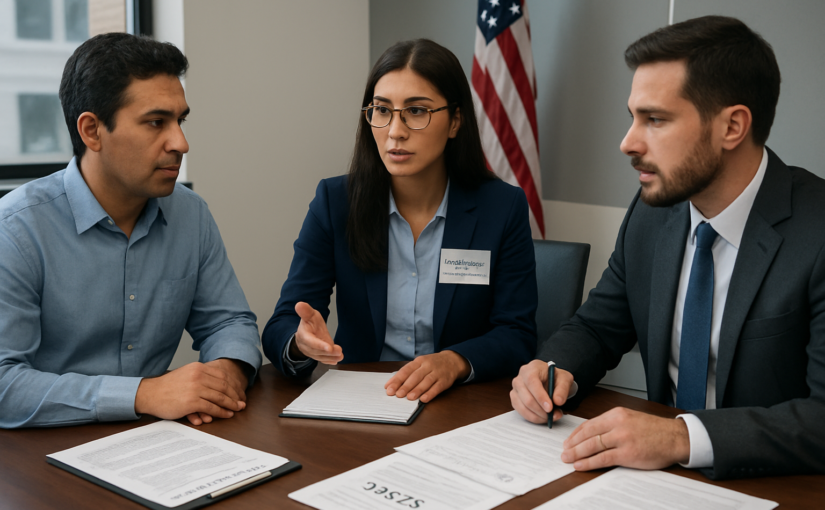
Why a Certified Farsi Interpreter Matters in Asylum and Immigration Cases
For Persian-speaking applicants, asylum interviews, immigration hearings, and government appointments can be life-changing events. In these settings, accuracy is not simply helpful; it is essential. A single misunderstanding about dates, names, family relationships, travel history, or fear of return can affect credibility and, ultimately, the outcome of a case. That is why many individuals and legal teams seek a certified Farsi interpreter when preparing for high-stakes proceedings before USCIS and EOIR.
If you are applying for asylum, attending a master calendar hearing, appearing at an individual hearing, or meeting with immigration officials, spoken interpretation must be precise, neutral, and complete. A qualified interpreter helps ensure that your testimony is conveyed faithfully, that you understand every question asked, and that your answers are not distorted by language barriers. In immigration matters, where the record can determine whether a person is granted protection or ordered removed, professional interpretation is a critical safeguard.
This guide explains how a certified Farsi interpreter supports Persian-speaking clients in asylum and immigration proceedings, what the difference is between USCIS and EOIR settings, and how to prepare effectively before your appointment or hearing.
Understanding the Role of a Certified Farsi Interpreter
A certified Farsi interpreter is a language professional trained to interpret spoken communication accurately between Farsi and English. In legal and government contexts, the interpreter’s role is to render each statement completely and impartially without adding, omitting, summarizing, or changing meaning.
For Persian-speaking clients, this role can be especially important because immigration terminology, legal concepts, and procedural language are often highly technical. Even individuals with conversational English may struggle to understand questions about admissibility, prior entries, persecution claims, protected grounds, or procedural deadlines. An interpreter ensures that the client can participate meaningfully in the process.
In asylum and immigration contexts, a professional interpreter may assist with:
- USCIS asylum interviews
- USCIS appointments and follow-up meetings
- EOIR master calendar hearings
- EOIR individual hearings
- Attorney-client case preparation sessions
- Credible fear or reasonable fear-related legal consultations
- Meetings involving government agencies or court personnel
Not every setting has the same interpreter rules, so it is important to confirm in advance whether the government provides an interpreter or whether the applicant must bring one.
USCIS vs. EOIR: Why Preparation Requirements Differ
USCIS Proceedings
USCIS handles many immigration benefits and interviews, including asylum interviews in certain cases. Depending on the appointment type and current agency rules, applicants may need to provide their own interpreter if they are not fluent in English. In such situations, choosing a certified Farsi interpreter is one of the most important preparation steps.
At a USCIS interview, the officer may ask detailed questions about identity, background, entry history, family members, prior applications, and the basis for the asylum claim. The interview may move quickly, and answers must be clear and consistent with the written application. If interpretation is weak, answers can become incomplete or appear inconsistent with documents already on file.
EOIR Proceedings
EOIR, the Executive Office for Immigration Review, oversees immigration court proceedings. Hearings before an immigration judge can include scheduling matters, pleadings, testimony, witness examination, and legal arguments. In many immigration court hearings, the court provides an interpreter for the respondent when needed. However, private legal preparation before the hearing still often requires a professional interpreter, especially when counsel needs to review testimony, exhibits, declarations, and cross-examination issues.
Even when the court provides interpretation, working with a certified Farsi interpreter before the hearing can help the client understand courtroom procedure, organize facts chronologically, and become more comfortable answering difficult questions accurately.
Why Family or Friends Should Not Be Used as Interpreters
Many applicants assume that a bilingual relative or friend can interpret well enough. In high-stakes immigration matters, that assumption can create serious risk. Informal interpreters may have good intentions, but they often lack training in legal terminology, interpreter ethics, and memory techniques. They may also unconsciously edit emotional testimony, soften sensitive details, or answer for the applicant.
Using a relative or friend can lead to problems such as:
- Omissions of important facts
- Incorrect translation of legal terms
- Conflicts of interest
- Difficulty interpreting traumatic experiences neutrally
- Confusion between Farsi dialect choices and English legal meaning
- Credibility concerns if the interpretation appears coached or incomplete
A certified Farsi interpreter is expected to remain impartial, preserve tone and meaning, and interpret exactly what is said. That professionalism can protect both the client and the integrity of the proceeding.
How a Certified Farsi Interpreter Supports Asylum Applicants
Asylum claims often involve traumatic personal histories, fear of persecution, and highly detailed timelines. Applicants may need to explain arrests, threats, political activity, religious conversion, ethnic discrimination, gender-based violence, or harm against family members. These topics are difficult to discuss in any language. They become even more challenging under pressure, in a formal government setting, through an interpreter.
A skilled certified Farsi interpreter helps by:
- Interpreting questions and answers fully and accurately
- Maintaining the applicant’s voice rather than replacing it
- Handling sensitive testimony with professionalism
- Ensuring dates, names, and places are conveyed carefully
- Clarifying when a repetition is needed because of audibility or wording
- Supporting communication during attorney preparation sessions
For many Persian-speaking clients, the ability to testify in their strongest language improves clarity and confidence. That does not mean the process becomes easy, but it does mean the applicant has a better chance to present their account accurately.
How to Prepare for USCIS and EOIR Proceedings with a Certified Farsi Interpreter
1. Confirm Interpreter Requirements Early
Do not assume that every agency or hearing will provide an interpreter. Ask your attorney or review your notice carefully. If you must bring your own interpreter, verify any eligibility rules in advance. Some appointments prohibit interpreters who are witnesses, attorneys of record, or family members.
2. Share Key Case Information Before the Appointment
A certified Farsi interpreter can perform better when given appropriate context. While the interpreter must remain neutral, advance preparation with terminology and logistics can improve accuracy. Provide names, dates, country references, hearing type, and any recurring legal terms that may arise.
This may include:
- Alien number or case identifier, if appropriate for scheduling
- Correct spelling of names and locations
- Important dates of entry, detention, marriage, or incidents
- Topics likely to arise, such as religion, politics, or military service
- Whether the assignment is in person, by phone, or by video
3. Review Your Timeline Carefully
Immigration officers and judges often focus on consistency. Before the interview or hearing, review your personal timeline in order. Make sure you can explain major events clearly: when something happened, where it happened, who was involved, and why it matters to your claim. A certified Farsi interpreter can help during preparation sessions, but the facts must come from you.
4. Practice Listening and Answering Through an Interpreter
Speaking through an interpreter feels different from ordinary conversation. Questions and answers take longer. You may need to pause after each sentence. During preparation, practice answering one question at a time and speaking in complete thoughts. This helps the interpreter preserve your exact meaning.
Useful habits include:
- Waiting for the full interpretation before answering
- Speaking clearly and not too quickly
- Giving verbal answers instead of gestures
- Correcting mistakes immediately if something was misunderstood
- Asking for repetition when you do not understand a question
5. Be Honest About Language Preference
Some applicants try to use English because they worry that requesting an interpreter will reflect poorly on them. In reality, it is far better to use the language in which you can testify most accurately. If Farsi is your strongest language for discussing complex and emotional events, requesting a certified Farsi interpreter is often the wisest choice.
6. Prepare for Sensitive Topics
Asylum and immigration proceedings may involve painful experiences. If there are topics that are difficult to discuss, tell your attorney during preparation so they can help you organize your testimony. A professional interpreter is trained to handle sensitive subject matter without judgment. The goal is not to make testimony sound better or worse, but to ensure it is communicated faithfully.
What to Expect on the Day of the Interview or Hearing
On the day of a USCIS appointment or EOIR proceeding, arrive early and bring all required documents. If you are working with a certified Farsi interpreter, make sure everyone knows where and when to meet, what identification is required, and whether the interpretation will be in person or remote.
During the proceeding:
- The interpreter may be asked to state their name and confirm their language ability.
- The officer or judge may explain that the interpreter must translate everything accurately and remain neutral.
- You should listen carefully to each interpreted question before answering.
- If you do not understand something, say so immediately.
- If the interpretation is unclear, respectfully ask for clarification or repetition.
Remember that interpretation is there to facilitate communication, not to coach or advocate. Your attorney advocates for you. The interpreter ensures your words are understood.
How to Choose the Right Certified Farsi Interpreter
Not every bilingual speaker is qualified for asylum and immigration work. When choosing a certified Farsi interpreter, look for a professional with experience in legal, court, or government settings. Accuracy under pressure, familiarity with immigration terminology, and adherence to confidentiality are all essential.
Ask about:
- Certification or professional credentials
- Experience with USCIS, EOIR, court, or asylum-related matters
- Knowledge of legal and immigration terminology
- Availability for in-person, phone, or video interpreting
- Confidentiality practices
- Ability to work with attorneys and case preparation teams
It is also helpful to choose someone who understands the importance of first-person interpretation. In professional interpreting, the interpreter should say what the speaker says directly, rather than summarizing or speaking about the client in the third person.
Common Mistakes to Avoid
Even strong cases can be weakened by avoidable communication problems. Persian-speaking clients and legal teams should watch for these common issues:
- Waiting until the last minute to book an interpreter
- Using an untrained friend or relative
- Failing to review the case timeline beforehand
- Assuming the interpreter already knows the facts
- Speaking too quickly or giving long, confusing answers
- Not correcting an interpretation error immediately
- Trying to testify in English when Farsi would be more accurate
Working with a certified Farsi interpreter early in the process can reduce these risks and help the applicant present information more clearly.
Why Accurate Interpretation Can Affect Credibility
In asylum and immigration cases, credibility is often central. Officers and judges may compare oral testimony with written declarations, prior interviews, identity records, and supporting evidence. If interpretation is inaccurate, a truthful applicant can appear evasive, inconsistent, or confused. That is why professional spoken interpretation is not a minor administrative detail. It is a critical part of due process.
A certified Farsi interpreter helps preserve the applicant’s intended meaning, emotional nuance, and factual precision. This is especially important where the case involves trauma, memory challenges, or culturally specific concepts that require careful interpretation into clear English.
Final Thoughts
If you are a Persian-speaking client facing a USCIS asylum interview, an EOIR immigration court hearing, or another government appointment where spoken accuracy matters, choosing a certified Farsi interpreter is one of the most important decisions you can make. Professional interpretation supports understanding, protects accuracy, and helps ensure that your testimony is heard as you intended.
Preparation also matters. Confirm the interpreter rules for your specific proceeding, review your timeline, practice answering through interpretation, and work with qualified professionals who understand the seriousness of immigration and asylum cases. In proceedings where every word can affect your future, clear communication is not optional. It is essential.