K-1 Visa Certified Translation in 2026: Exactly Which Birth, Divorce, Police, and Civil Documents Need English Translation Before Your Fiancé Visa Interview

K-1 Visa Certified Translation in 2026: What Fiancé Visa Applicants Need to Know
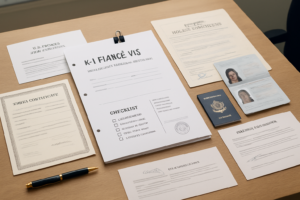
If you are applying for a fiancé visa, document preparation is one of the most important parts of the process. A missing or incorrect translation can lead to delays, confusion at the consular stage, or requests for additional evidence. That is why understanding K-1 visa certified translation requirements in 2026 is essential before your visa interview.

For most applicants, the rule is simple: any document submitted to U.S. immigration authorities or presented at a visa interview that is not fully in English should be accompanied by a complete certified English translation. However, many couples are unsure exactly which records fall into that category. Birth certificates, divorce records, police certificates, court documents, adoption records, military papers, and other civil documents may all require translation depending on your case.

This guide explains exactly which documents usually need K-1 visa certified translation, how certification works, what consular officers expect, and how to avoid the most common translation mistakes before your fiancé visa interview.

Why Certified Translation Matters for a K-1 Visa

The K-1 visa process involves both U.S. Citizenship and Immigration Services and a U.S. embassy or consulate abroad. Throughout that process, officers must be able to read and verify your records clearly. If a civil document is in another language, they generally need an English translation that is complete, accurate, and accompanied by a signed certification from the translator.

A proper K-1 visa certified translation helps with:

  • Confirming identity and family relationships
  • Verifying legal capacity to marry
  • Reviewing prior marriages and divorces
  • Checking criminal or police history
  • Matching names, dates, and places across records
  • Reducing the risk of delays or administrative processing

Even when a document seems straightforward, partial translations or informal translations can create problems. A certified translation should reflect the entire document, including stamps, seals, handwritten notes, and marginal remarks when relevant.

What Is a Certified Translation for Immigration Purposes?

In immigration and legal contexts, a certified translation is generally a full English translation accompanied by a statement signed by the translator or translation provider. That statement typically confirms that the translator is competent to translate the document and that the translation is complete and accurate to the best of their knowledge.

For K-1 visa certified translation purposes, certification does not usually mean notarization unless specifically requested. In most cases, the critical element is the translator’s signed certification. Still, many applicants choose professional immigration translation services because they understand formatting, legal terminology, and consular expectations.

Exactly Which Documents Usually Need K-1 Visa Certified Translation?

The safest rule is this: if the document is not entirely in English, assume it needs a certified translation unless official instructions for your embassy say otherwise. Below are the main categories of records fiancé visa applicants commonly need translated before the interview.

1. Birth Certificates

Your birth certificate is one of the most commonly required civil documents in a K-1 case. If the beneficiary’s birth certificate is in any language other than English, it will usually need K-1 visa certified translation.

The translation should include:

  • Full name
  • Date and place of birth
  • Parents’ names
  • Registry details
  • Official seals, stamps, and annotations

If the petitioner also submits a foreign-language birth certificate for any reason, that document should be translated as well. Be especially careful with long-form birth records that contain notes in the margins, later corrections, or registration remarks. Those details should not be omitted.

2. Divorce Decrees and Annulment Records

One of the core legal issues in a fiancé visa case is proving that both parties are legally free to marry. If either partner was previously married, the divorce decree, annulment judgment, or death certificate of the former spouse may be required.

Any non-English divorce or annulment record generally needs K-1 visa certified translation. This includes:

  • Final divorce judgments
  • Certificates of divorce
  • Annulment orders
  • Separation judgments, if relevant under local law
  • Death certificates of prior spouses

Applicants often make the mistake of translating only the final page showing the divorce was granted. That is risky. If the document includes identifying information, court details, case numbers, or legal findings on earlier pages, the entire record should be translated unless a specific authority requests only a particular page.

3. Police Certificates

Police certificates are frequently required for K-1 visa interviews, depending on the beneficiary’s age and residence history. If a police certificate is issued in a language other than English, it typically needs K-1 visa certified translation.

This includes police records from:

  • The beneficiary’s current country of residence
  • Any country where the beneficiary lived for the required period under visa rules
  • Any country where an arrest occurred, if applicable

Because police certificates can contain abbreviations, stamps, or preprinted legal language, using a professional translator is often a smart choice. A minor mistranslation involving criminal history language can lead to follow-up questions or delays.

4. Court and Criminal Disposition Records

If the beneficiary has ever been arrested, charged, or convicted, court records and disposition documents may be required. If those records are not in English, they should receive K-1 visa certified translation before the interview.

These records can include:

  • Charging documents
  • Court judgments
  • Sentencing orders
  • Dismissal orders
  • Probation completion records
  • Rehabilitation or pardon records

These are highly sensitive legal documents. Accuracy matters because officers may use them to determine admissibility. Incomplete or unclear translations can cause serious complications.

5. Adoption Records or Name Change Documents

If the beneficiary was adopted, legitimized, or legally changed their name, supporting civil records may be required to explain discrepancies across passports, birth certificates, school records, or police certificates. Any such foreign-language records generally need K-1 visa certified translation.

Common examples include:

  • Adoption decrees
  • Amended birth certificates
  • Name change court orders
  • Household registry extracts showing family changes

These documents are especially important when names appear differently across records. A good translation can help create consistency and reduce suspicion about identity mismatches.

6. Military Records

Some applicants may need to present military records, depending on the embassy’s document checklist and the applicant’s background. If required and not in English, these records should usually be translated through a K-1 visa certified translation process.

Military documents may include:

  • Service records
  • Discharge papers
  • Exemption certificates
  • Military conduct records

Because these records often use specialized terminology, experienced legal translators are preferable.

7. Other Civil Documents Requested by the Embassy

Embassies and consulates may ask for additional country-specific civil documents. Depending on the case, these can include family registers, residence records, census extracts, prison records, or local identity records. If they are not in English, they generally need K-1 visa certified translation.

Always check the interview instructions for your specific U.S. embassy or consulate, because document expectations vary by country.

Documents That Usually Do Not Need Translation

Not every paper in your K-1 package requires translation. In many cases, documents already issued in English or in bilingual format may not need additional work. Examples can include:

  • Passports with English biographical data
  • International or multilingual civil certificates that already include English
  • English-language bank records or employment letters
  • Official forms completed in English

Still, if a document contains non-English seals, handwritten notes, or supplemental pages, a translation may still be wise. When in doubt, err on the side of caution, especially for legal and civil status records.

When to Complete K-1 Visa Certified Translation

Do not wait until the week of the interview. A last-minute translation can create unnecessary stress and increase the chance of errors. Ideally, gather your civil documents as soon as your case reaches the consular stage and order your K-1 visa certified translation early enough to review everything carefully.

Build in time to:

  1. Obtain the correct original or certified copy of each document
  2. Check whether your embassy requires a specific version
  3. Send legible scans to the translator
  4. Review spellings, dates, and document completeness
  5. Print clean copies for the interview packet

What a Good Certified Translation Should Include

A professional K-1 visa certified translation should generally include:

  • A complete English translation of the full document
  • Accurate reproduction of names, dates, and places
  • Translation of stamps, seals, signatures, and handwritten notes when legible
  • A certification statement signed by the translator or provider
  • The translator’s name, signature, and date

The formatting should also make it easy to compare the translation with the original document. Clean, readable presentation matters in legal submissions.

Common Mistakes That Delay Fiancé Visa Cases

Many applicants run into avoidable problems because they underestimate translation requirements. The most common mistakes include:

  • Submitting untranslated civil documents
  • Using incomplete translations that skip seals or annotations
  • Relying on machine translation without certification
  • Having a friend translate the document without a proper certification statement
  • Misspelling names so they do not match the passport
  • Translating the wrong version of a document
  • Waiting too long and rushing the review process

Any of these issues can trigger extra scrutiny. In a high-stakes immigration matter, precision is worth paying for.

How to Choose a K-1 Visa Certified Translation Service

If you are shopping for a translation provider, look for one with immigration and legal document experience rather than general translation alone. The best K-1 visa certified translation services typically offer:

  • Experience with USCIS and consular document standards
  • Fast turnaround options
  • Clear certification language
  • Human translation by qualified linguists
  • Quality review for names, dates, and formatting
  • Confidential handling of sensitive personal records

Ask whether they regularly translate birth certificates, police certificates, divorce decrees, and court records for U.S. immigration cases. That niche experience can make a real difference.

Final Checklist Before Your K-1 Visa Interview

Before your interview, review every civil document in your file and ask one question: is every non-English record paired with a complete certified English translation? Your final review should include:

  • Birth certificate translation
  • Divorce or annulment translation, if applicable
  • Police certificate translation, if applicable
  • Court or criminal record translation, if applicable
  • Adoption or name change translation, if applicable
  • Military record translation, if applicable
  • Any embassy-specific civil document translation

Bring both the original-language documents and the certified English translations to the interview unless official instructions say otherwise.

Conclusion

In 2026, getting your K-1 visa certified translation right is not just a paperwork detail. It is a practical step that can protect your timeline, reduce interview stress, and help the consular officer evaluate your case without unnecessary confusion. For most fiancé visa applicants, any birth, divorce, police, court, military, adoption, or other civil document not in English should be professionally translated and properly certified before the interview.

If you want to avoid delays, the best strategy is simple: identify every non-English civil record early, confirm embassy-specific requirements, and use a reliable service that understands immigration standards. A strong K-1 visa certified translation package helps keep your fiancé visa case moving toward approval and your next step together in the United States.

10 Must-See Places in Norway: A Complete Travel Guide for First-Time Visitors

Introduction

Norway is one of Europe’s most spectacular travel destinations, known for its majestic fjords, snow-capped mountains, charming coastal cities, and unforgettable Arctic landscapes. Whether you are planning a summer road trip through the west coast, a winter escape to see the Northern Lights, or a cultural city break in Oslo or Bergen, Norway offers a rare combination of natural beauty, safety, and modern convenience.

For travelers who love dramatic scenery, outdoor adventure, and clean, well-organized cities, Norway is hard to beat. You can sail through UNESCO-listed fjords, ride some of the world’s most scenic railways, hike to iconic viewpoints, and explore historic neighborhoods full of color and character. At the same time, Norway is a highly connected destination, making it easy to use travel apps, translation tools, and mobile data while on the move.

In this guide, you will discover 10 must-see places in Norway, along with practical language tips, advice on using a translation app, ways to get a good cell phone rate overseas, and how to check the weather before heading out. If Norway is on your travel list, this article will help you plan a smoother and more rewarding trip.

10 Must-See Places in Norway

  1. Geirangerfjord

    Geirangerfjord is one of the most famous fjords in Norway and a UNESCO World Heritage Site. Surrounded by towering cliffs, cascading waterfalls, and deep blue water, it looks like something from a postcard. Visitors can take a fjord cruise, drive the winding mountain roads, or stop at viewpoints such as Dalsnibba and Flydalsjuvet for panoramic photos. The waterfalls known as the Seven Sisters are especially memorable.

  2. Bergen and Bryggen Wharf

    Bergen is a historic coastal city often called the gateway to the fjords. Its most iconic area is Bryggen, the old Hanseatic wharf lined with colorful wooden buildings that reflect the city’s maritime past. Strolling through the narrow lanes, visiting local fish markets, and riding the Fløibanen funicular for sweeping views over the city make Bergen a must-see destination in Norway.

  3. Oslo Opera House and Oslo Fjord

    Norway’s capital offers a different side of the country, blending nature, design, and culture. The Oslo Opera House is one of the city’s most recognizable landmarks, with its striking modern architecture inviting visitors to walk on the roof for views of the harbor. While in Oslo, travelers can also enjoy the Oslo Fjord, museums, waterfront neighborhoods, and a thriving food and arts scene.

  4. Tromsø

    Located above the Arctic Circle, Tromsø is one of the best places in Norway to experience the Northern Lights. In winter, the city becomes a base for Arctic adventures such as dog sledding, whale watching, and snowmobiling. In summer, visitors can enjoy the midnight sun. Tromsø also has a lively cultural atmosphere, excellent seafood, and beautiful mountain-and-sea scenery.

  5. Lofoten Islands

    The Lofoten Islands are famous for their dramatic peaks, fishing villages, white-sand beaches, and crystal-clear Arctic waters. This destination is ideal for photographers, hikers, and travelers seeking a more remote side of Norway. Red fishermen’s cabins called rorbuer add to the charm, while activities such as kayaking, hiking, and scenic driving make Lofoten one of the country’s most unforgettable places.

  6. Preikestolen (Pulpit Rock)

    Preikestolen is one of Norway’s most iconic natural landmarks. This flat-topped cliff rises high above Lysefjord and rewards hikers with a breathtaking view over the water and surrounding mountains. The hike is popular but manageable for many travelers with moderate fitness. Arriving early helps avoid crowds and gives you more time to take in one of Norway’s most famous landscapes.

  7. Flåm and the Flåm Railway

    Flåm is a small village with outsized scenic appeal. It is best known for the Flåm Railway, one of the steepest standard-gauge railway lines in the world and one of the most beautiful train journeys anywhere. The route passes waterfalls, valleys, and mountain farms, making it a highlight for visitors who want to experience Norway’s landscapes in comfort.

  8. Nordkapp (North Cape)

    North Cape is one of the northernmost accessible points in Europe and a bucket-list destination for many travelers. Standing on the dramatic cliff above the Barents Sea feels both remote and exhilarating. In summer, the midnight sun creates a surreal atmosphere, while the journey itself through northern Norway offers vast tundra, rugged coastlines, and unique Arctic scenery.

  9. Jotunheimen National Park

    For hiking enthusiasts, Jotunheimen National Park is one of the best places to visit in Norway. Home to some of the country’s highest mountains, glaciers, and alpine lakes, it offers trails for both day hikers and experienced trekkers. The famous Besseggen Ridge hike is especially popular for its dramatic views over contrasting blue lakes and rugged peaks.

  10. Nærøyfjord

    Nærøyfjord, another UNESCO-listed fjord, is narrower and more intimate than many other fjords in Norway. The steep mountain walls rise sharply from the water, creating a powerful sense of scale. A boat trip through Nærøyfjord is peaceful, scenic, and deeply memorable. It is often combined with visits to Flåm and nearby villages for a classic fjord experience.

Useful Travel Phrases in Norway

The main local language in Norway is Norwegian. Many Norwegians speak excellent English, especially in cities and tourist areas, but learning a few basic phrases is still a respectful and useful way to connect with locals. Below are helpful Norwegian travel phrases with English meanings and simple pronunciation guides.

  • Hello — Hei — hay
  • Thank you — Takk — tahk
  • Thanks a lot — Tusen takk — TOO-sen tahk
  • Sorry — Unnskyld — OON-shyld
  • Please — Vær så snill — vair sho sneel
  • How much is it? — Hvor mye koster det? — vor MYE KOSS-ter deh?
  • Where is the restroom? — Hvor er toalettet? — vor air twah-LETT-et?
  • Bye — Ha det — hah deh
  • Do you speak English? — Snakker du engelsk? — SNAK-er doo ENG-elsk?
  • I need help — Jeg trenger hjelp — yai TREN-ger yelp
  • Where is the train station? — Hvor er togstasjonen? — vor air TOG-stah-sho-nen?
  • Can I pay by card? — Kan jeg betale med kort? — kahn yai beh-TAH-leh meh korht?

Even if your pronunciation is not perfect, most locals will appreciate the effort. In restaurants, shops, train stations, and hotels, these phrases can make your trip smoother and more enjoyable.

How to Use a Translation App on Your Phone

A translation app can be extremely useful in Norway, especially if you travel beyond major tourist areas, read transport signs, or need help with menus, labels, or local instructions. Although English is widely spoken, having a translation app adds confidence and convenience.

  1. Download a reliable app before departure

    Install a trusted translation app such as Google Translate, Microsoft Translator, or another well-reviewed option before your trip. Set it up while you still have a stable internet connection at home.

  2. Download offline language packs

    Download Norwegian for offline use. This is important if you travel through mountain areas, fjords, rural villages, or on trains where signal strength may vary. Offline packs let you translate basic text even without mobile data.

  3. Use voice translation for quick conversations

    Voice mode is useful when asking simple questions such as directions, prices, or transport information. Speak clearly into your phone, keep sentences short, and avoid slang for more accurate translations.

  4. Try camera translation for signs and menus

    Most modern translation apps include a camera feature. Point your phone at a menu, museum label, road sign, or product packaging to get an instant translation. This can be especially helpful in supermarkets, train stations, and local cafés.

  5. Use conversation mode when speaking with locals

    Conversation mode allows two people to speak back and forth while the app translates each side. This is handy for hotel check-in, shopping, taxi rides, or basic service interactions.

  6. Save common phrases in advance

    Bookmark useful travel phrases such as asking for help, ordering food, or finding a restroom. This saves time when you need a quick answer on the go.

  7. Keep your phone charged

    Translation apps can use battery quickly, especially with voice and camera functions. Carry a power bank during long sightseeing days or train journeys.

Translation apps are helpful tools, but for official documents, legal paperwork, immigration forms, or business communication, professional human translation is still essential.

How to Get a Good Cell Phone Rate Overseas

Staying connected in Norway is easy, but international roaming can become expensive if you do not plan ahead. A few simple steps can help you get a good cell phone rate overseas while avoiding surprise charges.

  1. Check your current carrier’s international plan

    Before leaving, ask your mobile provider whether Norway is included in your international coverage. Some plans offer daily travel passes or monthly international data packages that may be convenient for short trips.

  2. Consider an eSIM

    If your phone supports eSIM technology, this is often one of the easiest and most cost-effective options. You can buy a Norway or Europe data plan online before arrival and activate it in minutes.

  3. Buy a local SIM card if needed

    For longer stays, a local prepaid SIM card may offer better value. These are often available at airports, electronics stores, or mobile shops. Make sure your phone is unlocked before you travel.

  4. Use Wi-Fi whenever possible

    Hotels, cafés, airports, and many public spaces in Norway offer Wi-Fi. Connect when available for maps, messaging, and trip planning, especially if you have limited mobile data.

  5. Turn off background data

    Apps can use data in the background for updates, backups, and location services. Disable unnecessary background activity to conserve your data allowance.

  6. Avoid accidental roaming charges

    Turn off data roaming until your international plan or eSIM is active. Also disable automatic app updates and large cloud uploads while on mobile data.

  7. Use messaging apps for calls

    Instead of making expensive international calls, use WhatsApp, FaceTime, Zoom, or similar apps over Wi-Fi or data.

Norway has strong mobile infrastructure in cities and many populated areas, but remote mountain and Arctic regions may have weaker coverage, so prepare offline maps and travel information in advance.

How to Check the Weather in Norway

Weather in Norway can change quickly, especially in fjord regions, mountain areas, and the north. A sunny morning can turn into rain, wind, or fog by afternoon, so checking the forecast regularly is essential.

  1. Use trusted weather apps

    Popular apps such as Yr, Weather.com, AccuWeather, and the default weather app on your phone can provide current conditions, hourly forecasts, and precipitation maps. Yr is especially well known in Norway and is widely trusted by locals.

  2. Check forecasts for specific locations

    Weather can vary significantly between Oslo, Bergen, Tromsø, and mountain areas. Always search for the exact town, hiking route, or fjord area you plan to visit instead of relying on a broad regional forecast.

  3. Pay attention to wind and rain

    Temperature alone does not tell the full story in Norway. Wind, rain, and changing visibility can greatly affect comfort and safety, especially on ferries, hikes, and scenic drives.

  4. Learn a few local weather terms

    • Vær — weather
    • Regn — rain
    • Snø — snow
    • Vind — wind
    • Sol — sun
  5. Check conditions before outdoor activities

    If you plan to hike to places like Preikestolen or Besseggen, or travel in Arctic regions, check the weather the night before and again in the morning. Conditions can affect trail safety, transport schedules, and visibility.

Packing layers, a waterproof jacket, and sturdy shoes is a smart choice in almost any season. In Norway, being prepared for shifting weather can make a major difference in your travel experience.

Final Thoughts

From the world-famous fjords of western Norway to Arctic adventures in Tromsø and the Lofoten Islands, Norway is a destination that rewards travelers with unforgettable scenery, efficient infrastructure, and rich cultural experiences. Whether you are exploring historic cities, hiking mountain trails, or cruising through narrow fjords, good planning helps you enjoy every part of the journey.

Language tools, mobile connectivity, and weather awareness can make your trip smoother, but some travel needs go beyond apps. If you need certified translation for passports, birth certificates, marriage certificates, academic records, immigration paperwork, visa applications, or business documents related to international travel, latranslation.com can help. As a certified translation and interpreting company, latranslation.com provides accurate, professional language services for individuals, families, students, and businesses navigating global travel and communication.

If your plans involve official documents, cross-border business, or important multilingual communication, contact latranslation.com for trusted certified translation and interpreting support before your trip to Norway.

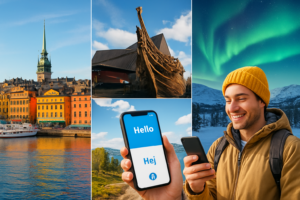
10 Must-See Places in Sweden: A Complete Travel Guide for First-Time Visitors

Introduction

Sweden is a destination that blends elegant cities, dramatic northern landscapes, royal history, innovative design, and peaceful natural beauty. From the colorful waterfront buildings of Stockholm to the Arctic wilderness of Lapland, Sweden offers travelers a remarkable variety of experiences in every season. Whether you are visiting for culture, outdoor adventure, business, or a longer Scandinavian journey, this Nordic country rewards careful planning and curious exploration.

One of the best things about traveling in Sweden is how accessible it can feel. Public transportation is efficient, many locals speak excellent English, and tourist infrastructure is reliable. At the same time, learning a few Swedish phrases, preparing your phone for translation and mobile data, and understanding local weather conditions can make your trip even smoother. In this guide, you will find 10 must-see places in Sweden, useful travel phrases, and practical travel tips to help you enjoy your journey with confidence.

10 Must-See Places in Sweden

  1. Stockholm Gamla Stan

    Gamla Stan, Stockholm’s Old Town, is one of the most charming historic districts in Northern Europe. Its narrow cobblestone streets, ochre-colored buildings, medieval alleys, and cozy cafes create a storybook atmosphere. Here you can visit the Royal Palace, browse small artisan shops, and enjoy a walk through centuries of Swedish history in the heart of the capital.

  2. Vasa Museum, Stockholm

    The Vasa Museum is one of Sweden’s most famous attractions and a true highlight for history lovers. It houses the remarkably preserved Vasa warship, which sank on its maiden voyage in 1628 and was recovered centuries later. Seeing the massive ship up close is unforgettable, and the museum’s exhibits provide fascinating insight into naval engineering, royal ambition, and life in 17th-century Sweden.

  3. Drottningholm Palace

    Located just outside Stockholm, Drottningholm Palace is a UNESCO World Heritage Site and the private residence of the Swedish royal family. The palace grounds are elegant and serene, with manicured gardens, waterfront views, and ornate interiors. Visitors often come for the architecture, but the Chinese Pavilion and historic court theater also make this royal estate especially memorable.

  4. Gothenburg Archipelago

    If you want a quieter side of Sweden, the Gothenburg Archipelago offers a refreshing coastal escape. These islands are known for rocky shorelines, fishing villages, sea breezes, and scenic walking paths. Ferries connect several islands, making it easy to spend a peaceful day exploring car-free communities and enjoying classic West Coast Swedish scenery.

  5. Liseberg Amusement Park, Gothenburg

    Liseberg is one of Scandinavia’s most popular amusement parks and a favorite for families, couples, and thrill-seekers. During the warmer months, it features roller coasters, gardens, games, and live entertainment. In winter, it transforms into a festive wonderland with holiday lights and seasonal markets, making it a lively attraction at different times of year.

  6. Kiruna and Swedish Lapland

    For travelers dreaming of the Arctic, Kiruna is a gateway to Swedish Lapland. This northern region is famous for snow-covered landscapes, Sami culture, dog sledding, and the chance to see the Northern Lights. In summer, the midnight sun creates an entirely different but equally magical atmosphere. It is one of the most unique places to visit in Sweden for nature and adventure.

  7. ICEHOTEL, Jukkasjarvi

    Near Kiruna, the ICEHOTEL in Jukkasjarvi is one of Sweden’s most iconic travel experiences. Rebuilt each winter from ice and snow, it features artist-designed suites, sculpted interiors, and a bar made of ice. Even if you do not stay overnight, touring the hotel offers a striking look at creativity, craftsmanship, and Arctic hospitality.

  8. Visby, Gotland

    Visby, on the island of Gotland, is a beautifully preserved medieval town surrounded by ancient stone walls. Its rose-covered lanes, church ruins, and sea views make it one of the most picturesque destinations in Sweden. In summer, Visby comes alive with festivals, outdoor dining, and a relaxed island atmosphere that feels both historic and vibrant.

  9. Abisko National Park

    Abisko National Park is a dream destination for hikers, photographers, and anyone seeking pristine natural beauty. Located in the far north, it is known for dramatic mountain scenery, clear skies, and excellent opportunities to view the Aurora Borealis. The park is also a starting point for the famous Kungsleden hiking trail, making it a top choice for outdoor enthusiasts.

  10. Oresund Bridge and Malmo

    Malmo, in southern Sweden, combines modern architecture, multicultural energy, and easy access to Copenhagen via the Oresund Bridge. The city’s highlights include the Turning Torso skyscraper, lively public squares, and attractive waterfront areas. Visiting Malmo gives travelers a different perspective on Sweden, one shaped by innovation, design, and cross-border Scandinavian life.

Useful Travel Phrases in Sweden

The main local language in Sweden is Swedish. Although many people speak English, learning a few polite and practical Swedish phrases can improve everyday interactions and show respect for local culture. Below are useful travel phrases with English meanings and simple pronunciation guides.

  • Hello — Hej — hay
  • Thank you — Tack — tahk
  • Sorry — Förlåt — fur-loht
  • How much is it? — Hur mycket kostar det? — hoor MYK-et KOS-tar day
  • Where is the restroom? — Var är toaletten? — var air too-ah-LET-en
  • Bye — Hej då — hay doh
  • Please — Snälla — SNEL-la
  • Yes — Ja — yah
  • No — Nej — nay
  • Do you speak English? — Pratar du engelska? — PRAH-tar doo ENG-els-ka
  • I need help — Jag behöver hjälp — yag behur-ver yelp
  • Where is the train station? — Var är tågstationen? — var air TOHG-sta-shoo-nen
  • Can I pay by card? — Kan jag betala med kort? — kan yag beh-TAH-la med kort
  • I would like this — Jag vill ha den här — yag vill hah den hair

Sweden is largely cash-light, so one especially useful phrase is asking whether you can pay by card. In many places, cards and mobile payments are preferred, and some businesses may not accept cash at all.

How to Use a Translation App on Your Phone

A translation app can be extremely helpful in Sweden, especially when reading signs, menus, transit information, or product labels. Even though English is common, there are still many situations where quick translation support makes travel easier. Here are practical steps for using a translation app effectively while traveling.

  1. Download a reliable translation app before your trip

    Choose a well-known app such as Google Translate, Microsoft Translator, or another trusted language tool. Install it before departure so you have time to learn its features and adjust settings.

  2. Download Swedish for offline use

    Before you fly, download the Swedish offline language pack. This is important if you lose signal, want to save mobile data, or travel to remote areas such as Lapland or national parks where service can be weaker.

  3. Use voice translation for simple conversations

    If you need directions, help in a shop, or basic travel assistance, try the voice feature. Speak clearly and keep your sentences short. For example, say, “Where is the bus station?” instead of a long detailed question. This usually improves translation accuracy.

  4. Use camera translation for menus and signs

    Point your phone camera at printed Swedish text to instantly translate menus, train schedules, museum notices, or grocery labels. This is one of the fastest and most useful features for travelers moving through stations, restaurants, and public spaces.

  5. Try conversation mode for back-and-forth communication

    Some apps offer a conversation mode that listens to two languages and translates each side in sequence. This can be useful for checking into accommodations, speaking with drivers, or asking detailed questions in pharmacies or stores.

  6. Save key phrases in advance

    Bookmark common travel phrases such as “I have a reservation,” “I need a taxi,” or “Where is platform number three?” Having these ready can save time in busy travel moments.

  7. Double-check important information

    Use translation apps for convenience, but verify critical details such as medication instructions, legal forms, transport changes, or emergency information with a person whenever possible. Machine translation is helpful, but it is not perfect.

How to Get a Good Cell Phone Rate Overseas

Staying connected in Sweden can be simple and affordable if you plan ahead. Since travelers often rely on maps, ride apps, translation tools, banking, and messaging, securing a good cell phone rate overseas is worth doing before arrival.

  1. Check your home carrier’s international plan

    Before your trip, compare your provider’s international roaming options. Some carriers offer daily or monthly travel passes that may be convenient for short stays, especially if you want to keep your regular number active.

  2. Consider an eSIM for Sweden or Europe

    If your phone supports eSIM, this is often one of the easiest and most cost-effective options. You can buy a Sweden-specific or Europe-wide data plan online before departure and activate it when you arrive.

  3. Buy a local SIM card if staying longer

    For longer visits, a local prepaid SIM may offer better value. You can usually find options at airports, electronics stores, convenience stores, or mobile provider shops. Be sure your phone is unlocked before traveling.

  4. Use Wi-Fi strategically

    Hotels, cafes, airports, and many public spaces in Sweden offer Wi-Fi. Connect when available for updates, backups, and large downloads. This helps reduce data usage on your mobile plan.

  5. Turn off unnecessary roaming features

    Disable background app refresh, automatic video playback, and large cloud syncing when using mobile data. Also confirm that roaming settings are configured correctly so you do not accidentally incur high charges.

  6. Download maps and travel content in advance

    Offline maps, train tickets, language packs, and reservation confirmations can all be stored on your phone before you head out for the day. This reduces your need for constant mobile data and helps if service drops temporarily.

Sweden generally has strong mobile coverage in cities and towns, but if you are heading far north or into remote hiking areas, it is wise to prepare for occasional weak signal zones.

How to Check the Weather in Sweden

Sweden’s weather can vary greatly by season and region, so checking conditions regularly is essential. Southern cities such as Malmo may feel very different from Stockholm, while Kiruna and Abisko in the far north can experience dramatically colder temperatures and faster-changing conditions.

  1. Use trusted weather apps

    Apps such as AccuWeather, The Weather Channel, Apple Weather, or your preferred Android weather app can give current conditions, hourly forecasts, precipitation chances, and wind information for Swedish destinations.

  2. Check Sweden’s meteorological sources

    Travelers can also look at local forecasting services such as SMHI, the Swedish Meteorological and Hydrological Institute. Local weather sources are especially useful for accurate regional forecasts, snow conditions, and weather warnings.

  3. Monitor hourly changes

    In Sweden, daylight, wind, rain, and temperature can shift noticeably across a single day, especially in shoulder seasons. Checking the hourly forecast is often more useful than looking only at the daily high and low.

  4. Learn a few local weather terms

    Recognizing a few Swedish weather words can help when reading signs or local forecasts. Useful examples include regn for rain, snö for snow, vind for wind, and sol for sun.

  5. Prepare for seasonal extremes

    Winter travelers should watch for snow, ice, and limited daylight, particularly in the north. Summer travelers should still pack layers, because evenings can be cool even after warm afternoons. In coastal and northern areas, weather can feel colder than the temperature suggests because of wind.

If you are planning outdoor activities such as hiking, boat trips, Northern Lights tours, or archipelago excursions, always check the forecast shortly before departure and follow local guidance.

Travel Smarter with Professional Language Support

Traveling to Sweden can be exciting, inspiring, and surprisingly easy when you have the right preparation. From choosing which of the must-see places in Sweden to prioritize, to learning a few Swedish expressions and setting up your phone for translation and data, small steps can make a big difference in the quality of your trip.

For some travelers, language preparation goes beyond vacation phrases. You may need certified translation services for birth certificates, marriage certificates, academic records, legal documents, immigration paperwork, business contracts, or other official materials connected to international travel, study, relocation, or work. In these situations, accuracy matters.

latranslation.com provides certified translation and interpreting services for individuals, families, students, and businesses who need dependable language support. Whether you are preparing documents for travel, applying for visas, handling international business matters, or arranging interpretation for important conversations, working with a professional team can save time and reduce stress.

As you plan your Sweden journey, let smart travel tools help you on the road and let expert human translators help you with the documents and communication that matter most. If you need certified translation or interpreting support before or after your trip, contact latranslation.com for professional assistance you can trust.

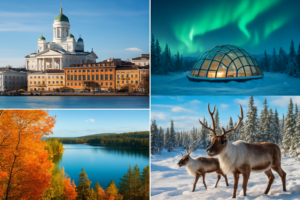
10 Must-See Places in Finland: A Complete Travel Guide for First-Time Visitors

Introduction

Finland is a destination that feels both peaceful and extraordinary. Known for its clean cities, vast forests, thousands of lakes, Arctic wilderness, and design-forward culture, Finland offers travelers a rare mix of urban sophistication and raw natural beauty. Whether you want to wander through stylish Helsinki neighborhoods, meet Santa in Lapland, chase the Northern Lights, or relax in a traditional sauna by a lake, Finland delivers unforgettable experiences in every season.

This Nordic country is ideal for travelers who appreciate space, nature, safety, and authenticity. Summer brings long daylight hours and endless outdoor adventures, while winter transforms Finland into a snowy wonderland perfect for husky rides, skiing, and aurora hunting. In this guide, you will find 10 must-see places in Finland, practical Finnish travel phrases, and smart travel tips to help you navigate your trip with confidence.

10 Must-See Places in Finland

  1. Helsinki Cathedral, Helsinki

    One of the most recognizable landmarks in Finland, Helsinki Cathedral rises above Senate Square with its striking white facade and green domes. This elegant Lutheran cathedral is a must-see for architecture lovers and first-time visitors exploring the capital. The surrounding area is perfect for strolling, taking photos, and enjoying the city’s neoclassical charm.

  2. Suomenlinna Sea Fortress, Helsinki

    A UNESCO World Heritage Site, Suomenlinna is a historic sea fortress spread across several islands just a short ferry ride from central Helsinki. Visitors can explore old ramparts, tunnels, museums, and scenic walking paths with beautiful sea views. It is one of the best places in Finland to combine history, culture, and fresh coastal air.

  3. Rovaniemi, Lapland

    Rovaniemi is famous as the official hometown of Santa Claus, but it offers much more than festive fun. Located near the Arctic Circle, this Lapland city is a gateway to winter adventures such as snowmobiling, reindeer sleigh rides, and Northern Lights excursions. Families especially love Santa Claus Village, where holiday magic lasts all year.

  4. Levi, Lapland

    Levi is one of Finland’s top ski resorts and a favorite destination for winter sports enthusiasts. Beyond skiing and snowboarding, travelers can enjoy ice karting, spa experiences, and guided aurora tours. In summer and autumn, the area becomes a scenic destination for hiking, mountain biking, and enjoying the colorful Arctic landscape.

  5. Lake Saimaa

    Lake Saimaa is the largest lake in Finland and a dream destination for travelers seeking tranquility and nature. Its labyrinth of islands, waterways, and forested shores makes it ideal for boating, kayaking, fishing, and lakeside cottage stays. It is also one of the few places in the world where you may spot the rare Saimaa ringed seal.

  6. Turku Castle, Turku

    Turku, Finland’s oldest city, is home to the impressive medieval Turku Castle. Built in the late 13th century, the castle offers fascinating exhibitions, grand halls, and a glimpse into Finland’s Swedish and medieval past. The city itself is lively and cultural, with riverside cafes, museums, and a relaxed atmosphere.

  7. Old Rauma

    Old Rauma is a beautifully preserved wooden town and another UNESCO World Heritage Site in Finland. Walking its narrow lanes feels like stepping back in time, with colorful houses, artisan shops, and cozy courtyards creating a uniquely charming setting. It is an excellent stop for travelers interested in heritage, architecture, and local craftsmanship.

  8. Koli National Park

    Koli National Park is one of the most iconic natural landscapes in Finland. Its hilltop viewpoints overlook forests and Lake Pielinen, offering scenes that have inspired Finnish artists for generations. Hiking here is rewarding in every season, from green summer trails to fiery autumn colors and snow-covered winter panoramas.

  9. Porvoo Old Town

    Just a short trip from Helsinki, Porvoo is one of Finland’s most picturesque towns. Its old town is filled with cobblestone streets, red riverside warehouses, boutique shops, and historic buildings. Porvoo is perfect for a day trip if you want a romantic and photogenic setting with a slower pace than the capital.

  10. Åland Islands

    The Åland Islands, located between Finland and Sweden, offer a peaceful maritime escape with a distinct local identity. Visitors come for cycling routes, seaside villages, sailing, and fresh island cuisine. This archipelago is especially appealing in summer, when long days and calm waters make outdoor exploration especially enjoyable.

Useful Travel Phrases in Finland

The main local language in Finland is Finnish, although Swedish is also an official language in some regions. English is widely spoken, especially in cities and tourist areas, but learning a few basic Finnish phrases can make your trip smoother and more respectful. Below are useful phrases for travelers, with English meaning and simple pronunciation.

  • Hello — Hei — hay
  • Thank you — Kiitos — kee-tohs
  • Sorry — Anteeksi — ahn-tehk-see
  • How much is it? — Paljonko tämä maksaa? — pahl-yon-koh تہ-mah mahk-saa
  • Where is the restroom? — Missä on WC? — mees-sah on vay-say
  • Bye — Hei hei — hay hay
  • Yes — Kyllä — kyul-lah
  • No — Ei — ay
  • Please — Ole hyvä — oh-leh huu-vah
  • Excuse me — Anteeksi — ahn-tehk-see
  • Do you speak English? — Puhutko englantia? — puu-hut-koh eng-lahn-tee-ah
  • I need help — Tarvitsen apua — tar-vee-tsen ah-poo-ah
  • Where is the train station? — Missä on rautatieasema? — mees-sah on row-tah-tee-ah-seh-mah
  • One ticket, please — Yksi lippu, kiitos — uuk-see lip-poo, kee-tohs

Tip: Finnish pronunciation is generally consistent, so once you learn the sound patterns, signs and phrases become easier to read aloud.

How to Use a Translation App on Your Phone

A translation app can be extremely useful in Finland, especially when reading signs, menus, transportation details, or speaking with locals outside major tourist areas. Even though many Finns speak excellent English, having a translation app on your phone adds convenience and confidence.

  1. Download Your App Before Departure

    Install a trusted translation app before your trip. Popular choices include Google Translate, Microsoft Translator, and iTranslate. Set up the app while you still have reliable internet access at home.

  2. Download Offline Language Packs

    Before flying, download Finnish for offline use. This allows you to translate basic text and phrases even without mobile data. Offline packs are especially helpful on trains, in rural areas, or during outdoor excursions in Lapland.

  3. Use Voice Translation for Quick Conversations

    Open the microphone feature and speak clearly in English. The app will translate your sentence into Finnish, which you can show or play aloud. This works well for asking directions, confirming prices, or checking hotel information.

  4. Try Camera Translation for Signs and Menus

    Point your phone camera at printed Finnish text to translate road signs, museum descriptions, restaurant menus, or product labels. This feature is especially useful in grocery stores and train stations.

  5. Use Conversation Mode

    Many translation apps offer a conversation mode that lets two people speak back and forth in different languages. This can be helpful in taxis, shops, or smaller guesthouses where communication may be more limited.

  6. Save Common Phrases

    Create a favorites list with important travel phrases like “Where is the restroom?” or “I have a reservation.” This saves time when you need a phrase quickly.

  7. Double-Check Important Information

    For critical matters such as medical needs, legal issues, or official travel documents, do not rely solely on machine translation. Translation apps are useful for casual travel situations, but professional human translation and interpreting are best for accuracy when it truly matters.

How to Get a Good Cell Phone Rate Overseas

Staying connected in Finland is usually easy, but international roaming charges can become expensive if you do not plan ahead. Here are practical ways to get a good cell phone rate overseas while traveling in Finland.

  1. Check Your Current Carrier’s International Plan

    Before your trip, contact your mobile provider and ask about Finland coverage. Some carriers offer daily international passes or monthly travel plans that may be sufficient for short visits.

  2. Consider an eSIM

    If your phone supports eSIM technology, this is often one of the easiest and most affordable options. You can buy a data plan online before arrival and activate it digitally without swapping a physical SIM card.

  3. Buy a Local SIM Card

    For longer stays, a local prepaid SIM card can offer good value. These are often available at airports, convenience stores, or mobile shops. Make sure your phone is unlocked before you travel.

  4. Use Wi-Fi Whenever Possible

    Finland has reliable Wi-Fi in many hotels, cafes, airports, and public spaces. Connect to trusted networks for messaging, maps, and trip planning to reduce mobile data usage.

  5. Turn Off Background Data Roaming

    Disable roaming and background app refresh for nonessential apps. Photo backups, streaming services, and automatic updates can consume data quickly and lead to unexpected charges.

  6. Use Internet-Based Calling Apps

    Apps like WhatsApp, FaceTime, and Zoom can help you communicate over Wi-Fi or data rather than paying high international calling rates.

  7. Download Maps and Travel Info in Advance

    Save offline maps, hotel confirmations, and train tickets before leaving Wi-Fi. This reduces the need for constant data access while you are moving around Finland.

How to Check the Weather in Finland

Weather in Finland can vary dramatically by season and region. Southern cities like Helsinki may be mild compared to the far north, where winter temperatures can drop well below freezing. Because conditions can change quickly, especially in Lapland and lake regions, checking the forecast regularly is essential.

  1. Use Reliable Weather Apps

    Install a dependable app such as Weather.com, AccuWeather, Apple Weather, or Windy. These apps provide current temperature, hourly forecasts, wind conditions, and precipitation alerts.

  2. Check Finland’s Meteorological Sources

    For local accuracy, travelers can also look at the Finnish Meteorological Institute website. Local sources are often especially useful for snow conditions, storm warnings, and regional weather updates.

  3. Monitor Daylight Hours

    In Finland, daylight changes significantly throughout the year. In summer, you may have very long days, while winter in the north can bring very limited daylight. Checking sunrise and sunset times helps you plan sightseeing and transport.

  4. Look for Key Weather Terms

    A few useful weather-related terms can help when reading local forecasts. Sää means weather, lumi means snow, sade means rain, and tuuli means wind.

  5. Prepare for Layering

    Even if the forecast looks stable, layering is the best strategy in Finland. Conditions can shift between sunny, windy, wet, and cold within the same day, particularly near the coast or in northern wilderness areas.

Travel Smart in Finland with Professional Language Support

Finland is a rewarding destination for leisure travelers, students, business visitors, and families alike. From historic cities and island fortresses to Arctic adventures and peaceful lakes, the country offers an exceptional range of experiences. Good preparation, a few local phrases, a reliable translation app, and a smart mobile plan can make your journey smoother from arrival to departure.

If your Finland trip involves more than sightseeing, such as visa paperwork, academic records, legal documents, medical files, or international business communication, professional language support becomes even more important. latranslation.com provides certified translation and interpreting services for travelers, professionals, and organizations that need accuracy, reliability, and fast turnaround. Whether you need certified document translation for official use or an interpreter for important cross-border communication, our team is here to help you travel and communicate with confidence.

Planning a trip to Finland or handling documents for international travel? Contact latranslation.com for trusted certified translation and interpreting services tailored to your needs.

10 Must-See Places in Denmark: A Complete Travel Guide for First-Time Visitors

Introduction

Denmark is one of Europe’s most appealing travel destinations, known for its colorful waterfronts, fairy-tale castles, Viking history, modern design, and relaxed Scandinavian charm. Whether you are planning a city break in Copenhagen, a cultural road trip across Zealand and Jutland, or a peaceful coastal escape, Denmark offers a rich mix of history, architecture, food, and natural beauty in a compact and easy-to-navigate country.

This guide highlights 10 must-see places in Denmark for travelers who want to experience the country’s most memorable attractions. You will also find useful Danish travel phrases, practical advice for using a translation app on your phone, tips for getting a good cell phone rate overseas, and simple ways to check the weather in Denmark before and during your trip. If you are traveling for study, business, immigration, or international paperwork, we will also explain how professional certified translation and interpreting services can help make your journey smoother.

10 Must-See Places in Denmark

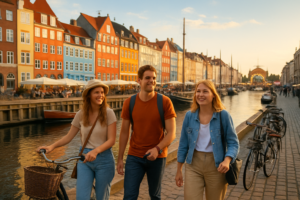
  1. Nyhavn, Copenhagen

    Nyhavn is one of the most iconic places in Denmark and often the image travelers picture first. This 17th-century waterfront district is lined with brightly painted townhouses, historic wooden ships, lively restaurants, and cozy cafes. It is perfect for a canal-side stroll, boat tour, or evening meal while taking in the classic Copenhagen atmosphere. The area is especially beautiful at sunset, when the harbor glows with warm light and reflections shimmer across the water.

  2. Tivoli Gardens, Copenhagen

    Tivoli Gardens is one of the world’s oldest amusement parks and remains one of Denmark’s most beloved attractions. More than just rides, Tivoli combines gardens, live entertainment, seasonal decorations, elegant architecture, and a nostalgic old-world spirit. Families love the rides, couples enjoy the romantic lights, and culture lovers appreciate the concerts and performances. Visiting Tivoli in summer or during the Christmas season is especially magical.

  3. The Little Mermaid, Copenhagen

    Inspired by Hans Christian Andersen’s famous fairy tale, The Little Mermaid statue is small in size but huge in cultural significance. Sitting quietly on a rock by the waterfront, she has become one of Denmark’s most recognized landmarks. While the statue itself is modest, the surrounding harbor walk makes the visit enjoyable, and it pairs well with nearby sights such as Kastellet and the royal district.

  4. Rosenborg Castle, Copenhagen

    Rosenborg Castle offers a fascinating glimpse into Denmark’s royal history. Built in the early 17th century, this elegant Renaissance castle houses the Danish crown jewels, royal regalia, and beautifully preserved interiors. The surrounding King’s Garden is one of the oldest and most pleasant parks in central Copenhagen, making Rosenborg an ideal stop for travelers interested in history, architecture, and photography.

  5. Kronborg Castle, Helsingør

    Kronborg Castle, a UNESCO World Heritage Site, is famous worldwide as the setting of Shakespeare’s Hamlet. Located in Helsingør on the narrow strait between Denmark and Sweden, the fortress is dramatic, historic, and visually striking. Visitors can explore grand halls, underground casemates, and panoramic coastal views. It is one of the best day trips from Copenhagen and a must for anyone who enjoys literature, history, or castles.

  6. Louisiana Museum of Modern Art, Humlebæk

    Just north of Copenhagen, the Louisiana Museum of Modern Art is one of the finest art museums in Scandinavia. Its collection includes major international modern and contemporary artists, but the setting is equally impressive. The museum blends architecture, sculpture gardens, and sea views into a calm, inspiring experience. Even travelers who do not usually prioritize museums often find Louisiana unforgettable because of its balance of art, landscape, and design.

  7. ARoS Aarhus Art Museum, Aarhus

    ARoS is one of Denmark’s leading cultural attractions and a centerpiece of Aarhus, the country’s second-largest city. The museum is best known for its circular rooftop installation, Your Rainbow Panorama, which lets visitors walk through colored glass while enjoying sweeping views of the city. Inside, ARoS features impressive exhibitions ranging from classic to experimental. It is a vibrant stop for travelers who want to see Denmark’s creative and contemporary side.

  8. Den Gamle By, Aarhus

    Den Gamle By, or The Old Town, is an open-air museum that brings Danish urban history to life. Historic buildings from different periods have been relocated and reconstructed here, creating streets and neighborhoods that show how people lived in past centuries. Costumed interpreters, traditional shops, and authentic interiors make the experience immersive and educational. It is especially rewarding for families and visitors curious about everyday Danish life through time.

  9. Legoland Billund, Billund

    For families and playful travelers, Legoland Billund is one of the top attractions in Denmark. Located in the birthplace of LEGO, this park combines imaginative rides, themed lands, miniature world displays, and interactive experiences. Children love the colorful energy, while adults appreciate the creativity and craftsmanship behind the models. If you are traveling with kids, Billund can easily become the highlight of your Denmark itinerary.

  10. Møns Klint, Zealand

    Møns Klint offers a completely different side of Denmark, one defined by dramatic natural beauty. These striking white chalk cliffs rise above the Baltic Sea and create one of the country’s most breathtaking landscapes. Hiking trails through beech forests, scenic viewpoints, and fossil-hunting opportunities along the shore make this destination ideal for nature lovers. It is a peaceful and memorable escape from the cities, especially in spring and summer.

Useful Travel Phrases in Denmark

The main local language in Denmark is Danish. Many Danes speak excellent English, especially in cities and tourist areas, but learning a few basic phrases is still respectful and helpful. Below are useful travel phrases in Danish with English meanings and simple pronunciation guidance.

  • Hello — Hej — Pronunciation: “hi”
  • Thank you — Tak — Pronunciation: “tack”
  • Sorry — Undskyld — Pronunciation: “OON-skool”
  • How much is it? — Hvor meget koster det? — Pronunciation: “vor MY-eth KOS-ter deh?”
  • Where is the restroom? — Hvor er toilettet? — Pronunciation: “vor air twah-LET-et?”
  • Bye — Farvel — Pronunciation: “far-VEL”
  • Please — Vær sød — Pronunciation: “vair surth”
  • Yes — Ja — Pronunciation: “ya”
  • No — Nej — Pronunciation: “nye”
  • Do you speak English? — Taler du engelsk? — Pronunciation: “TA-ler doo ENG-elsk?”
  • I don’t understand — Jeg forstår ikke — Pronunciation: “yai for-STOR IK-keh”
  • Can you help me? — Kan du hjælpe mig? — Pronunciation: “kan doo YEL-peh my?”
  • Where is the train station? — Hvor er togstationen? — Pronunciation: “vor air TOH-sta-see-O-nen?”
  • I would like this — Jeg vil gerne have denne — Pronunciation: “yai vil GER-neh hay DEN-neh”
  • Good morning — Godmorgen — Pronunciation: “GO-morn”

Even if your pronunciation is not perfect, using a few polite words in Danish can make interactions warmer and more enjoyable.

How to Use a Translation App on Your Phone

A phone translation app can be extremely useful in Denmark, especially for reading menus, signs, transportation instructions, museum labels, and local notices. While English is widely spoken, a translation app adds convenience and confidence when you are outside major tourist settings.

1. Download your app before departure

Install a trusted translation app before leaving home. Popular options include Google Translate, Microsoft Translator, and Apple’s built-in translation tools on supported devices. Set up the app while you still have a stable internet connection.

2. Download offline language packs

Before your trip, download Danish and English offline packs. This is important in case you lose signal, want to save mobile data, or are traveling in rural areas. Offline translation may be simpler than live online translation, but it is still very helpful for basic communication.

3. Use voice translation for quick conversations

If you need help at a station, hotel, shop, or clinic, open the voice feature and speak clearly in short sentences. Let the app translate into Danish, then show or play the result. Keep your wording simple for the most accurate translation.

4. Try conversation mode

Many translation apps offer a conversation mode that allows two people to speak back and forth in different languages. This can be useful when asking for directions, discussing dietary restrictions, or clarifying travel arrangements.

5. Use the camera for signs and menus

The camera function is one of the most practical travel tools. Point your phone at a menu, train notice, museum sign, or product label to get an instant translation. This is especially useful for understanding ingredients, schedules, and public instructions.

6. Save common phrases

Most apps let you save favorite translations. Store key phrases such as “Where is the restroom?” “I have a reservation,” “I need a doctor,” or “Do you accept cards?” so you can access them quickly.

7. Double-check important information

For casual travel situations, machine translation is usually enough. However, for legal, medical, academic, or immigration matters, do not rely on an app alone. Important documents and sensitive conversations require professional human translation or interpreting.

How to Get a Good Cell Phone Rate Overseas

Staying connected in Denmark is usually easy, but international phone costs can become expensive if you do not plan ahead. Here are smart ways to get a good cell phone rate overseas.

Use an eSIM if your phone supports it

An eSIM is often the easiest option for travelers. You can purchase a data plan for Denmark or Europe before arrival, activate it digitally, and avoid the hassle of finding a physical SIM card. This is ideal for short stays and frequent travelers.

Compare local SIM and eSIM options

If your phone is unlocked, compare local prepaid SIM cards with travel eSIM plans. Depending on your needs, a local option may offer more data for less money. If you are visiting multiple European countries, look for a regional plan rather than a Denmark-only plan.

Check your home carrier’s international plan

Some mobile providers offer daily or monthly international passes. These can be convenient if you want to keep your regular number active for calls and texts. Read the details carefully, since convenience sometimes comes with higher costs.

Use Wi-Fi whenever possible

Hotels, airports, cafes, and many public places in Denmark offer Wi-Fi. Connect when available for messaging, maps, and app updates. For extra safety, avoid entering sensitive financial information on unsecured public networks unless you use a VPN.

Turn off data roaming if needed

If you are unsure about your international rates, disable data roaming in your phone settings until your travel plan is active. This simple step can protect you from unexpected charges.

Download essentials in advance

Save maps, translation packs, train tickets, hotel confirmations, and travel guides before you leave your accommodation. That way, you can navigate even with limited connectivity.

How to Check the Weather in Denmark

Denmark’s weather can change quickly, especially near the coast. Wind, light rain, cool mornings, and shifting skies are common, so it is wise to check conditions regularly.

Use reliable weather apps

Popular apps such as AccuWeather, The Weather Channel, Apple Weather, and Weather Underground can provide current conditions, hourly forecasts, and precipitation alerts for Danish cities and regions.

Check the Danish Meteorological Institute

For local accuracy, consult the Danish Meteorological Institute, often referred to as DMI. It is a trusted source for weather forecasts in Denmark and useful for checking wind, rain, and coastal conditions.

Look at hourly forecasts, not just daily highs

A day in Denmark may begin sunny, turn windy by afternoon, and end with light rain. Hourly forecasts help you plan museum visits, walking tours, cycling, or coastal excursions more effectively.

Learn a few weather-related local terms

  • Vejr — weather
  • Regn — rain
  • Vind — wind
  • Sol — sun
  • Koldt — cold
  • Skyet — cloudy

Recognizing these simple words can help when reading local forecasts, station screens, or weather updates online.

Pack layers and a light waterproof jacket

No matter the season, layering is the key to comfort in Denmark. Comfortable walking shoes, a sweater, and a compact rain jacket are practical choices for most travelers.

Travel Smarter with Professional Translation and Interpreting Support

Travel to Denmark can be simple and enjoyable, but some trips involve more than sightseeing. You may need certified translations for birth certificates, marriage certificates, academic transcripts, medical records, legal paperwork, visa applications, or business documents. In those situations, accuracy matters far more than convenience.

latranslation.com provides certified translation and interpreting services for individuals, families, students, professionals, and companies who need reliable language support. Whether you are preparing travel-related documents, applying for visas, handling international business, or coordinating important communication across languages, professional assistance can save time and prevent costly misunderstandings.

If your Denmark travel plans involve official paperwork or multilingual communication, latranslation.com can help with certified translations and professional interpreting tailored to your needs. Before you depart, make sure your documents are clear, accurate, and ready for international use so you can focus on enjoying everything Denmark has to offer.