
Introduction
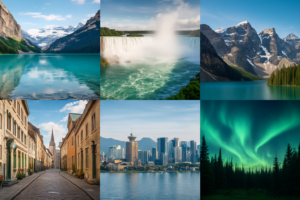
Canada is one of the world’s most rewarding travel destinations, offering a remarkable mix of natural beauty, multicultural cities, historic landmarks, and outdoor adventure. From the dramatic Rocky Mountains to the charming streets of Quebec City, Canada appeals to travelers who want both iconic sights and authentic local experiences. Whether you are planning a short city break, a scenic road trip, or a longer cross-country journey, this vast country has something memorable in every region.
One of the best things about traveling in Canada is its diversity. You can spend one day exploring world-class museums and restaurants in Toronto or Montreal, and the next day hiking beside glacier-fed lakes in Alberta or watching whales off the Pacific coast. Because Canada is officially bilingual, travelers may also encounter both English and French in many settings, especially in Quebec and federal services. This guide highlights 10 must-see places in Canada and includes practical travel tips to help you navigate language, weather, transportation, and mobile connectivity with confidence.
10 Must-See Places in Canada
-
Banff National Park, Alberta
Banff National Park is one of the most famous places in Canada for good reason. Located in the heart of the Canadian Rockies, it offers breathtaking mountain scenery, turquoise lakes, wildlife viewing, and unforgettable hiking. Lake Louise and Moraine Lake are the star attractions, but the town of Banff itself is also worth visiting for its lively atmosphere, shops, and cozy mountain lodges. In every season, Banff delivers postcard-perfect views.
-
Niagara Falls, Ontario
Niagara Falls is one of the most iconic natural attractions in North America. The sheer power and scale of the falls make it a must-see for first-time visitors to Canada. Boat tours bring travelers close enough to feel the mist, while observation decks offer panoramic views day and night. Beyond the falls, the surrounding Niagara region is known for wineries, gardens, and charming nearby towns.
-
Old Quebec, Quebec City
Old Quebec feels like a slice of Europe in North America. This UNESCO World Heritage Site is known for its cobblestone streets, fortified walls, elegant architecture, and historic charm. Visitors can stroll past centuries-old buildings, explore quaint cafes, and admire the famous Fairmont Le Chateau Frontenac. In winter, the city becomes especially magical with snow-covered streets and festive lights.
-
Vancouver, British Columbia
Vancouver is a vibrant coastal city surrounded by mountains and water. It is ideal for travelers who want urban culture and outdoor recreation in one destination. Stanley Park, Granville Island, Gastown, and the Capilano Suspension Bridge are among the city’s highlights. Vancouver also offers excellent food, diverse neighborhoods, and easy access to day trips such as Whistler or Vancouver Island.
-
Toronto and the CN Tower, Ontario
Toronto is Canada’s largest city and a major cultural hub. The CN Tower defines the skyline and gives visitors an incredible view over the city and Lake Ontario. Toronto is also home to outstanding museums, theater, sports, and neighborhoods with food from around the world. Travelers can explore the Distillery District, Kensington Market, and the waterfront, all while experiencing the energy of a truly global city.
-
Montreal, Quebec
Montreal is known for its creative spirit, French heritage, and lively cultural scene. It combines old-world architecture with modern design, making it one of Canada’s most exciting cities to explore. Old Montreal, Mount Royal, the Notre-Dame Basilica, and the city’s famous food scene are major draws. Montreal is especially popular for festivals, music, and a unique blend of North American and European influences.
-
Jasper National Park, Alberta
Jasper National Park offers a more peaceful but equally spectacular Rocky Mountain experience. It is famous for wide-open wilderness, glaciers, scenic drives, and exceptional stargazing. The Icefields Parkway connecting Jasper and Banff is often considered one of the most beautiful drives in the world. Maligne Lake, Athabasca Falls, and wildlife such as elk and bears make Jasper an unforgettable stop.
-
Prince Edward Island
Prince Edward Island is celebrated for red-sand beaches, rolling farmland, seafood, and literary history. It is the beloved setting of Anne of Green Gables, which attracts visitors from around the world. The island’s relaxed pace, coastal drives, lighthouses, and fresh lobster dinners make it perfect for travelers seeking charm and tranquility. It is especially lovely in summer and early autumn.
-
Churchill, Manitoba
Churchill is one of the most unique travel destinations in Canada. Known as the polar bear capital of the world, it attracts adventurous visitors who want to see wildlife in a truly remote northern setting. Churchill is also a fantastic place to view the Northern Lights. Depending on the season, travelers may spot beluga whales, migratory birds, and dramatic Arctic landscapes unlike anywhere else in the country.
-
Cabot Trail, Nova Scotia
The Cabot Trail is one of Canada’s most scenic road trips. Winding along the coast of Cape Breton Island, it offers dramatic ocean views, forested highlands, hiking trails, and charming fishing villages. Travelers can stop for fresh seafood, local music, and breathtaking lookouts along the route. In autumn, the fall colors make the drive even more spectacular.
Useful Travel Phrases in Canada
Canada has two official languages: English and French. In much of the country, English is the main language, but French is especially important in Quebec and can also appear on signs, packaging, transportation information, and government services across Canada. For travelers, learning a few basic French phrases can be very helpful and appreciated. Below are useful travel phrases in Canadian French, with English meanings and simple pronunciation guides.
- Hello — Bonjour — bohn-zhoor
- Thank you — Merci — mehr-see
- Sorry — Désolé / Désolée — day-zoh-lay
- How much is it? — Combien ça coûte ? — kohm-byen sah koot
- Where is the restroom? — Où sont les toilettes ? — oo sohn lay twah-let
- Bye — Au revoir — oh ruh-vwar
- Please — S’il vous plaît — seel voo pleh
- Excuse me — Excusez-moi — ex-kew-zay mwah
- Do you speak English? — Parlez-vous anglais ? — par-lay voo ahn-glay
- I don’t understand — Je ne comprends pas — zhuh nuh kom-prahn pah
- Can you help me? — Pouvez-vous m’aider ? — poo-vay voo meh-day
- Where is the train station? — Où est la gare ? — oo ay lah gahr
- I would like this — Je voudrais ceci — zhuh voo-dray suh-see
- The bill, please — L’addition, s’il vous plaît — lah-dee-syon seel voo pleh
If you are visiting Montreal, Quebec City, or smaller towns in Quebec, these phrases can make everyday interactions smoother. Even if locals also speak English, making the effort to use a few French words is often appreciated.
How to Use a Translation App on Your Phone
A translation app can be one of the most useful travel tools in Canada, especially if you are visiting French-speaking areas or communicating in airports, hotels, restaurants, or medical settings. Most modern translation apps are easy to use and offer several features beyond simple text translation.
-
Download your app before departure
Choose a reliable translation app such as Google Translate, Microsoft Translator, or Apple’s built-in translation tools. Install it before your trip so you can get familiar with the interface and settings.
-
Download offline language packs
Before arriving in Canada, download English and French offline packs. This is especially useful if you are traveling through remote areas, national parks, or places with weak signal coverage.
-
Use voice translation for quick conversations
Tap the microphone icon and speak clearly. The app can translate common questions such as directions, food requests, or transportation needs. This is ideal when you need a fast answer at a train station, shop, or hotel front desk.
-
Try conversation mode
Many apps include a conversation mode that allows two people to speak back and forth in different languages. This can be helpful when checking into accommodations, asking for local recommendations, or resolving simple travel issues.
-
Use the camera for signs and menus
Camera translation is especially useful in French-speaking areas. Point your phone at menus, transit notices, museum panels, or product labels, and the app will translate the text on your screen.
-
Save important phrases
Most apps let you bookmark common expressions. Save phrases related to transportation, food allergies, emergencies, and accommodation so you can access them quickly without typing every time.
-
Check pronunciation playback
If you are unsure how to say a phrase, use the audio playback function. This helps you communicate more naturally and can make interactions smoother.
-
Use translation apps carefully for important matters
Translation apps are excellent for daily travel situations, but they are not a substitute for professional certified translation when dealing with legal, medical, immigration, or official documents.
How to Get a Good Cell Phone Rate Overseas
Staying connected in Canada is important for maps, ride apps, weather updates, hotel bookings, and translation tools. However, international roaming can become expensive if you do not plan ahead. Here are practical ways to get a better cell phone rate while traveling in Canada.
-
Check your home carrier’s international plan
Before you leave, review your provider’s Canada roaming options. Some plans include Canada at no extra charge, while others charge daily fees or high data rates.
-
Consider an eSIM
If your phone supports eSIM, this is often one of the easiest and most cost-effective choices. You can buy a Canada data plan online before arrival and activate it in minutes.
-
Buy a local SIM card if staying longer
For extended trips, a local Canadian SIM card may offer better value. Major providers and prepaid options are available in airports, electronics stores, and shopping centers.
-
Use Wi-Fi whenever possible
Hotels, cafes, airports, and many public spaces offer Wi-Fi. Connect to trusted networks for messaging, calls, and downloads to reduce mobile data use.
-
Turn off background data
Apps can consume data without you noticing. Disable automatic updates, cloud backups, and background refresh while traveling to avoid unnecessary charges.
-
Download maps and travel info in advance
Offline maps, translation packs, boarding passes, and reservation details can save both time and data, especially in rural or mountainous regions.
-
Avoid accidental roaming near borders
In some areas near the United States border, phones may switch networks unexpectedly. Check your carrier settings and turn off automatic network switching if needed.
How to Check the Weather in Canada
Canada is a large country with major regional weather differences, so checking the forecast is essential before and during your trip. Conditions in Vancouver can be rainy and mild while Alberta may be sunny but cool, and northern regions can change rapidly.
-
Use trusted weather apps
Install reliable apps such as The Weather Network, Environment Canada, AccuWeather, or WeatherCAN. These provide current conditions, hourly forecasts, air quality, and severe weather alerts.
-
Check official sources
Environment and Climate Change Canada offers dependable national weather information. This is especially useful for road trips, hiking, and outdoor activities.
-
Look at hourly and multi-day forecasts
In Canada, temperatures can shift quickly. Checking both hourly and seven-day forecasts helps you plan layers, rain gear, or winter clothing.
-
Learn common local weather terms
Useful terms include wind chill, humidex, freezing rain, snowfall warning, and air quality advisory. These can affect comfort and safety, especially in winter or wildfire season.
-
Monitor mountain and park conditions
If you are visiting Banff, Jasper, Whistler, or other outdoor destinations, check local park or resort websites for trail conditions, road updates, avalanche notices, and visibility.
-
Prepare for seasonal extremes
Summer can be warm and sunny, but evenings may still be cool in some regions. Winter can bring snow, ice, and severe cold. Spring and fall often require layers and waterproof clothing.
As a general rule, always pack flexible clothing for Canada. A light waterproof jacket, comfortable walking shoes, and layers are useful in most seasons and destinations.
Travel Smarter with Professional Language Support
Traveling in Canada can be smooth and enjoyable with the right preparation, from knowing a few French phrases to using a translation app and securing a good mobile data plan. But some travel situations require more than casual translation. If you are applying for a visa, preparing immigration paperwork, handling academic records, organizing business travel, or submitting legal or medical documents, accuracy matters.
That is where professional support becomes essential. latranslation.com provides certified translation and interpreting services for individuals, families, students, and businesses that need trusted language solutions. Whether you need certified document translation for official use or professional interpreting for meetings and appointments, working with an experienced provider helps you avoid costly misunderstandings and delays.
Canada offers unforgettable cities, landscapes, and cultural experiences. As you plan your journey, let latranslation.com help with the language side of travel so you can focus on enjoying the destination with confidence.